

•Nigeria Police Force
To prepare security officers, media, and other stakeholders for a peaceful and credible 2027 general election, the Nigeria Police Force (NPF), Zone 2 Command, today flagged off a training on election security management, charging participants to be neutral, professional, and patriotic.
The event, themed: “Professionalism, Neutrality and Collaboration: Strengthening election security for safe and credible polls”, was held at the Zonal Headquarters in Onikan, Lagos, in partnership with the Institute for Police and Security Policy Research (IPSPR), reports The Nation.
It adopted a train-the-trainer approach, with participants expected to cascade the knowledge gained to personnel who will be deployed for the election in their various commands.
Giving the opening remarks, the Assistant Inspector-General of Police in charge of Zone 2, Olohundare Jimoh, assured residents of Lagos and Ogun states that the political atmosphere in both states was peaceful.
“If the election is to happen tomorrow, I want to assure the people of these two states that we are good to go,” he said.
Jimoh described the training’s theme as the tripod on which public confidence in the police, the military and other security agencies could be built ahead of the polls. He said Zone 2, covering Lagos and Ogun, sits on the economic and democratic heart of Nigeria, adding that whatever standard is set there in joint security coordination would reverberate nationally.
He reminded participants that the conduct of every agency under the Inter-Agency Consultative Committee on Election Security (ICCES) had to be impeccable through all three phases of the election: the campaign period, Election Day and its aftermath, appealing to political stakeholders and candidates to play by the rules and counsel their members and supporters to abide by the electoral guidelines.
The AIG noted that political activities in Zone 2 had so far been peaceful, urging that it should be sustained. Professionalism, he said, went beyond competence in deployment; it had to be backed by respect for human rights and human dignity, with security personnel remaining apolitical and non-partisan throughout the electoral process.
He also singled out traditional rulers and community leaders as, in his words, the moral architecture of society, whose voices were among the most respected in encouraging the public to keep the peace.
Jimoh said political campaigns for the presidential and National Assembly elections were officially flagged off on 19 August, while campaigns for governorship and state assembly elections are billed to begin on September 9.
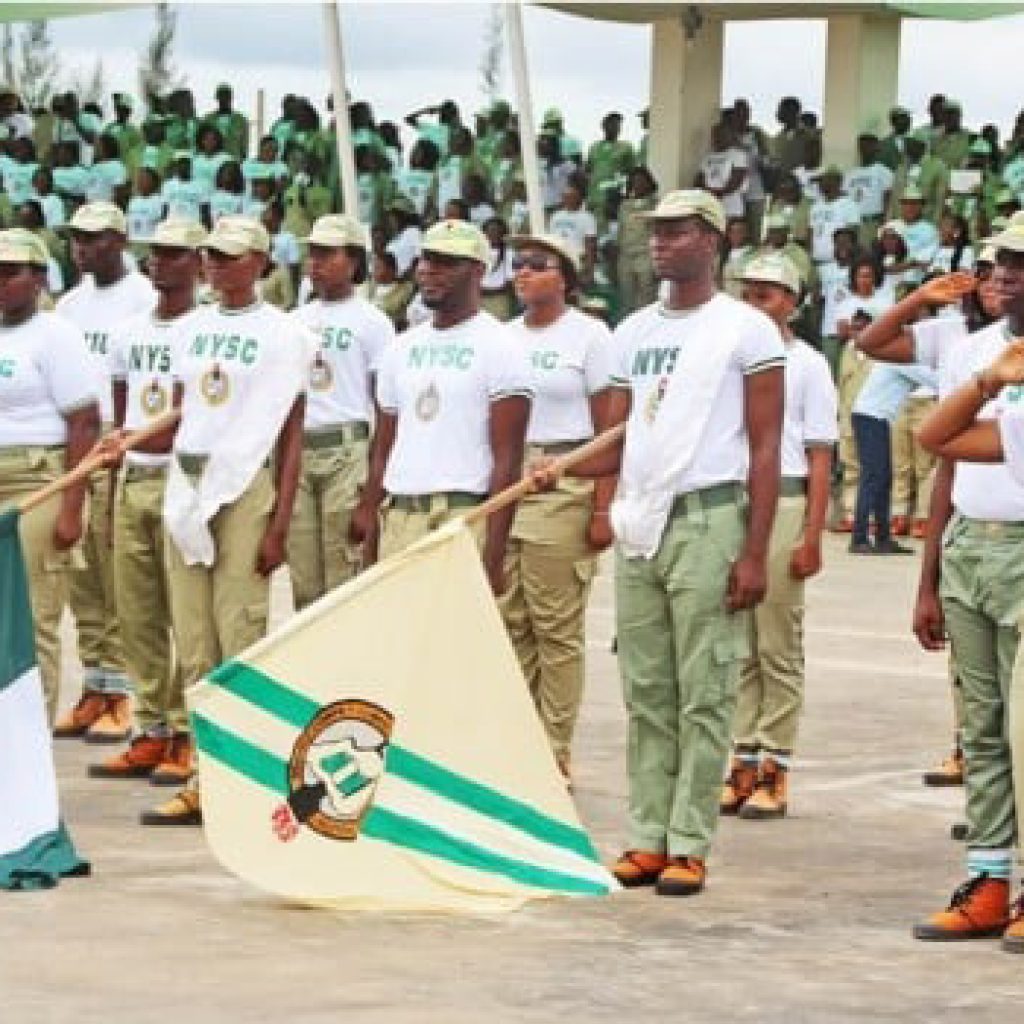
He said the Independent National Electoral Commission’s (INEC’s) permanent and ad-hoc staff, the National Youth Service Corps (NYSC) and electoral materials would be given adequate protection, warning that parents and guardians must caution their children and wards against being used to disrupt the electoral process because offenders would face “the full weight of the law.”
He also appealed to the media to guard against misinformation, saying new deployment strategies would be introduced to protect both the electorate and security personnel.
Declaring the training open on behalf of the IGP Disu, former Force Public Relations Officer (FPRO), CP Emmanuel Ojukwu (rtd), commended the Zonal command for the initiative.
“If you don’t train somebody, you don’t blame them,” Ojukwu told participants, stressing that officers deployed for the election must combine competence with strict political neutrality, and that no single agency could secure the polls alone.
In his goodwill message, the Air Officer Commanding (AOC), Logistics Command, Air Vice Marshal Abubakar Abdul Suleh, told personnel that elections were not routine political events but a direct test of Nigeria’s constitutional democracy, and that the burden of securing them fell on every agency in the room collectively.
“We are not participants in the political contest. We are guardians of the democratic environment in which that contest takes place,” he stated.
He warned officers against allowing personal, political, ethnic or religious considerations to influence their conduct on duty, insisting that their loyalty ran to the constitution, the Nigerian state and the citizens they had sworn to protect, not to any party or candidate.
Where the military’s support was lawfully requested to aid civil authorities, he said, troops stood ready to respond, but strictly within constitutional bounds and with due regard for the rights and dignity of citizens, adding that a reassuring military presence, not a heavy-handed one, was what would ultimately strengthen public confidence.
He went further to caution that the credibility of the entire security operation would not be judged only by the incidents personnel prevented, but by how much confidence Nigerians reposed in their professionalism and neutrality throughout the process, urging commanders to use the training to sharpen inter-agency coordination ahead of the polls.
The Director-General of IPSPR, Dr Charles Omole, set the tone for the training with a warning dressed as a proverb. “A ballot without a shield is a wish without a guarantee,” he said, describing election security as the oxygen of democracy.
He commended Jimoh for the initiative and urged other zonal police commands nationwide to replicate the model.
Omole explained the logic behind the train-the-trainer design, describing it as a force multiplier for democratic safety: one trained officer teaches dozens, dozens teach hundreds, and hundreds go on to secure millions of voters. Capacity that stops at the top of the command chain, he said, is half spent; it only becomes transformative when it travels downward to every officer who will stand watch on Election Day.
He warned that unpreparedness was not a neutral state but an active liability, insisting that an officer who is unprepared on Election Day fails not only himself but the millions of Nigerians whose democratic rights depend on his readiness.
The Resident Electoral Commissioner (REC) for Lagos State, Ayobami Salami, recalled an incident from the 2023 general election in Ekiti State in which a security operative, the only one left at a polling unit after hoodlums stormed in shooting, grabbed the ballot box and fled in a commercial taxi to keep it safe, was attacked by a mob that mistook him for a thief.
The officer was nearly beaten to death and set ablaze before Salami intervened to negotiate his release, and he was hospitalised for several days. “Either this man was not properly briefed, or he did not apply his briefing, “Salami said, describing the episode as proof that professionalism among deployed officers cannot be assumed; it has to be taught, and officers must understand that their safety comes first.
Among Guests at the opening were the Commissioners of Police (CPs) of Lagos and Ogun States, Fatai Tijani and Bode Ojajuni; a representative of the Lagos monarch, Oba Rilwanu Akiolu; activist Segun Awosanya; and the Lagos State Coordinator, NYSC.
Participants for the training were drawn from the police, military, Department of State Services (DSS), Nigeria Security and Civil Defence Corps (NSCDC), Federal Road Safety Commission (FRSC), Nigeria Immigration Service (NIS), Nigeria Customs Service (NCS), National Drug Law Enforcement Agency (NDLEA), Nigerian Correctional Services (NCoS), Federal Fire and Rescue Service, National Orientation Agency (NOA), National Youth Service Corps (NYSC) and the National Independent Electoral Commission (INEC).