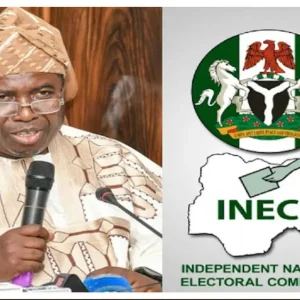
•Senate minority leader, Abba Moro
The Senate Caucus of the Peoples Democratic Party (PDP) yesterday said it is not opposed to the emerging coalition aimed at unseating President Bola Ahmed Tinubu in the 2027 elections — but insists on joining only if the coalition is party-driven and not led by individuals.
Addressing journalists after their meeting in Abuja, Senate Minority Leader, Senator Abba Moro (Benue South), said the Caucus believes political parties must coordinate any such coalition, reports Daily Trust.
“Senate Caucus of the PDP states that it is not adverse to the idea and ideals of coalition,” Moro said, adding that, “The caucus advises that any such coalition should be driven by political parties and not individuals.”
“As the largest of all opposition parties, the PDP’s umbrella is big enough to accommodate all persons desirous of coalition. Therefore, if a coalition becomes necessary, the PDP should drive it,” he added.
It was earlier reported that on March 20, key political figures, led by PDP’s 2023 presidential candidate Atiku Abubakar, former Labour Party presidential candidate Peter Obi, and former Kaduna State governor, Nasir El-Rufai, announced the formation of a coalition to challenge Tinubu’s re-election bid.
The announcement has sparked heated debate among stakeholders and analysts regarding the coalition’s viability. Following that, the PDP Governors’ Forum, led by Bauchi State Governor, Bala Mohammed, announced at a recent meeting in Ibadan that the party would not participate in any merger or coalition ahead of 2027.
Moro’s comment comes amid reports that Atiku is exploring the option of contesting on another party’s platform. Speculations are also rife that he and Obi have agreed to work together under the banner of the Action Democratic Congress (ADC).
Atiku’s media adviser, Paul Ibe, recently told our correspondent that while no power-sharing deal has been finalised, discussions are ongoing to build a credible alternative platform.
“The process is ongoing. A lot of ground has been covered. The focus now is on building a viable platform,” Ibe said.
The PDP Senate Caucus also dismissed claims that the party is collapsing, insisting it remains strong and is actively repositioning for the future.
“The current crisis in the PDP is not unique. Other opposition parties—and even the ruling APC—are facing similar internal challenges,” the caucus said in a statement.
It urged party members to remain steadfast and loyal, expressing confidence that the PDP would emerge stronger through ongoing internal reforms.
“The Senate Caucus of the PDP urges all our teeming members to remain resolute in their commitment, dedication and loyalty to the party. The series of activities lined up by the party leadership will breathe new life into the PDP and prepare it to compete effectively in future elections,” it said.
The lawmakers also stressed the importance of a vibrant opposition in a functioning democracy.
“The beauty of democracy lies in the existence of a robust opposition to hold the ruling party accountable. Celebrating the emasculation of opposition parties and a drift towards a one-party state does not advance democratic ideals,” they said.
“The PDP Senate Caucus is not averse to the idea and ideals of coalition. It believes that the synthesis of ideas and harmonisation of ideals only enriches democracy.”
NWC to South East: Reconsider PDP pullout threat
In a related development, the National Working Committee (NWC) of the PDP has appealed to the South East Zonal Executive to reconsider their threat to dump the party over the ongoing impasse surrounding the national secretary position.
The South East caucus last week nominated a former PDP National Youth Leader, Sunday Ude-Okoye, to replace Senator Samuel Anyanwu, who has been at the centre of controversy. They warned that any attempt by the PDP to disregard their choice would trigger mass defections from the region.
Yesterday, Senate Minority Whip, Senator Osita Ngwu, presented the zone’s communiqué to the NWC at the party’s national headquarters in Abuja, reaffirming the South East’s unified endorsement of Ude-Okoye.
Acting National Chairman Ambassador Umar Damagum and several NWC members were absent, but Deputy National Chairman (South-West), Taofeek Arapaja, who stood in for Damagum, responded to the delegation.
He assured the stakeholders that the issue would be deliberated at the next NWC meeting and a resolution would be forwarded to the National Executive Committee (NEC).
“We will do justice to the matter. But when we transmit it to NEC, we believe that together, we will find a lasting solution,” Arapaja said.
Addressing the visibly frustrated South East leaders, Arapaja pleaded for patience and urged them to remain in the party.
“You didn’t mention your withdrawal threat here, but I believe everyone has read it. I understand your frustration. However, leaving your own house because it’s leaking is not the answer. Together, we can fix the problem.”
Earlier, Senator Ngwu urged the party leadership to consider the South East’s request based on established precedent and the region’s loyalty to the PDP over the years.
“We are not here to give orders but to make an appeal for the growth of the party,” Ngwu said, adding that, “This zone has delivered governors, National Assembly members, and stood by the PDP even in difficult times. We are eager to redeem our past glory.”
He stressed the importance of taking a decision that would rebuild morale and confidence in the party.
“We’re appealing to your conscience. Let the decision taken be one that supports our recovery as a party. Let it lift the morale of members and show that the PDP still belongs to the people.”
‘NEC to decide Anyanwu, Ude-Okoye fate’
Meanwhile, a ranking member of the PDP’s NWC, who spoke to our correspondent anonymously, said the crisis over the party’s national secretary will ultimately be resolved by the NEC regardless of what the Saraki committee recommended.
He said committee is to “straighten some of the challenges the party is facing — like the issue of the National Secretary, the issue of the convention itself, and the issue of zoning that we have agreed on. Those are the things that he is supposed to midwife, to build understanding among stakeholders.
“Like the Bauchi governor said, so that the party can have a rancour-free NEC and convention. You know, Saraki was one-time chairman of the reconciliation committee of the party. This committee is just like an implementation group. Because of the pervasive issues, we needed somebody who is neutral to both parties to midwife some of these arrangements, starting with the issue of the National Secretary.”
On the Supreme Court judgement which nullified the lower court orders used to appoint Sunday Ude-Okoye as acting National Secretary, the NWC member said those opposed to Anyanwu’s return were twisting the interpretation of the ruling.
“What Saraki and his committee are expected to do is get the aggregate opinion of members and act accordingly. The legal adviser has advised the party that it should adhere to the Supreme Court judgement. What brought Ude-Okoye was the two judgements of the lower courts in Enugu. Now that those decisions have been set aside, why should Anyanwu not continue as Secretary?
“Even if you don’t like Anyanwu, the constitution of the party says only NEC or the convention can remove him. There is nobody who has the power to make another person Secretary except NEC. The Deputy Secretary can only act when the National Secretary is not around — but he is around. The problem is that many people are not reading the constitution.”
The source also pointed out that the attempt to bring in Deputy National Secretary Setonji Koshedo as a replacement lacked full NWC backing.
“The move for Setonji Koshedo to act in place of Anyanwu was not a unanimous decision by the NWC. It was a recommendation they sent, and it was refuted by the legal adviser. As it is now, if Anyanwu challenges any action that Koshedo takes, I’m telling you the party will be in trouble. Sometimes, people are bringing sentiments into all of this. The party is guided by its constitution.”
He reiterated that the NEC has the authority to act on the matter, but must follow constitutional procedure.
“NEC has powers to do everything — except constitutional amendments, which are reserved for the convention. But NEC has powers to remove Anyanwu, if we go to NEC and adduce good reason. Because constitutionally, he was not barred from contesting the election.
“Saraki has asked Anyanwu to go back to work. He based his argument on the legal advice he got from the Legal Adviser. But some members of the NWC are not happy with it, because they have interest. A lot of people have interest. Everybody has interest in this matter.”
On the position of the South East, the source maintained that the NEC would ultimately determine the outcome.
“So what we are saying is, why can’t they wait for that NEC? When the NEC comes, then they bring their recommendation — that they want to remove Anyanwu and put this person.
“It’s as simple as that. Because NEC has power to actually make that change. Yes, NEC has those powers. But what remains is that you need to get the aggregate number to do this change. That’s just what remains.”