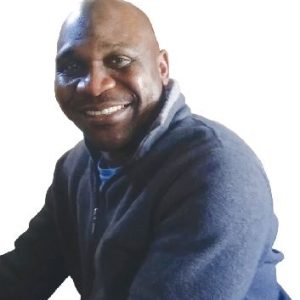


Rufus Akinyemi is a professor of geriatric neurology and translational neuro-science and the lead for the African Dementia Consortium. In this interview, he speaks about the unique reasons more Nigerians may develop dementia, a brain degeneration problem due to increasing psychoactive drug use, as well as the increasing incidence of social isolation, hypertension, low education among other factors that are strongly associated with memory problems and dementia in Nigeria, reports Nigerian Tribune.
Excerpts:
Across Africa, too many elders living with dementia are misunderstood, stigmatised or even accused of witchcraft. What exactly is the problem?
To begin, the commemoration of the World Alzheimer’s Disease and Other Dementias in the month of September every year is basically to raise awareness and advocate for policy, inputs and other initiatives from everybody – families, governments, and NGOs. It is to raise the bar in the fight against dementia.
Now, across Africa, there are many elders living with dementia. They are misunderstood and stigmatised, and sometimes they are accused of witchcraft. No doubt, the African population is ageing. Statistics for every country show that by the year 2050, the absolute number of older people will be multiples of what we have at the moment. That means that ageing-related diseases, including dementia, are also going to be on the increase.
Historically, on the continent, people who have dementia have been stigmatised. Stories are told of some of them being stoned to death, burnt or attacked because they were said to have made confessions. So they are thought of as witches. Why is this true in Africa? This happens because the brain has failed. People with dementia lose their cognitive competencies in multiple domains to engage reasonably and independently with themselves and the environment.
The domains of thinking, remembering, taking in information, connecting with the environment, language, memory, knowing how to get around, and executive function – some or all of these may be impaired depending on the level of severity of the disease.
Then beyond this, people now develop what we call behavioural and psychological symptoms of dementia. They may become anxious, agitated, aggressive, apathetic or even depressed. They may develop what psychiatrists call delusions and hallucinations. They may become paranoid too. They become suspicious. So the confessions and other expressions of these behavioural and psychological symptoms of dementia are termed to be characteristics of people with witchcraft.
And those symptoms get worse as the person moves from the mild stage of the disease to moderate to severe. As such, you may find such people wandering around; they may go naked. However, those behaviours are expressions of somebody who is sick in the mind. It is like somebody having malaria, and you treat it with antimalarial medicine. So those expressions can also be treated.
What are the common symptoms of Alzheimer’s disease, and how do they differ from normal ageing?
Dementia essentially describes individuals who have impairment in their cognitive functioning that is severe enough to hinder their ability to function independently, whether at home, at work or in any other setting. They will need to be supported by others to perform activities of daily living.
Alzheimer’s disease is the most common type of dementia. And what happens in Alzheimer’s disease is that the brain cells and tissue begin to break down and then begin to accumulate waste products that should have been flushed out of the brain. These wastes, called ‘amyloid plaques’, clog the small blood vessels in the brain and also trigger the development of ‘tangles’. Then the brain begins to shrink. That is what we see in Alzheimer’s disease.
Globally, of every 10 cases of dementia, about 7 to 8 will be Alzheimer’s. However, only 5 to 6 of every 10 cases of dementia in Africa will be as a result of Alzheimer’s.
The vascular type of dementia, the type that is due to inadequate blood supply to the brain, constitutes about 2 to 3 out of 10 in Africa.
Vascular dementia is due to a chronic occlusion of small blood vessels that supply blood to the brain.
Everybody undergoes ageing. In fact, some books say that from the age of 40, ageing starts to take place in virtually all the organs of the body. When the brain ages, what we see is also its slow shrinkage over time. The brain may accumulate some waste products, too. But all these happen at a faster and higher rate in Alzheimer’s disease.
But in normal ageing, despite those changes, the person is still able to maintain normal functioning of the brain.
In normal ageing, the individual may sometimes experience benign forgetfulness. Even younger people forget things if they are not concentrating and have things on their mind. So it is allowed. So normal ageing may be accompanied by a general slowing of the body and mind.
But when you have a person who, in addition to forgetting things, begins to have difficulty with taking initiatives, begins to have behavioural changes, begins to misplace things, and begins to have problems with. He cannot name, maybe, his wife or children or children’s children. You know that this is something that is more than normal ageing.
So an individual manifesting these features needs to be evaluated to know if this is dementia or not. And if it is dementia, then you take appropriate action to treat and also to prevent further deterioration.
What are the known risk factors for Alzheimer’s disease? What do individuals need to do to reduce their risk of the condition?
The Lancet Commission for Dementia Care and Prevention recently made a list of 14 risk factors for dementia, which are agreed to be of global importance worldwide.
Risk factors can be classified as non-modifiable and modifiable.
The non-modifiable risk factors include getting old, sex and family history or genetic factors. Those are risks that you cannot do anything about. Someone with a dementia gene can pass it on to their offspring. Getting old is also a natural process.
But the modifiable risk factors are legion. The 14 topmost of all these modifiable risk factors include depression, air pollution, less education, obesity, hearing loss, excessive alcohol consumption, smoking, head injury and hypertension.
Others are physical inactivity, social isolation, diabetes, vision loss and high cholesterol.
An individual can reduce their risk of coming down with dementia by half by preventing or tackling all those 14 risk factors.
Now, these modifiable risk factors can be classified into three broad groups: early-life factors, midlife factors and late-life factors. Low education is an early life factor. The fewer the number of years of education, up to a certain age, the higher the risk of dementia. The more you use the brain, the better it is for it. By engaging the brain in a very positive way, you build new networks; you help the brain to develop what we call ‘cognitive reserve’.
Midlife factors, which are from 25 years to 60 years of age, include conditions like obesity, hearing loss, poor physical activity, depression, traumatic brain injury, smoking, excessive alcohol, hypertension, diabetes, high cholesterol, and physical inactivity.
In the Western world, obesity is a risk factor for dementia. On the contrary, in Nigeria, weight loss/underweight is a risk factor for dementia. Being steadily overweight was found to be protective against dementia in Nigeria.
That weight loss is a risk factor may just be an indication of something going on in the body associated with dementia. For instance, if somebody is demented, the person may lose appetite. But it is something that we found here that is unique to the African environment in general.
Factors that are important in late life include social isolation, air pollution and visual loss. These are factors that are very prominent in late life. Visual impairment is shown to be a very important risk factor in older persons in late life. Also important are sleeping problems like sleep apnea and insomnia that have also been shown to be strong risk factors for dementia in some studies.
So, in preventing Alzheimer’s disease, there are two broad approaches. One is to take measures that will obviate those 14 modifiable risks for dementia as stated by the Lancet Commission for Dementia Care and Prevention. The other approach is to engage in cognitively engaging activities that can help build ‘cognitive reserve’. Such activities include learning/speaking multiple languages, physical activities, learning new things or new skills, staying socially connected, etc.
About how many Nigerians are affected by dementia? Is its incidence on the rise from what you see in the clinic?
From a systematic review of studies in Nigeria, the average prevalence of dementia in Nigeria is put at about 5% in people who are 60 years old and above. The population of Nigeria is currently about 220 million. The proportion of the population that is above the age of 60 is about 5 per cent. That comes to, like, about 500,000 individuals who are living with dementia in Nigeria. So that’s a very modest estimate.
But the question is, where are these 500,000 individuals? We know that, globally, 75 per cent of people living with dementia are not diagnosed. In fact, in low-and middle-income countries, up to 90 per cent of cases are not diagnosed in healthcare settings. Some may not even be aware that they even have the condition. Some families think, “Oh, the man is getting old.” People mistake dementia for normal ageing. And that’s why a formal diagnosis is vital.
But there are challenges with diagnosis. Part of it is poor recognition of the symptoms of dementia, confusing it for normal ageing. Two is that we don’t have enough experts. If they meet a doctor or a health practitioner who doesn’t have expertise in picking the symptoms, they just explain the symptoms away.
Oftentimes, we also do auxiliary investigations to confirm diagnosis, like brain scans and some blood tests. Some of these tests are not readily available because of poor infrastructure.
Most of the time, a very high index of clinical suspicion is used to make the diagnosis in the environment. Then, people also have poor health-seeking behaviour.
For cases that are diagnosed, people only bring them to the hospital when they are in advanced stages. That is when the family feels that they cannot cope any longer.
So, that also accounts for very low diagnosis, apart from the poor awareness about dementia.
And of course, people can’t afford a lot of health care services. Ideally, these are conditions that primary health care workers should be able to pick up its symptoms and then refer such cases to higher levels of the health care structure. But our referral system is weak. Similarly, emigration of health workers has had an impact on early detection, diagnosis, and treatment of dementia.
Are there resources for individuals and families affected by Alzheimer’s disease?
It’s very important for people to be aware of the condition; it’s very important for early diagnoses to be made and treatment to be available for the persons. Now, dementia is a condition that requires that the person who is sick needs assistance from caregivers, who may be family members. Although the trend is changing now, homes are springing up with people trained to provide care for the elderly and those with dementia.
Also, caregiver training and resources to empower caregivers are being offered. In other climes, there are paid caregivers.
However, governments and healthcare workers must all partner together to improve access to diagnosis, care and rehabilitation for people living with dementia. Not one single person or group can do it. It has to be a collaborative effort of all stakeholders.
Can you share the latest research findings on dementia from your group?
Currently, there is ongoing cutting-edge research being undertaken in Nigeria. Some of these efforts are being led by us from the Neuroscience and Ageing Research Unit of this Institute for Advanced Medical Research and Training at the College of Medicine of the University of Ibadan.
We have been undertaking two studies in 10 African countries that have a goal to unravel those genes that are associated with Alzheimer’s disease and other related dementias in people of African ancestry. It is in partnership with researchers from the global north and specifically with the research team of Professor Margaret Pericak-Vance from the University of Miami, USA. They are known as the READD-ADSP and ORIGINS studies.
Here, in Ibadan, through a study acronymed ‘VALIANT’, we are researching the risk factors for dementia locally and the number of people that are affected to see whether things have changed from the previous study that was done at Idikan by the Ibadan-Indianapolis group over 20 years ago. We want to know if there are new risk factors that were not there or picked up then.
There’s also a third piece of research looking at how we can reduce the risk of dementia. It’s known as the African Fingers Study, and it’s currently being implemented in two African countries, Kenya and Nigeria.
In Nigeria, we have four centres, including the Lagos University Teaching Hospital and UCH Ibadan. The goal of this trial is to see what interventions we can put in place to reduce the risk of dementia in the long term in our environment.
The fourth study, acronymed the ISAVRAD Study, is looking at dementia-like changes in the brains of people who suffered COVID-19 during its outbreak five years ago. There are suspicions that COVID may trigger some degeneration in the brain. But we’re not very sure. We focus on people who are 60 years and above. We want to know whether it’s going to increase the likelihood of dementia or not in them. All these are to better understand the subject of dementia in our own environment.
Emerging findings in our study, including social isolation, hypertension, low education, living alone, and poor hand grip strength, are factors strongly associated with memory problems and dementia in Ibadan. This means that we must ensure people are socially connected. We must ensure that there is social engagement. Nutritional factors are also being implicated as well.