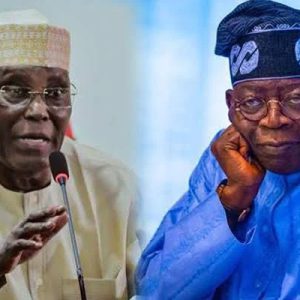
•Ajaero, Tinubu and Osifo
As Nigeria prepares for negotiations for a new national minimum wage, Organised Labour and other critical stakeholders have tasked the federal government to ensure a hitch-free negotiation process that would result in a timely agreement and implementation of the new wage.
They noted that considering the socio-economic crises bedeviling the country, especially with the removal of fuel subsidy, President Bola Ahmed Tinubu should keep to his promise of alleviating the sufferings of Nigerians by ensuring that the implementation of a new national minimum wage is achieved within the specified time frame.
Tinubu had in his New Year live broadcast, promised to alleviate the sufferings of Nigerians and vowed to implement the new minimum wage, which is due in April this year, reports The Guardian.
However, organised labour had faulted the federal government for not demonstrating sufficient commitment towards the actualisation of its promises, part of which is the inauguration of a minimum wage negotiation committee, supposed to have been unveiled in November 2023, as agreed on October 2, 2023 at a meeting with the labour unions.
They alleged that the Tinubu administration had developed a reputation for breaching promises and advised the government to “walk the talk” in the new year as the negotiation process commences with a tripartite committee, which comprises the government, labour and private sector employers.
However, giving assurance that the committee would soon be inaugurated, the Minister of State for Labour and Employment, Nkeiruka Onyejeocha, recently said the challenges to the implementation of a new wage would soon be addressed.
The battles for national minimum wage in Nigeria by organised labour date back to 1981 during the civilian government of Shehu Shagari when the government approved N125 per month as against the N300 demanded by the Nigeria Labour Congress (NLC) under the leadership of Hassan Sunmonu.
From 1981 to date, or at least April 18, 2019, when the subsisting N30,000 national minimum wage took effect, the battle for national minimum wage had never been seamless or without a fierce ‘fight’ between the government, private sector employers and organised labour.
It was gathered that in 38 years, no minimum wage was achieved or gotten on a platter of gold in Nigeria.
During this period – 1981 and 2019 –, there were about six national minimum wage reviews: 1981 (N125), 1990 (N250), 1998 (N300), 2000 (N5, 500 and N7, 500), 2011 (N18, 000) and 2018 (N30, 000).
As workers’ welfare is the responsibility of governments across the world through fixing and regulating of the national minimum wage, stakeholders believe that for the Nigerian government to address the perennial minimum wage problem and be seen as fulfilling its obligation according to the standard set by the International Labour Organisation (ILO), it must urgently put in place an acceptable mechanism for fixing and regulating the national minimum wage in the country to cushion the effect of the hike in petroleum products on which the national economy largely depends.
They argued that despite the 2019 Wage Act, which stipulates a five-year wage review period in the country by the Tripartite Committee on National Minimum Wage (TCNMW), Nigeria was yet to establish an effective mechanism to manage national minimum wage matters seamlessly without threats, warning strikes and actual strikes by labour.
For instance, Paul Opone and Kelvin Kelikwuma, in their analysis, alleged that politics characterised the 2019 national minimum wage negotiations and implementation, which they described so far as the most prolonged in Nigeria’s history.
They argued that the absence of functional standing machinery with a focus on labour economics deciding the condition and time for a minimum wage review remains the main bane in government-labour frequent face-off in Nigeria, which has negatively impacted harmonious industrial relations.
According to them, industrial actions have become one action too many because of the government’s political approach to labour demands.
As Nigeria prepares for another round of negotiation, the duo told our correspondent that it was high time the Nigerian government developed a salary adjustment template controlled by an index factor that automatically increases workers’ minimum wage by a certain percentage whenever the need arises.
This, they said, would eliminate the usual prolonged negotiations, ultimatum, strike actions and no work, no pay regime that has constantly characterised national minimum wage fixing and regulation in Nigeria.
Besides, they noted that the national minimum wage should serve as a benchmark for states and their labour unions to negotiate as is the case with true federalism so as to pave the way for harmonious industrial relations in the country.
The duo called for a mutual understanding among all stakeholders to ensure that they arrive at a minimum wage that is commensurate with the prevailing cost of living.
They described 2023 as an unpleasant year dominated by the removal of fuel subsidies, higher inflation that affected real disposable incomes and devaluation of the naira, among others.
“The removal of subsidies on petroleum products further worsened the challenges faced by working people, which unleashed severe pain and contributed to galloping inflation even as it increased inequality and poverty,” the duo said.
The labour experts believe that the quest for a wage system that is sufficient to provide a decent living for workers and their family members was crucial.
They argued that the urgent need for a pay rise for Nigerian workers is no longer debatable, especially with more than 300 per cent increase in the price of Premium Motor Spirit (PMS), devaluation of the naira and increase in prices of goods and services, among others.
Calling for a minimum wage commensurate with the prevailing cost of living, they emphasised that a well-motivated and well-remunerated workforce has a positive impact on productivity and national development.
According to them, the pursuit of a national living wage is not merely an economic necessity, but also a moral imperative.
NLC President Joe Ajaero
In setting an agenda for the negotiation, President of the Nigeria Labour Congress (NLC), Joe Ajaero, said he hoped that the content of the new minimum wage would approximate a living wage, whereby the government would see it as an opportunity to put in standards that would ameliorate most of the sufferings it foisted on Nigerian workers because of the ‘subsidy is gone’ policy.
He noted that until the wage negotiation committee is inaugurated, he could not attest that the mechanism for negotiation has been fully activated.
Noting that the federal government was still dilly-dallying on the matter, he said the inauguration must be done before the committee goes into the indices and contents of the minimum wage fixing process.
He said the minimum wage is supposed to approximate a living wage as a standard mechanism, noting that a national minimum wage that does not achieve that is a ruse, because “your wage is supposed to take you home and meet the basic cost of living.”
Ajaero added: “The FG has to do well to ensure we all agree to a national minimum wage that approximates to a living wage. We expect a living wage this time and not something they just sit down and fix. It must be negotiated based on the cost of living.”
Factoring the Consumer Price Index (CPI), inflationary rate, exchange rate and poverty rate, Ajaero said Nigeria must take cognisance of the United Nations (UN) principle that says a person is not supposed to live below $2 a day.
He explained that in the Nigerian context, an average family of six, comprising four children and parents, is not supposed to live below $12 per day.
Breaking it down with an exchange rate of $1 to N1000, he said: “Multiplying it by 30 days, it means $360, which approximates to N360,000 equivalent. Looking at international rates, then we should be talking of nothing less than N360,000 so that we will not be brewing poverty; so that we will not have an increasing number of working poor as experienced in Nigeria.
“The minimum wage is expected to do all of these and take care of workers. When you increase the income of workers via salary, what it does is that it will send a signal for manufacturers to increase their production and it will also go down in inventory; they will employ more people. That will rev up the economy.”
Ajaero said what is going to propel a national minimum wage negotiation process is going to be based on the objective realities that confront Nigerian workers and the nation.
According to him, any minimum wage below the UN poverty line impoverishes and enforces poverty.
The NLC chief said the minimum wage is supposed to lift people out of poverty and not to perpetuate them into poverty.
“We expect that by March we would have had a minimum wage agreement forwarded to the National Assembly and passed into law. We also need the minimum wage to expand more coverage of this in the informal sector. We need a mechanism that will cover them.
“I can’t be buying a bag of rice for over N60,000 and you pay me N60,000 as minimum wage. Is it only rice that I and my family will eat for the whole month? I can’t be paying tuition fees of over N200,000 and you pay me a minimum wage that cannot take care of my children’s school fees, including rent, feeding and other basic requirements. My salary is supposed to take care of these and any salary that cannot meet the basic requirements fall short of what is required and what a national minimum wage is supposed to be.
“The NLC has set up a technical committee that has done work around all aforementioned parametres to determine the demand we will put forward to the federal government so that our demand will not be based on frivolities but on living facts,” he added.
The Chief Executive Officer, Centre for the Promotion of Private Enterprise, Dr. Muda Yusuf, said the emphasis should be on how to stabilise the macroeconomic environment.
He said Nigerians needed to see an economy where the purchasing power is stronger and where whatever workers earn should be sufficient for them to be able to meet their basic needs.
He stated that pushing up the amount that people earn has not significantly enhanced their standards of living.
“We need to look beyond it and ask questions like what can the government do to ensure workers’ salaries can buy more. What can the government do to take off pressure from the citizens like pressure of paying school fees at all levels? If the government was investing well in education, we would have many people benefitting from free education up to the secondary level. With this, people will not be stressing themselves about going to private schools. It is putting a lot on the family budget,” he said.
The economist urged the government to make education more affordable and possibly free, particularly at primary and secondary school levels.
“There has to be a window for the children of the poor, for them to be able to go to school without putting too much pressure on them. Spending on that area by the government will relieve the workers.
“There is the need to strengthen our health insurance, where every worker would be covered so they don’t pay out of their pockets to access care. That will relieve the workers. Then housing; there is a need for social housing schemes, which low-income earners can comfortably afford. The government has to come down on the policy on costs such as basic food and transportation that are heavily subsidised. These are some of the things labour should put on the table apart from wage,” he said.
The Deputy President of the Trade Union Congress of Nigeria (TUC), Dr. Tommy Okon, noted that the reality was very clear amid the socio-economic challenges posed by the removal of subsidies, high cost of living and rising inflation.
Aggregating these, the TUC chief maintained that there must be a central point or an equilibrium of understanding where there would be an interplay to see that the national minimum wage takes into account sectors like education, housing and health when it comes to life-threatening illnesses not covered by the National Health Insurance Authority (NHIA).
NLC protest over new minimum wage
He said: “If you pay N200,000 as minimum wage and you are paying so much for public services, such as transportation and housing sectors, it therefore means you have gained nothing. So, the living wage must be able to address those sectors. Let there be interventions.
“Government must also carry out the intervention in the education, transportation, health and housing sectors. Taking these into consideration will reduce inflation and enhance the purchasing power of a worker that will have a spillover on the generality of the populace.”
Realistically, a public affairs analyst, Jide Ojo, canvassed for a N50,000 to N60,000 minimum wage, stating that labour agitating for a very high minimum wage may lead to organisations retrenching workers to be able to meet up.
He said the wage committee should be constituted early enough, adding: “Let the partners, the private sector and the government demonstrate the political will and reality of their existence. There is no point labour raising wages to N200,000 when you know it would be very difficult for the government to pay. The reality is that the economy is running on deficit.
“We need to be careful in setting too high a minimum wage. We need to understand that states are not equally endowed and what one can afford, others might not.
“With the wage implementation due for April 1, we hope that whatever is added cannot be withheld administratively. It still has to be sponsored as an Executive Bill to the National Assembly, where the two chambers have to pass it before it becomes operational. If you don’t want them to do hurried work, you have to give them sufficient time,” he said.
In his submission, a lawyer and expert in labour matters, Paul Omoijiade, maintained that since the increase in the price of fuel, the purchasing power of workers in terms of their wages and salaries has been adversely affected.
Noting that the rate of inflation has gone up, he added that as wage negotiation begins, there should be an increase commensurate to workers’ wages to cushion the effect.
Omoijiade stated that in the long run, the government has to put in place measures to inflate the economy.
He added: “No matter the increase in wages, it will be eroded if there is no improvement in inflation, productive sectors and the cost of production. The productivity of labour must also be taken into account. Some variables make labour to be productive in terms of the right tools, right training and exposure and environment for labour productivity to thrive.
“In the educational sector, there has to be synergy between the universities and polytechnics and other tertiary institutions, as well as the industries and services sector so the economy can be better off for it.
“The government needs to invest in the education sector and health sector. Workers do not need to go abroad before they can access good health care. These are some of the things they should aggregate and look at holistically for the economy to witness a boost.”