•Tinubu and Atiku
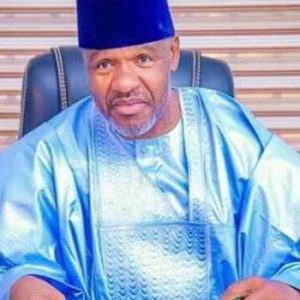
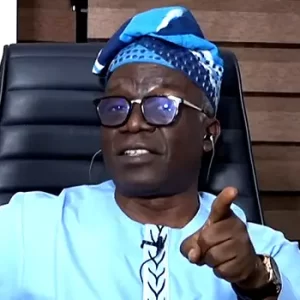
As politicians in opposition parties step up coalition talks ahead of the 2027 general election, this article examines the various questions surrounding the viability of the planned coalition and whether it is well-positioned to defeat the ruling party, reports Sunday Tribune.
As Nigeria prepares for the 2027 general election, the political landscape is gradually shifting in anticipation of what many believe would prove to be a fierce contest.

The major political players, including incumbent President Bola Tinubu, former Vice-President Atiku Abubakar, and other political bigwigs are regrouping to put themselves in the best position to win.
Despite the APC’s recent bragging rights over swelling its ranks with high-profile defectors from the main opposition, including sitting governors from Delta and Akwa Ibom states, frantic efforts are still underway by powerful political figures to oust President Tinubu.
While Tinubu continues to fortify the All Progressives Congress (APC) with a steady stream of newly elected members joining almost weekly, the opposition front remains fractured.
Atiku Abubakar, alongside his allies in the Nigeria National Coalition Group (NNCG), including former Kaduna State governor Nasir El-Rufai and ex-Minister of Transportation Rotimi Amaechi, is still scrambling to secure a viable political platform for their coalition, revealing a contrast of momentum and coordination between both camps.
With the Peoples Democratic Party (PDP) continuing to haemorrhage elected members in recent months, many critics of the Tinubu administration are looking forward to a coalition of opposition parties to take on the APC in 2027.
Although there were reports that the coalition had settled on the All Democratic Alliance (ADA), which recently wrote to the Independent National Electoral Commission (INEC) for registration as a political party, the major stakeholders, including Atiku, have disowned the ADA, saying they are yet to decide on a platform.
As the coalition forces plot to unseat the APC in 2027, the crucial question is whether they have the capacity to defeat an incumbent party.
Notably, most Nigerian elections since the advent of the Fourth Republic in 1999 have featured attempts at opposition coalitions trying to unseat the ruling party, but such efforts have rarely succeeded.
The rare exception came in the 2015 general election, when the APC — a coalition of Nigeria’s three largest opposition parties: the Action Congress of Nigeria (ACN), the Congress for Progressive Change (CPC), and the All Nigeria Peoples Party (ANPP), along with a breakaway faction of the All Progressives Grand Alliance (APGA) and the New PDP, a faction of the then-ruling PDP — won a landslide victory in federal and state elections.
Past Failed Coalitions
The APC victory was an outlier in a long history of coalition failures. In the build-up to the 2011 presidential election, the ACN and the CPC failed to agree on how to choose a joint candidate to run against President Goodluck Jonathan’s PDP. The coalition talks were scuttled by competing interests between then-General Muhammadu Buhari, the CPC candidate, and ACN leaders.
The ACN National Chairman, Chief Bisi Akande, accused the CPC of not demonstrating “sufficient seriousness and political will to forge a workable electoral cooperation.”
Buhari reportedly asked Nuhu Ribadu, the ACN presidential candidate, to withdraw from the race and allow him to be the candidate for both parties, but Ribadu declined, arguing that since Buhari had been head of state and run for president twice without success, it was time for a younger person to take the lead. The disagreement ended without a resolution at a meeting in Kaduna State.
The failure of these alliance talks showed the difficulty of forming political coalitions in Nigeria, where political heavyweights are often reluctant to sacrifice personal ambition for a collective goal.
Beyond competing interests, poor organisation has also led to failed alliances in the past.
In its bid to unseat Buhari’s APC in the 2019 general election, the PDP signed a Memorandum of Understanding (MoU) with 38 opposition parties under the Coalition of United Political Parties (CUPP). The MoU, signed in July 2018, less than a year before the election, was criticised for being too late.
Former Senate Deputy Minority Leader, Senator Olorunnimbe Mamora, predicted that time would work against the coalition’s success, noting that the APC’s success in 2015 took nearly four years of preparation.
“Where is the time for the coalition to put its acts together? Unlike the case of the APC, the plan for the merger started much earlier, immediately after the 2011 general election,” he said. “The party was registered in 2013, almost two years ahead of the 2015 elections. The party had ample time to put a structure on the ground; draw up a programme and sensitise Nigerians on what it stands for.”
Eventually, the coalition failed as Buhari was re-elected easily, winning over 55 per cent of the vote and defeating Atiku by nearly four million votes. The results indicated that the opposition was not well-positioned to convince the majority of voters, despite the perceived failures of the ruling APC on critical national issues such as the economy and security.
Why the APC Succeeded
The APC succeeded where other alliances had failed by recognising the importance of political structures. According to insiders, the alliance was anchored on two pillars: Buhari’s broad-based appeal in the North and Tinubu’s political infrastructure in the South-West. Their position was strengthened by the defection of several governors and key figures from the PDP, weakening the ruling party.
Importantly, Tinubu shelved his presidential ambitions to support Buhari, a sacrifice that ensured unity within the new party.
Even when stakeholders such as former Senate President Bukola Saraki blocked efforts to make Tinubu Buhari’s running mate, he remained loyal to the team.
Stakeholders credited the party’s unity as the glue that kept the coalition intact and primed it for success. “Everyone was a team player,” an insider said. Even Atiku, who left the PDP when Jonathan was seeking re-election, contested the APC primary, lost to Buhari, and backed him in the general election.
British political scientist Nic Cheeseman described the APC’s 2015 victory as proof that a united opposition can defeat an incumbent.
“The most obvious lesson from the Nigerian election is that opposition unity is critical if an established incumbent is to be defeated,” Cheeseman said. “In the Nigerian context, the APC’s success was rooted in the construction of a broad coalition that brought together a powerful alliance of leaders with established profiles and political networks in different parts of the country.”
The unity enjoyed by the APC in 2015 has often been lacking among opposition parties. In the 2023 presidential election, the ruling APC won with less than 37 per cent of the vote, thanks to divisions among the PDP, Labour Party (LP), and New Nigeria People’s Party (NNPP), which together secured 60.7 per cent of the vote.
The results signalled that a united opposition could have defeated an unpopular ruling party, but competing interests among opposition figures dashed hopes of an alliance. Consequently, Nigeria elected a president with the lowest percentage of votes in its democratic history.
Is Tinubu Vulnerable to Defeat?
Learning from the joint losses of 2023, major opposition leaders are now betting on a coalition as a viable path to victory. They are also counting on what they perceive as Tinubu’s vulnerabilities.
On the second anniversary of the Tinubu administration, Atiku declared: “In just two years, President Bola Ahmed Tinubu’s administration has proven to be one of the most incompetent, disconnected, and anti-people governments in Nigeria’s democratic history. No previous administration has inflicted this level of hardship on the masses while showing such disregard for transparency, accountability, and responsible leadership.”
Similarly, Peter Obi, the LP’s 2023 presidential candidate, widely considered a key figure in any successful 2027 coalition, recently criticised the president for failing to stem rising insecurity.
“With the brutal killings of over 100 people in Zamfara, including our revered military men, Mr President, it is time to accept the inevitable truth and act decisively,” he wrote on social media last week.
“We cannot continue like this. It is time to prioritise the security of lives over infrastructure projects.”
Yet, the lingering crises may not prove powerful enough to cause a defeat for Tinubu. Jonathan’s loss in 2015 followed a string of major issues, from insecurity to corruption allegations that the opposition elements latched on to mount noisy propaganda.
The 2014 abduction of nearly 300 Chibok schoolgirls by Boko Haram triggered local and global outrage and boosted the perception pushed by the opposition that the president was not competent enough to fix the security crisis. The #BringBackOurGirls campaign, supported by figures including U.S. First Lady Michelle Obama, intensified the political pressure on Jonathan.
In contrast, Buhari’s candidacy was buoyed by a touted anti-corruption reputation.
Cheeseman noted: “The second lesson to take from the Nigerian elections is that as much as effective oppositions win elections, governments lose them.”
So, the 2015 defeat of an incumbent showed that a vulnerable president can lose. For Atiku’s coalition to beat Tinubu, who enjoys the powers of incumbency, including control of federal institutions, influence over INEC, access to state resources, and the backing of APC governors, it needs Tinubu to be vulnerable, but it also needs to capitalise on his perceived failures.
While ongoing insecurity in the Middle Belt and economic hardship are severe challenges for Tinubu, it is worth noting that Buhari also struggled with insecurity and economic tensions ahead of the 2019 elections, yet still secured re-election.
Thus, political analysts argue that merely highlighting Tinubu’s failures is not enough; the opposition must present a credible and unified alternative.
Appearing on an Arise Television programme, which was monitored by our correspondent, last week, former presidential aide Dr Hakeem Baba-Ahmed expressed doubt over the coalition’s readiness. “It’s the wrong approach. They meet, agree among themselves, and say, ‘We’ve decided this one will be this, and that one will be that.’ Then they invite Nigerians in. That’s not how to build a credible opposition,” he said.
Baba-Ahmed also accused the coalition of lacking vision and meaningful engagement with national issues.
“Where is the vision? Where are the younger Nigerians who should be leading this country? Where is the concern that violence is destroying our communities? Politics should be about the people, not just about getting rid of President Tinubu,” he said. “Unless opposition leaders put forward a clear, people-centered agenda with credible leadership, they may inadvertently help the All Progressives Congress (APC) retain power in 2027.”
Also, there is the lingering question of where the main opposition party, the PDP, stands amid the coalition talks. In April, governors elected on the PDP platform said they were not interested in joining a coalition to contest the 2027 race.
Considering that the failure of opposition parties to unite behind a single candidate helped Tinubu win in 2023, political analysts believe that continued disunity among the opposition may once again mask the president’s vulnerabilities and boost his chances in 2027.
Will the coalition be ready for success in 2027?
With less than two years to the 2027 general elections, the coalition is yet to settle on a party or platform to contest the polls, raising concerns about its readiness. In recent days, controversy erupted over the platform choice of the Atiku-led coalition after reports emerged that the group had adopted the ADA. However, insiders disowned the reports.
Atiku’s Special Assistant on Digital Media Strategy, Demola Olarenwaju, said his principal and other leaders in the NNCG were still in consultation and that no decision had been taken on the choice of a platform.
Similarly, the National Chairman of the African Democratic Congress (ADC), Chief Ralph Okey Nwosu, described the reported birth of the ADA as fake, claiming that the issue of the coalition’s platform had been settled long ago. Nwosu insisted there was no new party.
“What does All Democrats Alliance mean? You can see that it is fake! The coalition has already settled on what they want to do. But agents of darkness will continue with their misinformation to create confusion,” he stated.
However, the delay in selecting a platform as the general election approaches has fuelled speculation that the coalition lacks unity and is not up for the task of taking on the ruling party. During his recent television appearance, Baba-Ahmed also alleged cracks among the coalition’s promoters, claims he said were confirmed by some of the leading opposition figures, indicating they lack the unity needed to mount a credible and viable challenge.
“I’m not involved in the coalition discussions. I am just observing, with a lot of concern, that an opportunity to create a strong opposition to the ruling party is being squandered by people who insist they must be the face of that opposition,” he said.
“There are divisions between and among them.”
In a recent interview with our correspondent, Babachir Lawal, a former Secretary to the Government of the Federation (SGF) and a member of the coalition, pushed back against the doubters, predicting that they would defeat Tinubu, even if all 36 state governors backed him.
“I have been holed up in this town for the past five months, participating in this [coalition effort]. If I knew it wouldn’t succeed, I would be on my farm,” he said. “Whoever says we aren’t serious doesn’t know who the people involved are, because we don’t take photographs. We don’t take minutes of meetings. We take time to ensure that information on strategies doesn’t leak. I’m sure that is the reason for all the speculation. But I can tell you that the coalition is very serious; we are experienced and we know what we’re doing. At the appropriate time, we will go public with what we are doing.”
With the 2027 general election fast approaching, whether the coalition will set itself up for success quickly enough remains an open question.