A renowned psychiatrist, policy reformer, and academic leader at the Ahmadu Bello University, Zaria, Prof. Taiwo Sheikh, has called on the federal government to declare suicide a national crisis, stressing the urgent need for a comprehensive suicide prevention law in Nigeria.
Sheikh, who is also the Continental Representative for Lifeline International, made the call while delivering the keynote address at the Vanguard Mental Health Summit 3.0, held in Lagos.
Speaking on the alarming rise of suicide cases in Nigeria, he described the situation as a preventive tragedy that should never be trivialised.

“Nigeria must declare suicide a national crisis. Suicide is preventable, but our response has been weak. We need a coordinated, national suicide prevention law and strategy that prioritises mental health and protects vulnerable groups,” he said.
Sheikh noted that while mental illness often contributes to suicidal behaviour, suicide itself is not a mental illness, but rather a complex outcome of intertwined psychological, social, and economic factors.
“Mental illness is part of suicide, but suicide is not mental illness. It is linked to multiple, intricate, and intersecting psychosocial conditions,” he explained.
Citing recent data, Sheikh revealed that a suicide occurs every 33 minutes in Nigeria, warning that the situation could worsen without immediate policy intervention and investment in mental health infrastructure.
“There are many young people moving around with untreated mental health conditions in our communities. Mental health is the foundation of good health — without it, you cannot make viable choices,” he said.
He lamented the absence of a federal budget line for mental health, noting that only Lagos, Ekiti and Kaduna States currently have directorates dedicated to mental health care.
“Nigeria has no national budget for mental health, which is unacceptable. Only a few states have taken the initiative. This neglect is costing lives,” he said.
The psychiatrist urged policymakers to leverage technology in engaging young people, pointing out that many youths are reluctant to speak openly about mental health struggles.
“We need to create safe digital platforms where young people can express themselves freely. They don’t like to speak out, and that silence is deadly.”
“We must bring suicide out of the shadows. It’s time to face it as a national emergency that affects families, communities, and the future of our nation,” he concluded.
Don’t subsume suicide decriminalisation bill into Mental Health Act — Sheikh
In a related development, Sheikh cautioned against moving the suicide bill that is before National Assembly and subsume it into the National Mental Health Act, saying it is wrong.
Speaking at the Summit, Sheikh said government must be held accountable on policies on mental health, even as he argued that the objective of the National Mental Health Act is about those who have mental illness.
“That law is for people under the body of mental health condition.
So if you subsume suicide prevention law into the Mental Health Act, it means if you do not have a diagnosis of mental illness, that law will not protect you. That is what it means. And we tell those who are doing this that, that cannot work.
“We need to stand the law, a comprehensive suicide prevention law in Nigeria that takes care holistically of anything about suicide, including post-prevention.
Care for relations of those who have died of suicide or attempted suicide and decriminalisation of attempted suicide.
“That is what the law should be. To set up a fund for suicide prevention, address the social determinants of suicide among young people in Nigeria, provide jobs, support them in school.
“That is what the draft before the National Assembly contains. Setting up a fund for suicide prevention, including access to that fund by those who have attempted suicide.
“When you identify their social needs, you draw from the fund to support them. Setting up suicide collection data where there is no data, there is no plan.”
On treatment gap, he said poor access to effective mental health services is a major risk factor, especially among young people. He pointed out that the mental health treatment gap in Nigeria is about 85 percent, which means only 15 per cent of people with severe mental health conditions access treatment in the past 12 months.
“That is what is called the mental health treatment gap. So we have a lot of young people moving around with untreated mental health conditions. You can understand why the rate is so high among young people. They have no access to mental health care.
“Fifteen per cent in some communities in Nigeria is up to 95 percent mental health treatment gap. Only five per cent of people who deserve the treatment can only access it. That is what it means.
“And that is fuelling suicidality in our communities. Often people who are considering suicide are dealing with a combination of mental health conditions and difficult life events. The determinants of mental health conditions are similar and related but not the same.
“Suicide is not everything about mental health, so let us know that, because a lot of people assume that once you hear anything suicidal, the person must have a mental illness. It is not true. Mental illness is part of suicide, but suicide is not mental illness.
“So there are people who are saying we should move the suicide bill that is before the National Assembly and subsume it into the National Mental Health Act. This is wrong, “ he asserted.
Criminalisation of suicide outdated — Ekpenyong
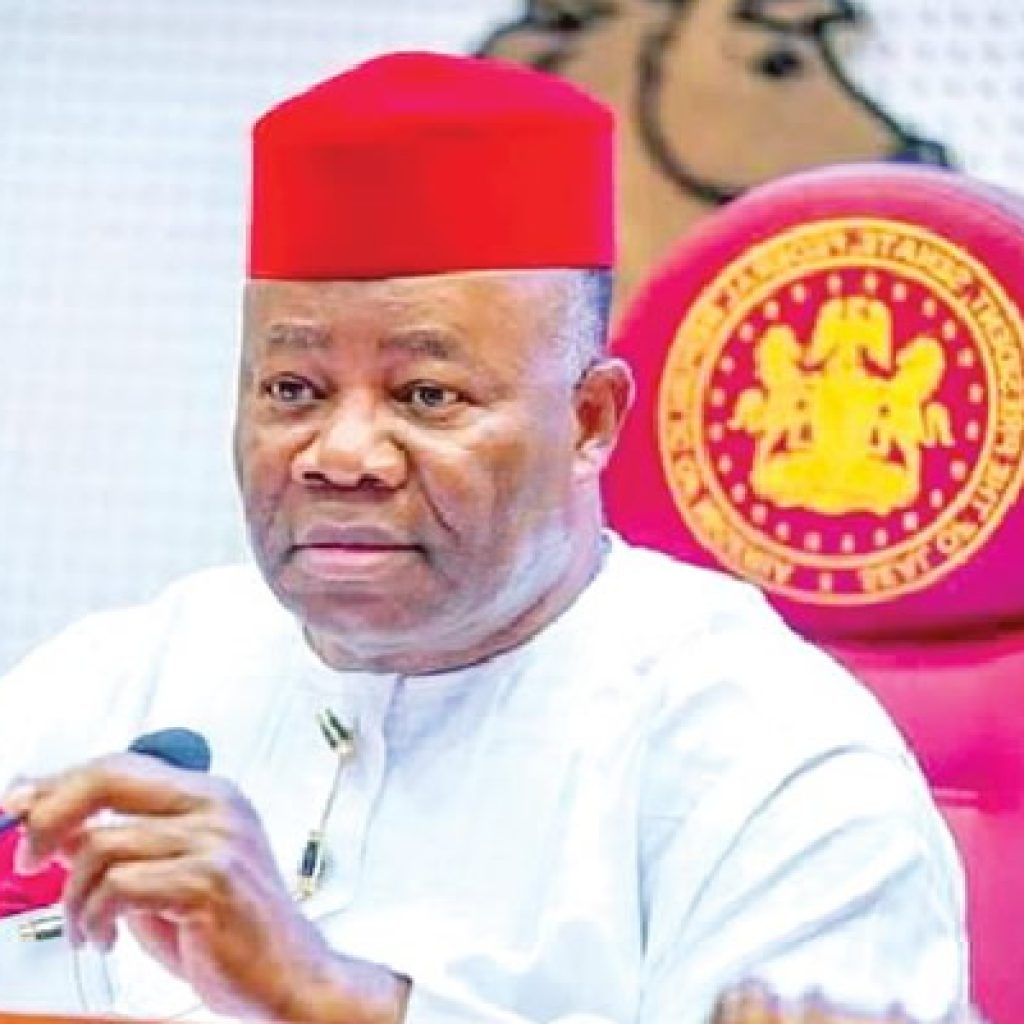
Senator Asuquo Ekpenyong has called for an urgent end to the criminalisation of attempted suicide in Nigeria, describing it as an outdated law that punishes pain instead of providing care.
Also speaking at the summit, the lawmaker said thousands of Nigerians die by suicide yearly, a reality he said could be saved with compassion, care, and timely action.
Ekpenyong, who represents Cross River South Senatorial District, disclosed that the Suicide Prevention Bill, 2024 which has passed first reading in the Senate seeks to decriminalise attempted suicide and establish a framework for rehabilitation, reintegration, and psychosocial support for survivors and affected families.
He said : “Under Section 327 of the Criminal Code and Section 231 of the Penal Code, attempting suicide in Nigeria is still a criminal offence, punishable by up to one year in prison. This outdated law does not save lives; it punishes pain. It deepens stigma, drives silence, and makes many more determined to complete the act.”
Ekpenyong noted that addressing suicide requires confronting the co-existing crisis of substance addiction while stressing that too many young Nigerians are trapped between despair and dependence.
“The Suicide Prevention Bill marks a historic shift, from punishment to patient care, from stigma to support.
Specifically, it seeks to mandate the establishment of proper funding of dedicated assessment and stabilization centres, ensuring that any individual who survives an attempt is immediately directed into a professional care pathway, rather than a prison cell.
“The provision for comprehensive rehabilitation and psychosocial support is designed precisely to intercept the dual crisis, offering paths to recovery not just from a suicide attempt, but from the underlying mental distress often exacerbated by drug and alcohol misuse.”
Ekpenyong commended Vanguard Newspapers for sustaining the mental health dialogue since 2021, describing the summit as a bridge among advocates, experts, and lawmakers.
He also expressed gratitude to civil society and mental health groups for supporting legislative reform and urged continued collaboration to end the silence, open the doors to care, and make suicide a story of survival and hope.