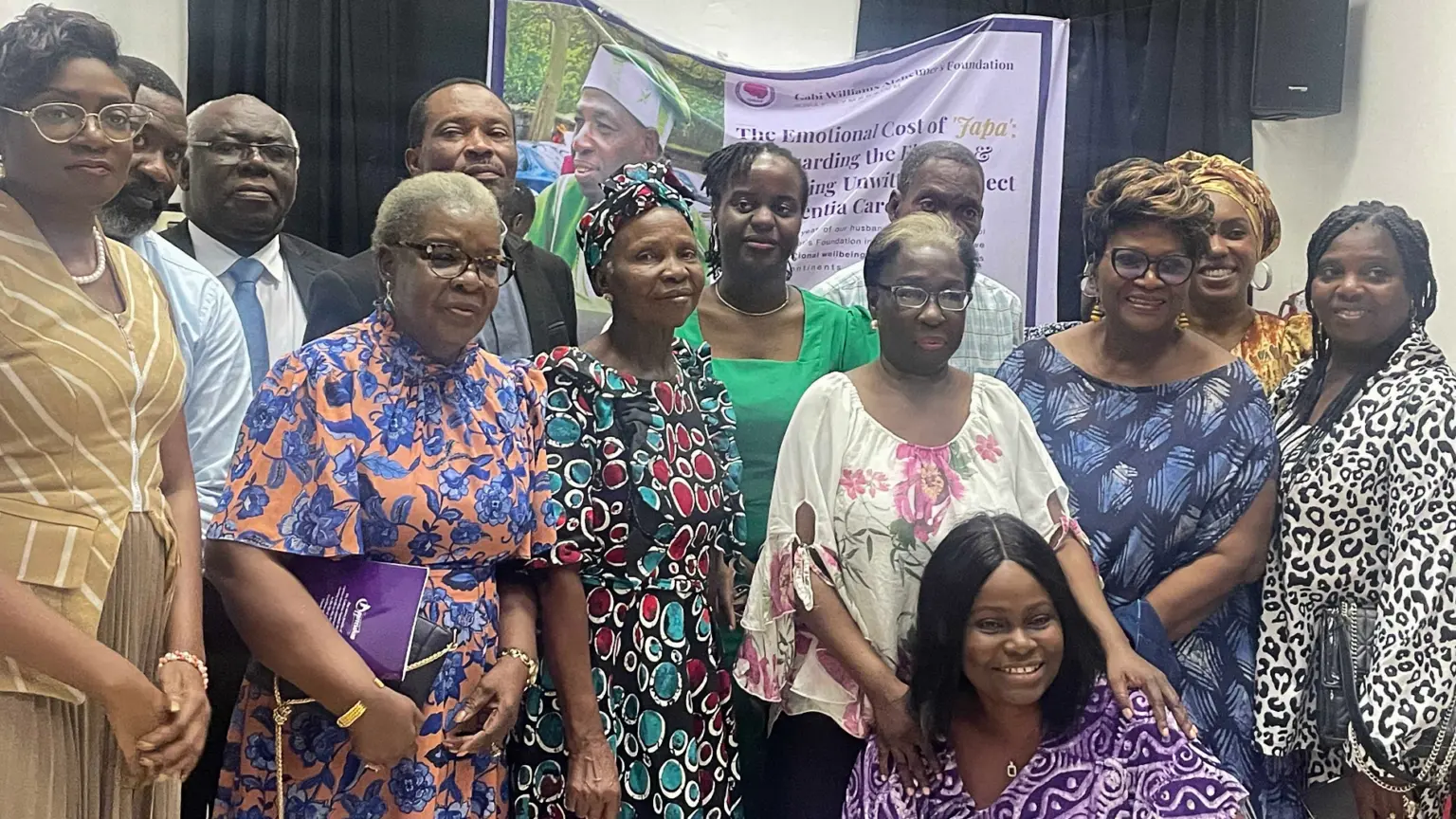
•Participants at the event
Stakeholders in elderly care and mental health have raised concerns over the growing emotional impact of migration on older Nigerians living with dementia, warning that physical separation from family members can lead to neglect, loneliness and diminished quality of life despite financial support from relatives abroad.
The concerns were raised at the 8th Annual Dr. Gabisiu Ayodele Williams Memorial Symposium organised by the Gabi Williams Alzheimer’s Foundation (GWAF) in Lagos, reports The Guardian.

The symposium, themed, “The Emotional Cost of Japa: Safeguarding the Vulnerable and Combating Unwitting Neglect in Dementia Care,” brought together healthcare professionals, caregivers, advocates and family members to examine the challenges faced by elderly persons living with Alzheimer’s disease and other forms of dementia amid increasing migration of younger Nigerians.
Speaking at the event, GWAF Administrator, Mrs. Olatoun Gabi-Williams, said the foundation was established following the death of her father, Dr. Gabisiu Ayodele Williams, popularly known as Gabi Williams, who lived with Alzheimer’s disease for 10 years before passing away eight years ago.
She said one of the key lessons from her family’s experience was that people living with dementia remain emotionally present despite cognitive decline and therefore require sustained emotional engagement from loved ones.
According to her, limited awareness about the condition often leads families and caregivers to focus solely on physical care while overlooking emotional needs.
“The person is still there. The brain is deteriorating and can no longer send instructions properly to the body, but the individual remains very much present and able to feel emotions,” she said.
Gabi-Williams noted that the migration of family members abroad has further complicated dementia care, as many elderly persons are left in the care of paid caregivers who may meet physical needs but lack the emotional bonds that family members naturally provide.
She also called for stronger collaboration among government agencies, faith-based organisations and civil society groups to improve support structures for older Nigerians.
She urged the National Senior Citizens Centre to revitalise programmes aimed at supporting ageing populations and advocated the conversion of underutilised public facilities into community daycare centres for elderly persons.
Delivering the memorial lecture, Professor Jide Gabi-Williams called for stronger family and community support structures to protect elderly Nigerians from neglect and social isolation as increasing migration continues to widen caregiving gaps across the country.
Speaking on the impact of migration on elderly care, Williams warned that the relocation of younger family members abroad in search of better opportunities was leaving many ageing parents vulnerable to neglect, loneliness and declining health outcomes, particularly those living with dementia.
He explained that neglect of elderly persons often manifests through physical, environmental, financial and behavioural signs, including poor personal hygiene, weight loss, untreated medical conditions, unsafe living environments, unpaid bills and social withdrawal.
According to him, some older adults are unable to access basic necessities, maintain their homes or attend medical appointments, while others may become victims of financial exploitation.
“There might be unpaid bills and the electricity is switched off because the bill is not paid. There might be missing valuables or money. People might be taking advantage of these elderly individuals, stealing their valuables and stealing their money,” he said.
Williams noted that dementia could further complicate the situation, as affected individuals may be unable to recognise or report neglect, making them more susceptible to abuse and exploitation.
He urged family members to pay attention to changes in behaviour, including depression, anxiety, fearfulness and isolation, which could indicate underlying neglect or cognitive decline.
The professor also highlighted the health consequences of social isolation, describing it as a major but often overlooked risk factor for dementia and other chronic illnesses.
Citing global research, he said loneliness has been linked to increased risks of cardiovascular disease, stroke, diabetes, cognitive decline and premature death.
“Social isolation is not just about missing social connection. It has direct harmful effects on health and increases the risk of dementia and other medical conditions,” he said.
Williams further drew attention to the burden faced by caregivers left behind to care for ageing relatives after other family members migrate abroad.
He said caregiving responsibilities frequently fall on a single individual, increasing the likelihood of emotional exhaustion, depression, anxiety and burnout.
According to him, caregiver burnout can result in missed medications, missed medical appointments, reduced social engagement and delayed recognition of health complications among elderly persons.
“When the caregiver is burning out and depressed and socially isolated and stressed, the care that they are providing decreases. The elderly individual can then be unwittingly neglected,” he said.
Williams added that children living abroad often experience feelings of guilt, anxiety and helplessness over their inability to provide direct support to ageing parents despite maintaining emotional ties from a distance.
To address the challenge, he advocated the establishment of a “circle of care” involving family members, trusted neighbours, healthcare providers and faith-based organisations to provide regular support and monitoring for elderly persons.
He described faith communities as critical partners in caring for older adults through companionship, practical assistance, emotional support and healthcare guidance.
The professor also encouraged families to develop long-distance care plans, maintain regular communication with elderly relatives and utilise technology such as video calls, medication reminders, emergency alert devices and telemedicine services.
While acknowledging the role of technology in supporting care, he stressed that genuine human connection remains indispensable.
“Technology extends care, but it does not replace love. Love knows no distance,” he said.
Also speaking at the symposium, Consultant Psychiatrist at St. Nicholas Hospital, Dr. Ismail Adesina, emphasised that emotional connection should be treated as an essential component of dementia care.
According to him, while medication, medical appointments and nutrition remain important, they do not adequately address the emotional wellbeing of patients.
“There is a prescription that is often missing, and that prescription is love and presence,” he said.
Adesina explained that emotional memory often survives long after other forms of memory have deteriorated, making feelings of love, comfort, fear and reassurance particularly significant for people living with dementia.
“Even when a person can no longer recognise faces, remember names or recall conversations, they can still feel emotions. Emotional memory endures even when factual memory no longer exists,” he said.
The psychiatrist warned that the increasing trend of migration, popularly known as Japa, has created a hidden emotional burden for both elderly parents and their children abroad.
He said many older persons experience loneliness, anxiety and depression following the departure of their children, while migrants often struggle with guilt, worry and regret over their inability to provide direct care.
“Money cannot hug your father. Money cannot hold your mother’s hand. It takes a human being to provide that warmth, comfort and emotional connection,” he said.
Adesina urged Nigerians in the diaspora to maintain regular contact with ageing parents through phone and video calls while ensuring that caregivers provide compassionate, relationship-based care rather than simply completing routine tasks.
He also encouraged families to move beyond treating dementia care as a checklist of medications and appointments and instead focus on meaningful interactions such as holding hands, listening, sharing memories and spending quality time with loved ones.
Also speaking, gerontologist Oluwadamilola Grillo stressed that technology could not replace physical caregiving, noting that virtual interactions alone were insufficient to meet the needs of older adults.
Presenting a paper titled “FaceTime Won’t Change Diapers,” she called for greater investment in elder care services, social welfare programmes and dementia-specific interventions.
“The government keeps creating interventions for young people while neglecting older adults. We need to recognise that Nigeria’s ageing population is growing and prepare adequately for it,” she said.
Grillo advocated stronger action against elder abuse, wider access to healthcare for older persons and increased research into dementia within the Nigerian and African context.
She said stakeholders, including government agencies, faith-based organisations, non-governmental organisations and social impact groups, must work together to create sustainable support systems for vulnerable elderly citizens.