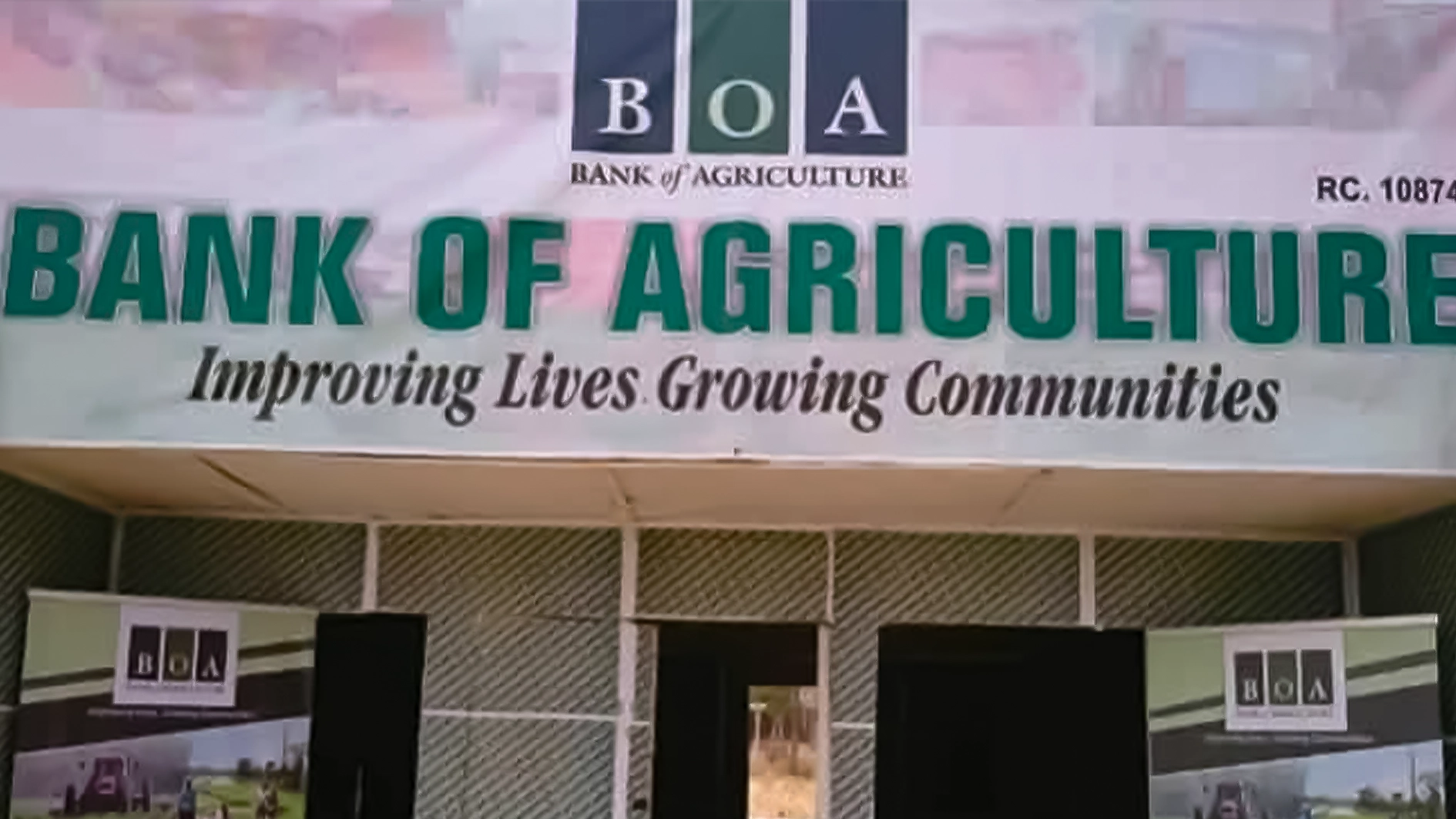
The federal government yesterday, formally inaugurated the new Board of Directors of the Bank of Agriculture (BoA) Limited, charging it with scaling up agricultural financing and aligning operations with President Bola Tinubu’s Renewed Hope Agenda.
Inaugurating the Board on behalf of the President, the Minister of Agriculture and Food Security, Senator Abubakar Kyari, said the approval of recapitalisation of the bank reflects “the boldest commitment to agricultural finance in our nation’s history.”
According to him, “Mr. President has approved the recapitalisation of the Bank of Agriculture, the boldest commitment to agricultural finance in our nation’s history, and the restructuring of the Bank is proceeding under the supervision of the Bureau of Public Enterprises, with the Ministry of Finance Incorporated and the Central Bank of Nigeria as shareholders.

“You are not being invited to preside over an institution. You are being charged to rebuild one,” Minister Kyari told the Board.
He noted that while the Bank’s name has changed four times since its establishment in 1972 in Kaduna as the Nigerian Agricultural Bank, “the purpose has never changed once.
“This is the institution charged with taking finance to the Nigerian farmer, wherever that farmer may be.”
The Board is constituted as follows: Alhaji Muhammad Babangida, Chairman; Mr Ayodeji Oludare Sotinrin, Managing Director/CEO; Hajiya Fatima Garba, ED, Corporate Services; Mr Hakeem Oluwatosin Salami, ED, Operations and IT; Hajiya Ka’amuna Ibrahim Khadi, ED, Risk Management; and Non-Executive Directors Alhaji Rabiu Idris Funtua, Mr Kpochi Donald Iorgyer, Alhaji Aminu Malami Mohammed, Mr Oladejo Odunuga, and Mr Charles Amuchienwa.
The Minister highlighted Chairman Babangida’s “more than two decades in the boardrooms of Nigerian finance” and corporate governance training at Harvard Business School as key to the governance task ahead.
The minister said the Bank is already digitising end-to-end, serving as the engine for the Renewed Hope National Agricultural Mechanisation Programme to serve over one million farmers annually, and had last week begun input distribution to nearly half a million smallholders under the Renewed Hope Smallholder Support and Value Chain Fund.
He charged the Board to integrate with existing Ministry and partner programmes including the Special Agro-Industrial Processing Zones, the IFAD Value Chain Development Programme, and the World Bank-financed AGROW, on “a single platform” to end “fragmented intervention.”
On governance, the Minister said the Board will operate under an exacting Board Charter and will be convened for a retreat to study duties and powers.
He stated the federal government’s expectations clearly: “credit that reaches real farmers and real agribusinesses… appraised on merit and recovered with discipline,” measurable lending to smallholders, women and youth from the recapitalisation, and a “lean, digital, service-driven network that puts the customer first.”
Concluding, Kyari said: “Eight commitments; one boardroom through which Mr President’s promises must pass,” and formally inaugurated the Board, wishing it “a successful and consequential tenure.”
Responding, the Chairman of Board of Directors of BoA, Muhammad Babangida, pledged to provide “sound strategic oversight” focused on integrity, transparency, accountability, and impact across Nigeria’s agricultural value chain.
He said the occasion “marks a renewed commitment to strengthening the Bank and positioning it to deliver greater impact in support of Nigeria’s agricultural transformation.”
He expressed gratitude to President Bola Tinubu, “for the confidence reposed in us through this appointment,” noting that the Board is “fully conscious of the expectations that come with it.”
He described the Bank of Agriculture as “the nation’s foremost agricultural development finance institution” with “a critical role to play in expanding access to finance for farmers, cooperatives, agribusinesses, and rural entrepreneurs.”
Citing national priorities of food security, economic diversification, and inclusive growth, he said “the importance of this institution cannot be overstated.”
The chairman outlined the Board’s mandate: to work closely with Management, shareholders, and stakeholders to “strengthen institutional capacity, improve operational efficiency, deepen stakeholder confidence, and enhance the Bank’s developmental impact across the country.”
He added that the Board’s performance will be judged beyond finance: “Our success will ultimately be measured not only by financial performance, but by the real impact we make in empowering farmers, supporting agribusinesses, creating jobs, and improving livelihoods.”
“We accept this responsibility with humility and with a firm commitment to justify the confidence placed in us,” he concluded.
Recall that the Bank of Agriculture Limited: was established in 1972, as the Nigeria’s apex development finance institution for agriculture, mandated to provide accessible, affordable credit to farmers, cooperatives, processors, and agribusinesses nationwide.