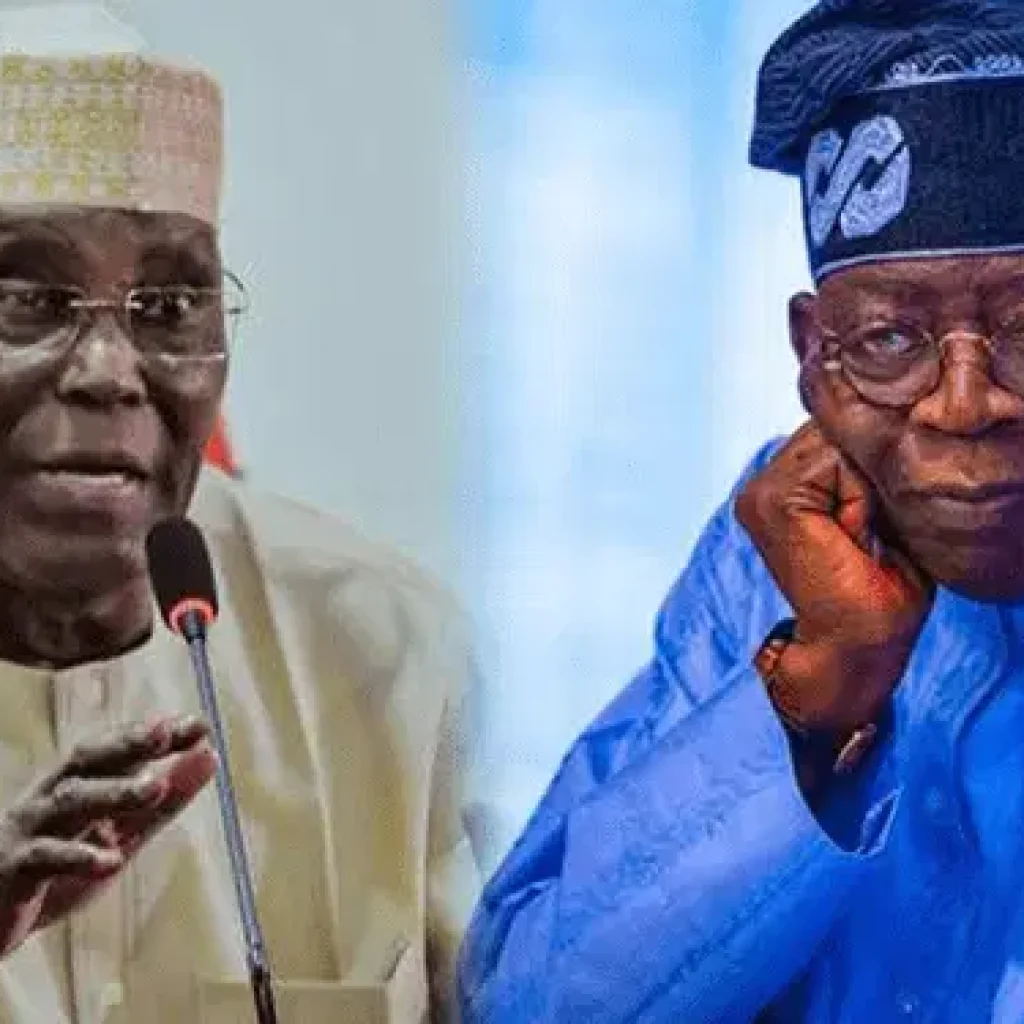
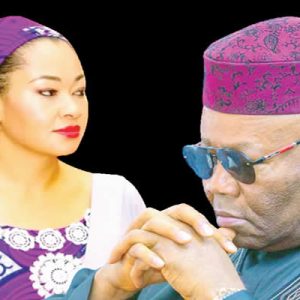
•Pastor Paul Enenche and Sheikh Sani Jingir
Senior Pastor of Dunamis International Gospel Centre, Paul Enenche, has hit back at Islamic cleric Sheikh Sani Yahaya Jingir over his controversial comments on Nigeria’s Muslim-Muslim presidency, declaring that the cleric belongs either in prison or a psychiatric asylum.
In a video currently trending across social media platforms, Enenche took particular exception to Jingir’s remarks concerning the Muslim-Muslim ticket and the religious balance in Nigeria, describing the comments as provocative and unacceptable, reports Daily Independent.

The pastor said statements capable of inflaming religious sentiments should not be treated lightly, urging the federal government to intervene and call the Islamic cleric to order.
“Such people belong either in prison or a psychiatric hospital. It’s time for the Nigerian government to call such people to order,” Enenche said.
Jingir has, however, refused to apologise or withdraw his position.
In an interview with BBC Hausa, the Islamic cleric said he had no regrets over his remarks and would continue to advocate a Muslim-Muslim presidential ticket, insisting that his position was based on his responsibility as a Muslim and was not a campaign for President Bola Tinubu.
The cleric’s comments followed a controversial declaration at a recent mass wedding ceremony in Kano, where he called for the continuation of the Muslim-Muslim arrangement and urged Muslims to vote in a manner that would demonstrate their numerical strength.
Jingir has maintained that he expected criticism and was prepared to continue expressing his views, arguing that Christians also have the right to advise their followers on how to vote.
The controversy has gone beyond the question of a same-faith presidential ticket, with critics taking exception to other remarks attributed to Jingir, including descriptions of Christians as “infidels” and claims concerning Nigeria’s religious identity.
Femi Fani-Kayode has publicly condemned the cleric’s refusal to apologise and called on President Tinubu and the Sultan of Sokoto to caution him.
Enenche, in his reaction, challenged the claim about the numerical strength of Muslims and Christians in Nigeria, calling for a credible national census that would allow Nigerians to declare their religious affiliations.
“If you think you are superior, why didn’t you people allow for the census all these while?” Enenche asked.
He said a credible census could produce results different from assumptions being made about the religious composition of the country.
“Let everybody tell you what they believe in, then you will be shocked that where you think you come from, there are Christians almost dominating in that place,” he said.
Enenche also warned against taking Christians and the church for granted, insisting that the Christian community remained an important part of Nigeria’s political and social landscape.
“Nobody should take Christians in this country for granted. Don’t take the church in Nigeria for granted. This is a warning to all of you who think that the church can be taken for granted,” he said.
The pastor further expressed anger over the continuing violence in the country, challenging those making divisive statements to consider their contribution to national development.
“They are not tired of bloodshed; they are not tired of destroying the nation. Ask yourself, what have you contributed to the development of this nation? Shame on you and everything you represent,” Enenche said.
The development has also triggered questions about the response of the federal government and security agencies to the controversy.
Critics have questioned why the presidency has not publicly condemned Jingir’s more controversial remarks, while some Nigerians have called on the Department of State Services and the Nigeria Police Force to investigate the cleric and, where applicable, prosecute him.
There has been no publicly announced government sanction against Jingir over the comments.
The silence has become part of the controversy, with Nigerians asking whether the authorities would have responded differently if similar statements had been made by a Christian cleric against Muslims.
Many Nigerians have also called on prominent religious figures, including the Sultan of Sokoto, Bishop Matthew Hassan Kukah and Pastor Enoch Adeboye, to speak up on the issue.
The calls are rooted in the interventions of such figures in previous national controversies, particularly on issues of insecurity, governance, religious tolerance and national unity.
The Sultan has repeatedly spoken on matters affecting national cohesion and has also advocated stronger regulation of social media, arguing that harmful online content can threaten national peace.
Adeboye, meanwhile, recently attracted criticism after saying President Tinubu was doing his best in dealing with insecurity.
The comment generated a strong backlash from Nigerians who argued that the security situation had deteriorated, pointing to attacks on communities and churches as well as cases of worshippers being abducted from places of worship.
For critics, the contrast has raised a broader question about the role of religious leaders in holding political authorities and influential clerics accountable.
They argue that the present controversy offers another opportunity for senior Muslim and Christian leaders to demonstrate that their commitment to national peace transcends religious or political considerations.
The Muslim-Muslim ticket adopted by Tinubu and Vice President Kashim Shettima in the 2023 presidential election remains one of Nigeria’s most sensitive political and religious issues as the country moves towards the 2027 elections.
Jingir’s renewed advocacy for the arrangement has already attracted condemnation from several quarters.
Former Kano State Governor Rabiu Musa Kwankwaso, for instance, warned that religiously divisive politics could undermine national unity and urged that such rhetoric be discouraged.
Interestingly, opposition to Jingir’s rhetoric has not been limited to Christian voices.
Fani-Kayode said he had spoken with four Northern Muslim governors who, according to him, were “ALL appalled” by Jingir’s alleged insults against Christianity.
He also praised the Sultan for urging Christians and Muslims not to insult one another.
The controversy therefore appears to have moved beyond the narrow question of whether Nigerians should support or oppose a Muslim-Muslim ticket.
It has become a debate about the limits of religious advocacy, the responsibility of influential clerics and the obligation of political and security authorities to prevent rhetoric capable of deepening Nigeria’s religious fault lines.
With Jingir insisting that he has no regrets and Enenche demanding government intervention, attention is now increasingly focused on the Presidency, security agencies and the country’s leading religious authorities.
For many Nigerians, the question is whether these authorities will speak up with the same urgency with which they have intervened in other sensitive national issues.
As the video of Enenche’s reaction continues to trend, the Jingir controversy is unlikely to disappear soon, particularly with the 2027 political season already beginning to shape public discourse around religion, power and Nigeria’s future.