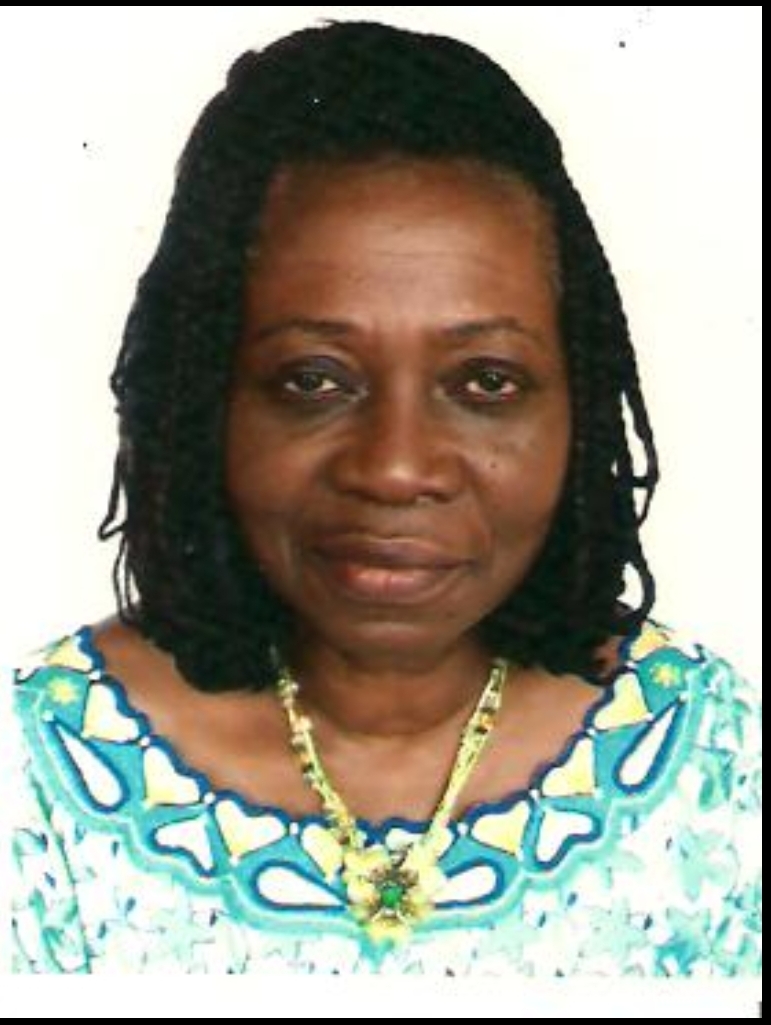
•Prof Adenike Grange
Being Welcome Address by Prof Adenike Grange, at the NUC Day Webinar by Nigeria Universal Healthcare Advocacy Network (NUHCAN) held on December 17, 2024
All our dignitaries and distinguished guests, colleagues and friends! You are respectfully recognized and warmly welcomed to this Webinar. Please, forgive me if individuals are not called out by me due to limitation of time. They will be ushered in at intervals by the coordinator. We are indeed grateful that you have joined us on this auspicious occasion.
We are aware that quite a number of other professional groups and civil societies have held webinars on this year’s UHC theme which is “Health as the Responsibility of Government”. We realise that Universal Health Coverage is defined as ensuring that all individuals and communities receive the healthcare services they need without suffering financial hardship. It encompasses access to essential health services, including preventive, promotional, curative, rehabilitative, and palliative care, as well as to safe, effective, quality, and affordable medicines and vaccines. At this webinar, our objective is to source for information at the State and Community levels from highly informed professionals who are working at these levels as service providers, trainers, administrators, advocates, civil society organisations including the organisation of patients.
I shall not bore you with the health statistics of Nigeria. Those that are available can be accessed easily. We have come a long way but, there are still many gaps between what is available and what should be available and accessible for better planning purposes. Maybe, we can hope for a closure of this gap with the advent of the internet and the social media when used responsibly. Improvement in the registration of the basic data such as accurate Births and Deaths registrations may also upgrade the quality of health statistics with time.
Indeed, the Health of all Nigerian citizens is the Responsibility of Government. The right to healthcare is articulated in The Nigerian Constitution, Chapter II, Section 17.
This section deals with the “Fundamental Objectives and Directive Principles of State Policy”
Specifically, it outlines the rights related to health and healthcare. It emphasizes that the state shall direct its policy towards ensuring that there are adequate medical and health facilities for all persons.
It should be noted that these provisions serve as guidelines for the government in formulating policies and laws related to the delivery of health and other social services. The Nigerian Health Act, 2014, and one of its components the Basic Health Care Provision Fund Act (BHCPF) are two important specific legislative derivations of these provisions.
The lack of justiciability of these constitutional provisions impacts the ability of citizens to assert and protect their rights, thus affecting the effectiveness of the legal framework in promoting justice and equity.
Unfortunately, over the past five decades of my practice in Nigeria, I have witnessed the gradual erosion of the process to make possible the right of access to quality and affordable health care to the point where it is guaranteed only to political leaders who no longer patronise the healthcare system in Nigeria but they waste no time in jetting abroad to patronize the system that is partially serviced by highly qualified Nigerian doctors and nurses. Nigeria’s political leaders’ response to this “JAPA” syndrome is to deny these well-trained professionals from leaving Nigeria in search of merit-based positions abroad. How about providing the enabling environment here in Nigeria? Our political leaders and public administrators must learn how to do this from the experiences of other low and middle income countries that have successfully reversed the outward migration of their healthcare professionals. India is a case in point. India over the past three decades has developed its healthcare system from a grossly underperforming one to one that has now earned its recognition globally as a reliable destination for Medical Tourism. As essential components of health care development are the development of the basic infrastructures including sustained power supply, internet connectivity, safe transportation, legal frameworks for ensuring safety and peaceful resolution of conflicts, security and freedom of movement, food security, stability in the prices and quality of drugs and other commodities.
Our immediate National Vice-President, Professor Osinbajo deserves to be commended for entrusting his care to the Nigerian healthcare system during an alleged health problem which required a major surgical intervention. Unfortunately, his acclamation of the excellent care he received from a private hospital in Nigeria went unnoticed by the political elites. In recognition of the potential enhancement of the development of public-private partnerships especially for tertiary health care, government should introduce attractive incentives for experienced entrepreneurial healthcare practitioners, usually from the Diaspora, who would like to invest in setting up this type of resource-intensive health care delivery specialized units.
As one of the many surviving elderly Nigerian healthcare professionals, I would like to bring forward one glaring fact. That is, many of today’s Nigerian politicians and high-ranking public officers were saved from perishing in their mothers’ wombs and during childhood through the hard work and expert interventions of several generations of dedicated Nigerian doctors, nurses and other healthcare professionals. How did they do it? Being one of them I can testify to the better character of politicians and senior administrators of those days. There was equity in remuneration for work done. Both the professionals and the political leaders rode in the same type of vehicle- for example, the Peuguot 404, as the healthcare service providers. We all relied on car loans which we paid back monthly from our salaries. There was mutual understanding and respect among healthcare professionals, administrators and politicians. Nowadays, the total emoluments of a legislator is at least five times that of a Professor of Medicine and Chief Consultant who is responsible for the expert medical care of patients. This makes legislators, governors and other highly paid political elites feel superior to the people they are meant to serve. They are constantly scrambling to accumulate wealth effortlessly and many times fraudulently at the expense of the remunerative rights of the hardworking electorate. This calls for a reform of the electoral process.
In those days, 70’s and 80’s, there was empathy for the patients. The Heads of State attended our conferences to listen to and act on our recommendations for improving the healthcare delivery services. It was because of our collective advocacy effort that General Ibrahim Babangida head hunted in 1985 my mentor, late Professor Olikoye Ransome-Kuti, a doyen of Paediatrics for the post of the Minister of Health; he has since been recognised as the most impactful Minister of Health in Nigeria. Subsequently, I was also humbly privileged to have been head hunted by President Umaru Yar’Adua in 2007 to serve as his Minister of Health. During his tenure, he was unfortunately unable to control his administration to drive effectively the on-going process of transformation that was handed down by President Olusegun Obasanjo. This was due to his ill health for which he was frequently absent from work right until the tragic fatal ending. As a result of this, my effort to continue with the transformative process was conspiratorially brought to an untimely and unfulfilled end. The Heads of States of those days who are still alive today can testify to this narrative.
We, the survivors of that period have been kept alive by the Grace of God for a purpose and that purpose must be fulfilled to His Glory. Nigeria was great then. We know what to do if we really want Nigeria to become great again and to retain its meritorious human capital within its shores. There are documents, policies and programmes galore in every government and academic institution to guide us and now we have digital support which has facilitated the retrieval and sharing of knowledge. What is required is the humility to recognise, collaborate and coordinate all valuable contributions of the past as well as the present to build the platform on which to remodel the prospects for enhanced and sustainable improvement in the future. Let us not waste any more time and money in retracing our steps from this precipice that would most likely lead us to total disintegration and destruction. The time to have begun our transformation back to our lost glory was yesterday but it is never too late to start.
My passion to witness during my lifetime a healthcare delivery system that can guarantee Universal Health Care (UHC) for the entire population remains unshaken. I know that this passion is shared by the ACTIVE members of NUHCAN. This is the reason why we are at this Webinar- to take stock of our progress so far with a view to consolidating on notable areas of improvement and BRIDGING THE GAPS WHEREVER NEEDED. It is only in this way that we can remain motivated and keep hope alive for the future of our generations yet unborn!
I shall end this rather grim welcome speech by quoting the futuristic words of the third stanza of our Nigerian National Anthem:
“O God of all creation,
Grant this our one request,
Help us to build a nation
Where no man is oppressed,
And so with peace and plenty
Nigeria may be blessed.”
All those who mean well for Nigeria should re-echo this prayer constantly to reinforce our belief that the rebuilding of our nation is in our hands-everyone of us. Yes, we can rebuild it successfully and sustainably!
Thank you for listening!
*Professor Adenike Grange, Nigeria’s former Minister of Health, is Chairman of the Board of Trustees, Nigeria Universal Healthcare Advocacy Network (NUHCAN)