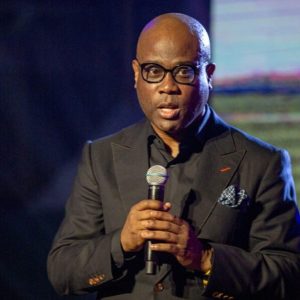
•Ikanna Okim Esq and Prof Emmanuel Osodeke
I had barely recovered from thinking about the effect of the contemplated NLC strike action in 13 states in Nigeria when I stumbled upon news in mainstream media quoting Professor Emmanuel Osodeke, the National President of the Academic Staff Union of Universities (ASUU), on the increase in first class graduates from private universities in Nigeria and more tragically, his call for stricter academic standards and regulation. At the heart of this lies the notion that the increasing number of first class graduates from private universities in Nigeria is a cause for concern.
Foremostly, I am worried about the fact that the growing trend of many first class graduates from Nigerian schools is even a cause for concern. It bothers my mind what the issue really is. Is it the case that the fewer the first class, the more indicative of a good ‘standard’ of education? Can one categorically say that where there are more first class graduates, one can draw an absolute conclusion that the standard of education has dropped? When these questions are satisfactorily answered, is it correct to attribute the rise in first class graduates in Nigeria to a drop in the standards without any consideration that there is a possibility that students have become more intelligent?
How about that technology has improved the standard of learning, therefore knowledge transfer and reception have become more seamless? Is there no chance that the increased use of teaching aids and technological tools has aided understanding of complex subjects and so good grades are inevitable?
I fear that the postulation of Prof. Osodeke is narrow and ultimately incorrect. With respect to the relationship between the number of first class graduates and the academic standard of an institution, though not a statistician, I would attempt an analysis using numbers. A closer look at these numbers reveals a more nuanced picture.
Covenant University was recognised as the highest ranked university in Nigeria by Times Higher Education in 2024, beating all government institutions once again. This opinion is not about the reputational standing of the Times Higher Education World Reputation Rankings, however it is needed to state that it is arguably the most prominent and highly-regarded educational standard ranking instrument.
This year, 2024, Covenant University graduated 339 first class students out of 1607 graduating students, resulting in a respectable 21% across the school.
Salem University produced 8% first class graduates, Ajayi Crowther University produced about 3% first class graduates just as Benson Idahosa University is planning to graduate 77 first class students out of 1029 amounting to about 7%.
It would interest Prof. Osodeke to know that the University of Oxford, the best university in the world as ranked in major directories, in 2023 graduated about 29% of its students with the first class grade. This is following 36.4% as recorded in the previous year. Furthermore, Statista reports that 30% of the graduates in the United Kingdom generally graduated with the first class grade last year.
With the foregoing in mind, it is very clear that a low turnout of first class graduates is not indirectly proportional to the academic standard of the school. If at all, it evinces otherwise. In clearer terms, poor results in Nigerian schools may be indicative of the relatively low academic standard when compared with their counterparts in other countries.
Rather than advocating for further ‘control’ of first class grades in universities, the situation in government universities should be the topic of discussion on these tables.
Enugu State University of Technology (ESUTH), for example, graduated only 199 students with a first class out of more than 9,000. That is a 2% of an entire university. While this is worth pondering on for a minute, again I am distracted by the disturbing call for an artificial regulation of first class grades which is not a direct result of the hard work and output of students in Nigerian tertiary institutions. In my opinion, such things should not even be imagined.
While I agree with most of the other issues Prof. Osodeke identified in his press statement, I grossly disagree with his position on the state of affairs in Nigerian schools.
It is time for us to begin to look into the main issues stifling the progress of advanced education in Nigeria, like the sex-for-grades pandemic, ‘sorting’ – which is a disturbing cultural term for money for grades in some schools, and unfair treatment of students in some (especially public/government) schools. We should be clipping the wings of lecturers who boldly say to a full class that the A grade is for God and the B grade is for the smartest in the class.
We should pool resources and utilise activism to create a standard educational system in Nigeria, rather than seeking ways to curtail the advancement of students in their academic endeavours; students who thrive against all odds, and for whom the ‘midnight candle’ is not just a proverbial term but a reality because there is hardly power supply in schools.
To the best of my knowledge, the Nigerian University Commission (NUC) is the body tasked with the approval of degree programmes and, on a larger scale, to monitor the standard of education in Nigeria. Where a university is granted accreditation, the university has the autonomy, and independent authority if you like, to confer degrees on its students, of course, subject to law. This responsibility, also to the best of my knowledge, is not duplicated as to also be within the powers/functions of the ASUU.
Given our unique problems as a country, we should be focusing on improving the standard of education from the angle of transfer of knowledge involving the welfare of lecturers, the value of education, transparency of academic processes and trampling down corruption within the educational systems in Nigeria; which I believe should be some of the objectives of the Academic Staff Union of Universities.
I implore the ASUU president not to be distracted by things that are largely not amongst its key objectives as a body as we progress towards ensuring free and quality education for all persons in Nigeria.
*Ikanna Okim Esq writes in from United Kingdom. @ikanna_okim (Instagram)