•Tinubu and bandits
Ahead of the 2027 general elections, Nigeria appears to be under siege with alarming rise in kidnapping and killing incidents.
Amid the waiting for the safe release of schoolchildren and teachers abducted from their schools in Oyo and Ondo states on May 15, 2026, five soldiers and three members of the Civilian Joint Task Force (CJTF) paid the supreme price as troops repelled Boko Haram attack on Forward Operating Base (FOB) Mandaragirau under 25 Brigade of Sector 2 in Borno State yesterday morning.
This was even as bandits yesterday invaded Igbosi Community along Imeri Road, Idogun, in Ose Local Council of Ondo State, destroyed homes and kidnapped a nine-year-old boy after his father escaped to safety, reports Saturday Guardian.
Meanwhile, the prevailing peace in Kano State was disturbed on Thursday following an attempted kidnap and cattle rustling incident at Bakin Komau, Dangora area in Kiru Local Council of Kano State that was, however, successfully foiled by operatives of the Nigeria Security and Civil Defence Corps (NSCDC) in the state.
Confirming the death of the soldiers and CJTF members, Acting Media Information Officer of Operation Hadin Kai (OPHK), Lt -Col. Haruna Sani, said in a statement that those wounded in the encounter were airlifted by the Air Component Command and were in stable conditions while receiving appropriate medicare.
He explained that the troops of the FOB successfully contained the terrorist attack in the early hours of Friday morning despite adverse weather conditions and poor visibility occasioned by heavy rainstorms.
According to him, the terrorists launched the attack at approximately 0300 hours and attempted to breach sections of the FOB under the extreme weather conditions.
“Determined troops responded with a fierce counter-offensive, decisively frustrating further incursions and inflicting casualties on the attackers. The counter-assault underscores the resilience of the troops at FOB Mandaragirau, and reflects the courage and determination of our troops across the Theatre.
“Their sacrifice embodies the highest traditions of service, courage and unwavering commitment to the defence of the nation. Operation HADIN KAI honours their heroism and the bravery of all personnel who stood firm in the face of a determined but ultimately futile enemy assault,” Sani said.
He said the troops remained firmly in control of the FOB and continue to dominate the general area, while exploitation operations are ongoing for consolidation. The failed attacks, he said, further underscored the growing desperation of terrorist elements who continue to suffer devastating losses under sustained operational pressure.
“All necessary measures are being taken to protect communities and sustain relentless pressure with the deployment of additional troops and critical combat enablers throughout the North East Theatre.”
It was gathered that the gunmen that stormed Igbosi community around 1:00 a.m. on Friday fired sporadic gunshots, after which they forced their way into the residence of Pastor Isaac Olaosebikan.
The pastor was said to have fled from the house upon sighting the gunmen, but his son, Victor Olaosebikan, was subsequently seized by the marauders.
According to sources, the gunmen in their attempt to gain entrance into some houses during the operation destroyed some buildings and left the community around 2:30 a.m. unchallenged.
When contacted over the incident, the Police Public Relations Officer in the state, Abayomi Jimoh, confirmed the attack, stating that an intensive manhunt has been launched on the fleeing suspected kidnappers.
The police spokesperson stressed that upon the receipt of the distress report, the Divisional Police Officer and his men, in collaboration with the Amotekun Corps, immediately mobilised to the scene and launched a coordinated search-and-rescue operation.
He said: “The incident was reported in the early hours of Friday, 5th June 2026, at about 2:30 a.m. by Mr. Olaosebikan Isaac and Mr. Joel Owalekan, both residents of Ugbosi Quarters, Idogun.
“According to their reports, at approximately 1:30 a.m. on the same day, a group of armed men invaded the community, firing gunshots sporadically and causing panic among residents.
“During the attack, the assailants reportedly forced their way into the residence of Mr. Olaosebikan Isaac. In a desperate attempt to save his life, he escaped into the surrounding bush, leaving behind his nine-year-old son, Master Olaosebikan Victor, who was subsequently abducted by the armed men.
“Mr. Joel Owalekan also reported that the same group of assailants unlawfully damaged his residence while attempting to gain entry. He similarly escaped the attack by fleeing to safety, thereby avoiding possible harm.”
Jimoh disclosed that security operatives combed the surrounding forests and likely escape routes in a bid to rescue the abducted child and apprehend the perpetrators.
“Investigations have commenced while relevant exhibits have been recovered and documented to determine the circumstances surrounding the attack and track down those responsible.
“The Commissioner of Police, Ondo State Command, CP Felix Ohagwu, has directed all tactical teams, intelligence units and other relevant security assets to intensify efforts towards the immediate rescue of the victim unhurt and the arrest of the perpetrators.
“The Command is also working closely with other security agencies and local vigilante groups to ensure that the criminals are brought to justice.
“The Command assures residents that every available resource is being deployed to secure the safe rescue of the abducted child.
“Members of the public are urged to remain calm, vigilant and cooperate with security agencies by providing any useful information that may aid ongoing investigations.
“Anyone with credible and actionable information relating to the abducted child or the suspects is encouraged to report promptly to the nearest police station or other security agency.”
The Ondo State government has also disclosed that a coordinated joint security operation has been launched in the state following the incident.
According to a statement issued by the Commissioner for Information and Orientation, Idowu Ajanaku, the activated emergency security response involves the Amotekun Corps, Nigeria Police Force, Department of State Services (DSS) and the military.
Ajanaku disclosed that the security agencies have since commenced intensive combing operations within the community, surrounding forests, and other locations.
“Preliminary security measures have already been strengthened in the affected axis, while intelligence gathering and search operations are ongoing to ensure the perpetrators are apprehended and brought to justice.”
Confirming the foiled kidnap and cattle rustling incident in Kano through a statement on Friday, the Public Relations Officer of the state command of the NSCDC, SC Ibrahim Abdullahi, said the armed bandits had attacked a shepherd, inflicted serious injuries on him, and abducted his two children while attempting to rustle livestock.
“Upon receiving a distress report, NSCDC personnel stationed around the nearby Dansoshiya Forest swiftly mobilised to the scene and engaged the criminals in a gun duel.
Abdullahi added: “Overwhelmed by the superior response of the NSCDC operatives, the suspects abandoned the kidnapped children and fled into the forest with injuries, thereby thwarting the criminal mission.”
The statement further said the two rescued persons, Abubakar Saleh, 36 and Muhammad Inuwa Dille, 30, had been reunited with their family, while the injured shepherd, 70-year-old Alhaji Saleh, had received immediate medical assistance.
The NSCDC reassured residents of its unwavering commitment to the protection of lives, property and critical national assets. It, however, urged members of the public to continue providing credible information to security agencies to enhance prompt response to security threats.
The incidents occurred barely three weeks after armed bandits abducted seven teachers and 39 students from Community High School, Ahoro-Esinle, and Yawota Baptist Nursery and Primary School in Oriire Local Council of Oyo State.
On the same day, suspected Boko Haram terrorists attacked three schools, including Mussa Central Primary School, Government Day Junior Secondary School, and a SUBEB school, abducting between 42 and 50 schoolchildren from Mussa town in the Askira-Uba Local Council of Borno State.
By the weekend, the abductors had beheaded one of the kidnapped teachers from Oyo, Mr. Michael Oyedokun.
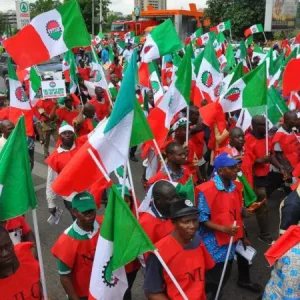
The continued detention of the teachers and schoolchildren triggered protests in many parts of the country.
While demanding the immediate release of the abductees, some of the protesters called for the resignation of President Bola Ahmed Tinubu, saying he had failed to secure the lives and property of Nigerians.
Recall that on Wednesday, April 8, this year, four army personnel, comprising two officers and two soldiers were killed during a terrorist attack on a military base in in Benisheikh, Borno State. Within two days after the incident, no fewer than 15 people were murdered by suspected bandits and kidnappers across the country – a woman and her daughter in Ondo State, five forest guards in Kwara State, and eight residents of Mbwelle village in Bokkos Local Council of Plateau State – indicating that the efforts of Nigeria’s security forces at addressing the insecurity menace still falls short.
Writing on the situation, the National Chairman, Ondo State Eminent Persons Group, Banji Alabi, linked heightened insecurity in the country to the 2027 general elections, a view top government officials like Senate President Godswill Akpabio had expressed.
In a piece titled, ‘Roadmap To Combating Insecurity, Terrorism In Nigeria’ made available to our correspondent, Alabi said:
“Insecurity in Nigeria did not start yesterday, and it has never been purely criminal. History shows a pattern: whenever disgruntled political actors lose power or fear losing it, they weaponise violence to destabilise the state and create conditions to ‘kick out a bad government.’
“We saw it in the lead-up to 2015. Boko Haram’s escalation, kidnappings and bombings were amplified and exploited to delegitimise the President Goodluck Jonathan administration. The same actors who could not win at the ballot box sought victory through bloodshed and fear. Communities were infiltrated, local accomplices were paid and intelligence was suppressed because the goal was not peace—it was power. That playbook is still in use. When special interest groups want to topple an administration they dislike, they fan ethnic tensions, fund banditry and ensure that no part of the country feels safe. They know a frightened nation does not ask questions. It only demands change, any change.
This is treason against the Nigerian people.”
Alabi called for the immediate formation of a National Committee Against Insecurity, structured from the wards to the centre.
“The war against insecurity and terrorism cannot be won solely by the regular armed forces; it is a battle that calls for the involvement and contributions of all Nigerians. It is an absolutely wrong mindset to conclude that it is the constitutional responsibility of government to ensure security. It is equally the constitutional calling of every Nigerian to report and expose threats to security and national stability and those behind it. Failure to do so makes a citizen a collaborator or conspirator.
“The committee system I am advocating will be an organised civil engagement platform to be established in every political ward in the country and all other layers of governance to the central (federal) level,” he added.
He also urged every ward in the country to constitute a council of traditional rulers, religious leaders, youth leaders, market leaders and retired security personnel with the mandate to meet weekly, identify unusual movements, vet local vigilantes and report directly to the local council.
He maintained that Nigeria is too large and too diverse for one police command, adding his voice to the debate on state police, even as he called for improved welfare, housing and equipment for policemen and soldiers.
“We must implement true federalism and resource control. Let states and regions establish their own police forces to handle community crimes, while federal forces focus on interstate terrorism, borders and transnational crime. This is the spirit of the Aburi Accord.”
Alabi also urged the National Assembly to pass a Whistleblower Protection and Reward Act that will provide for payment for actionable intelligence that leads to arrests.
“Nigeria must unite to secure Nigeria. The President alone cannot do it. Governors alone cannot do it. Only we, the people, can. We either own our security or we lose our country,” he warned.
Meanwhile, private security stakeholders have called for stronger collaboration between government institutions and private sector operators as part of efforts to address Nigeria’s growing security challenges.
The call was made ahead of the National Private Security Conference (NPSC) 2026, scheduled to hold on June 13 at the NAF Conference Centre, Abuja.
Speaking at a world press conference in Abuja, the convener, Dr. Charles Awuzia, said the conference would focus on how private sector capacity can complement government efforts in strengthening national security without undermining the authority of statutory security agencies
He said the conference, with the theme, ‘Building a Modern Security Ecosystem: Integrating Private Sector Capacity into Nigeria’s National Security Architecture,’ seeks to promote dialogue on practical ways of leveraging the expertise, technology and resources within the private security industry to support national security objectives.
Awuzia stressed that the increasing complexity of security threats across the country requires broader stakeholder participation, stressing that security can no longer be viewed as the sole responsibility of government agencies.
He explained that the conference would serve as a platform for engagement among security agencies, private security companies, policymakers, technology providers, investors and development partners on strategies for improving intelligence sharing, surveillance capabilities, security financing and public-private partnerships.
He further emphasised that the initiative is not intended to replace existing security institutions or regulatory authorities, but to explore areas where private sector expertise can support government efforts in safeguarding lives and property.
According to him, successful security models across the world are increasingly built on collaboration among governments, private operators, researchers, technology innovators and local communities, adding that Nigeria must adopt similar approaches to strengthen its security architecture.
Dignitaries expected at the conference include the Minister of Defence, General Christopher Gwabin Musa; the Director-General of the Department of State Services (DSS), senior military and police officers, lawmakers, defence industry executives, international security experts and private security practitioners.
Awuzia expressed optimism that the conference would produce actionable recommendations capable of supporting government policies, encouraging investment and enhancing the contribution of the private security industry to national security.