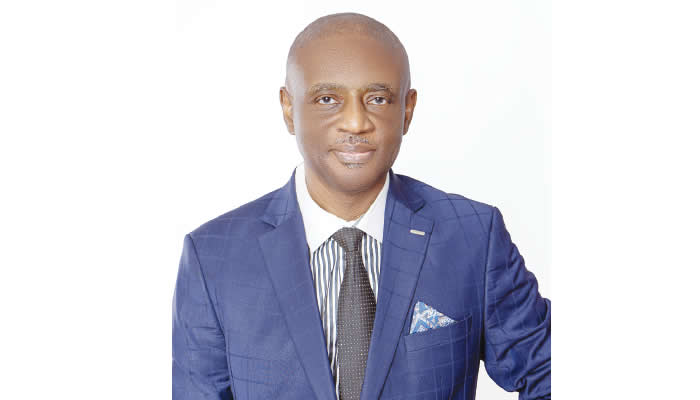
•Joseph Otteh Esq
A senior lawyer, Mr Joseph Otteh, in this interview with The PUNCH, discusses how judges dependence on governors and other executive arms of government for houses, vehicles, and welfare benefits compromises judicial independence and other related concerns
How does reliance on governors or the executive for housing and vehicles compromise judicial independence and public trust in Nigeria’s judiciary?

This situation is likely taking a significant toll on public trust, particularly in light of the deep suspicions many hold about the relationship between the judiciary and other arms of government. In the past, this wasn’t as contentious. Governments at the federal or state levels routinely paid judges’ salaries and provided amenities such as accommodation and vehicles.
At that time, there was little concern that judges’ perceptions or motivations would be influenced by the judiciary’s reliance on the executive for basic amenities or remuneration. Even today, in many parts of the world, judges still depend on the executive for funding and amenities, yet they manage to uphold a strong spirit of independence and maintain public confidence in their impartiality.
But Nigeria has undergone massive changes! At the moment, and given the seismic and tragic shifts in how Judges adhere to and apply the concept of judicial independence, it ought to have been a no, no for judicial authorities to accept such “gifts”.
The Nigerian Judiciary knows its reputation is bumping along the bottom, and one would have expected, in the present climate of public trust and deficit, that it would exercise the utmost discretion and restraint in things like accepting anything from another arm of government. Unfortunately, it did not! And that says a lot of the judiciary’s assessment of its own public image, reflecting negatively on the level of its determination to win back public trust.
Can a judiciary that receives material support from the executive remain impartial in cases involving the same executive? Why or why not?
A strong Judiciary, with judges who possess a deeply ingrained sense of independence, can maintain impartiality and autonomy, even when the executive provides for the needs of its judges.
But weak Judiciaries – and Nigeria’s Judiciary is in this category – will show biases towards those who provide hand-outs to them. This underlies some of the forum-shopping we see litigants – including government litigants – engage in routinely, looking for courts with possibly the least attachments to persons they want to hold accountable. It explains the black market for ex-parte orders, and accessible markets for outlandish injunctions as well.
And you know, it is unlikely that a Judge will openly say “this is why I did so and so”. But the “body language” of the court, is more graphically deciphered in the Rulings or Orders made by the Court in some of these kinds of cases, Look for example, at how some Judges are ready to ride roughshod over long-established principles of law, or overlook legal procedures and even law, in order to reach certain endgame scenarios, as we saw earlier in the year with the #endbadgovernance protests.
When courts in a number of jurisdictions made Orders preventing protesters from holding protests in places they chose, just hours before those protests would begin. Were these Judges acting conscientiously and impartially?
The Orders those courts made would trouble any constitutional student, scholar and practitioner, because the Constitution specifically provides that before a constitutionally guaranteed right can be curtailed, there must be a law curtailing the right, which law itself must pass prescribed thresholds. Which laws were passed in those jurisdictions which gave the courts power to limit the exercise of the constitutional right to protest.
I can’t find any!!! And this is in addition to depriving the protesters of the opportunity of being heard, the most fundamental element of a judicial hearing. So, a reasonable bystander can read the handwriting on the wall, and hopefully deconstruct what has happened and the loyalties that were served.
What alternative frameworks, such as an independent judicial welfare commission, could be implemented to ensure judges’ welfare while preserving judicial autonomy?
The National Judicial Council concept was supposed to represent this idea you talk of. The NJC is supposed to warehouse funds for infrastructure, welfare, remuneration and development, ensuring that the Judiciary – at the higher court level – is fiscally in control of its funds and not tied to the apron-strings of any government, Federal or State.
Until the 1999 Constitution, we didn’t have an institution with powers matching those of the NJC. So you see, this is an institution that’s designed as this solution. But governments – federal and state – have found ways to add sweeteners to the package of what the NJC dispenses, providing financial incentives to the Judiciary in various ways, sponsoring overseas travel for Judges, paying them extra allowances, giving lands, houses, cars etc.
This chips away at the original idea of an institution that would exclusively collect and disburse funds in a way that insulates members of the Judiciary from feeling they need to dance to the tune of him who pays the piper. In my very respectual opinion, the NJC needs to wake up and smell the coffee, and see the increasing dangers of allowing Federal and State Governments offer these arguably illicit enticements.
Would direct funding of the judiciary through the Consolidated Revenue Fund provide a sustainable solution for judges’ welfare? Why has its implementation remained inconsistent?
Sections 81/121 of the Constitution already mandate direct funding for the Judiciary through the Consolidated Revenue Fund. A number of judicial decisions have interpreted the Constitution to require this as well, alongside a number of Executive Orders, even by the last president. In terms of welfare, higher Judiciary judges are in a better place now.
The NJC is also in a position to request funds from the government to meet the developmental and welfare needs of Judges. No one needs to forcibly take over land from an owner, in order to “donate” this land to the Judiciary so to show the Judiciary how much he cares.
What role should the National Judicial Council and Nigerian Bar Association play in advocating financial autonomy and eliminating executive influence over judges’ welfare?
A lot they can do but are not doing so well. It’s Judiciary staff Union of Nigeria who are in the frontline and pulling all the stops here. They (JUSUN) should be commended for their activism.
What precedent does the practice of governors providing judges with houses and vehicles set for judicial independence in Nigeria’s democratic system?
Any amenity or support from a government or Governor that can be withdrawn, down-scaled or revoked at will offer a dangerous lifeline, is a Trojan horse gift and represents a huge risk for judicial independence. If governments must provide additional income or support to Judges, let this be done through a legislation that legally entitles Judges or Magistrates to access such benefits, not as a privilege but a right that cannot be withdrawn no matter how a judicial decision or order impacts the government.!!! That way, Judges and Magistrates would be less likely to be looking over their shoulders to see whether their decisions and orders can expose them to some material prejudice, which undermines their autonomy.
How does public perception of judicial impartiality shift when judges accept gifts or benefits, such as housing and vehicles, from governors or other executive bodies?
As things stand, and it pains me to say this it remains an open question whether the public still holds the Judiciary’s integrity in high regard. To put it bluntly, if I were a litigant facing off against the FCT, its agencies, or its Minister, I would be deeply concerned about the impartiality of the Court. In matters of justice, perception is everything. What truly matters is how a reasonable person would view the situation, not necessarily whether the judge was actually influenced. The Judiciary has squandered much of its reputational and perceptual capital, and this is a deeply troubling reality.
How do you view the enforcement of strict timelines under Order 4, Rule 15, especially the provision that limits applications for extensions to only three opportunities? Does this enhance efficiency, or does it pose a risk of denying justice?
It will arguably help to reduce delays in appellate proceedings in the Supreme Court. The sticking point I often find in these reforms is their lopsidedness. While the new provisions aim to reduce delays caused by lawyers, they side-step delays caused by the courts themselves and place no corresponding obligations on courts to cut the delays created from their side of the equation. And so you address only one side of a problem and leave out the other parts of the problem.
Given the exemption for capital punishment cases, does the amendment strike an appropriate balance between maintaining procedural discipline and ensuring access to justice for litigants?
While the reform is a positive development, it fails to strike the right balance in ensuring that all parties involved in facilitating the swift completion of the appellate process are equally and fairly held accountable for the timely resolution of appeals.
What challenges do you anticipate for lawyers and litigants under the new rules, particularly with regard to strict compliance with timelines, and how can these challenges be effectively addressed?
It is my hope that the rules will ultimately be interpreted and enforced as tools of justice, in line with the perspective of a former Supreme Court Justice who referred to them as “handmaidens” of justice, not as ends in themselves, which could inadvertently lead to miscarriages of justice.
The Supreme Court must recognise that lapses in adherence to these rules impact litigants, often more than their legal counsel. As such, it is essential that any errors or negligence on the part of counsel do not unduly disadvantage innocent (lay) parties.