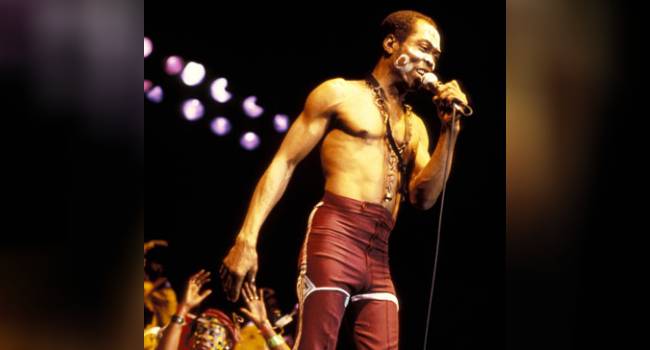
•Late Fela Anikulapo Kuti
The “King of Afrobeat”, “Black President”, activist and legendary musician Fela Anikulapo Kuti has returned to his hometown and Nigeria’s cultural capital Lagos through a landmark exhibition that celebrates his life and legacy and opens today.
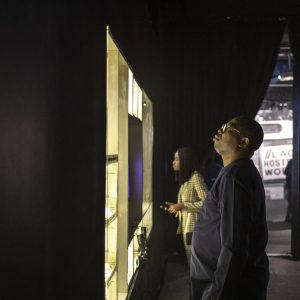
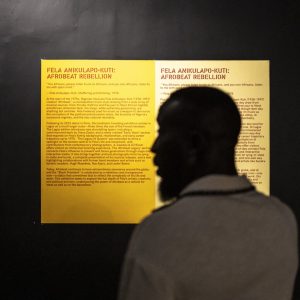
The “Afrobeat Rebellion” exhibition, organised by the French Embassy and the Kuti family, builds on one held in Paris in 2022 and coincides with the launch of the week-long “Felabration” festival that honours the musician every October, reports Channels TV.
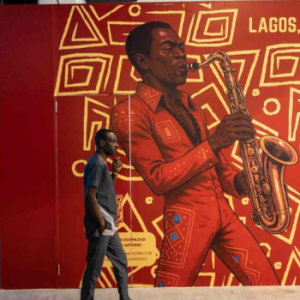
“The Paris exhibition was outstanding, but to have it here at home feels so special,” said Papa Omotayo, a Nigerian architect who helped to organise the Lagos event.
“And then there were some more local artefacts that were able to be gathered locally here by collectors,” he added, speaking at the opening night yesterday evening.
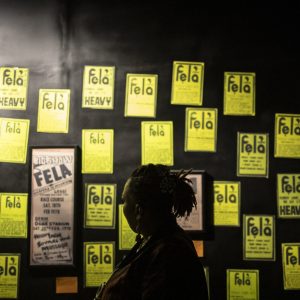
Designed as an “immersive multi-sensory journey” through Fela’s life, music, and political ideas, the exhibition recreates the scenes he inhabited, from his “Kalakuta” commune to his Afrika Shrine venue, layering archived objects, photographs, multimedia installations, and, of course, a soundtrack.
In the 1970s, the multi-instrumentalist and full-of-life performer invented Afrobeat: a mixture of jazz, funk, and African rhythms.
Over time, the genre gave rise to afrobeats (with an “s”), a less politicised form of music that incorporated the bling of US hip-hop and is now championed by Nigerian superstars such as Davido, Burna Boy, Tems, and Rema, who fill the world’s largest venues.
His vehement criticism of Nigeria’s military regimes led to his imprisonment on multiple occasions, and in 1978, soldiers raided his house, set it on fire, and threw his mother, Funmilayo Ransome-Kuti — an important decolonial, feminist figure herself — from the window.
‘Like Seeing History Come Alive’
Fela “is revered abroad, like a giant, like a saint, but back home even the government doesn’t see the essence of his value,” the musician’s close friend Mabinuori Kayode Idowu told our correspondent.
After a lifetime of clashes with successive powers in Nigeria, Fela has now received official posthumous recognition 28 years after his death, with Lagos State supporting the exhibition.
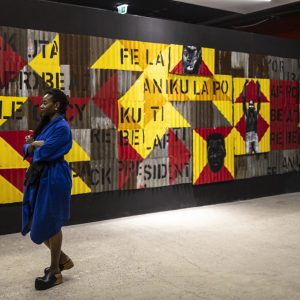
Ibrahim Olamilekan, 35, a director, called the exhibition a “celebration of the brain of this selfless man”.
“It’s like seeing history come alive,” said Chidimma Nwankwo, 32, founder of an organisation that promotes tourism and culture in Africa.
“I didn’t know that Wole Soyinka (winner of the Nobel Prize in Literature) was related to Fela on his grandmother’s side. So, that was a new thing I learned today.”
The musician’s eldest daughter, Yeni Kuti, now runs Afrika Shrine in memory of her father and views the exhibition as the perfect opportunity to reach younger generations less familiar with Fela, who died of AIDS in 1997.
“Work hard, be resilient, and you will be remembered after you die,” is Yeni’s message to this audience.
More than 60 percent of people in Africa’s most populous country live in extreme poverty.
“I hope it will help to open the eyes of the youngest folks to see what Fela was about, and maybe it will inspire them to do great things like Fela did,” said Kayode Idowu.