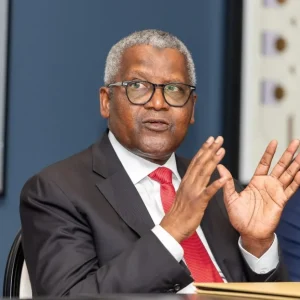
•PHOTO (L-R): Matthew Ojonugwa, Adebayo Aliu and Saheed Arigbede at the press conference on fintechs
Nigerians have demanded respect for consumer rights, accountability and financial transparency from fintechs operating in the country.
This demand was made at a press conference held to address issues around consumer rights, financial transparency, and due process within Nigeria’s digital financial ecosystem.
Affected individuals and legal representatives shared developments and provided further context during the briefing in Agidingbi, Ikeja, Lagos yesterday, Wednesday, March 11, 2026.
A lawyer, Saheed Arigbede, argued that questions have been asked about consumer rights in Nigeria’s rapidly expanding digital finance sector, reports The Guardian.
“In an ecosystem where millions of Nigerians rely on digital platforms for everyday transactions, transparency around financial charges is critical,” Arigbede said during the briefing, particularly as fintechs continue to handle a growing share of everyday payments across the country.
There have been observations that the rapid expansion of digital financial services has brought convenience to millions of Nigerians but there have also been complaints about their transaction fees, platform policies and regulatory oversight.
For Adebayo Aliu, he wants the fintechs in Nigeria to have respect for consumer rights: “I believe customers should be able to ask questions about charges affecting their money,” he said.
“We want transparency, and we want the relevant authorities to look into the concerns that have been raised. We want an improvement in how financial platforms communicate fees to users and how customer disputes are handled in Nigeria’s fast-growing fintech ecosystem.”
Meanwhile, the Economic and Financial Crimes Commission (EFCC), Ola Olukoyede, recently tasked the management of Moniepoint Micro Finance Bank on the need to ensure regulatory compliance in the services it renders.
Olukoyede gave the charge on January 22, 2026, when the management of the bank, led by its founder and Chief Executive Officer (CEO), Tosin Eniolorunda paid him a courtesy visit at the EFCC headquarters, Jabi, Abuja.
The EFCC’s boss emphasised the issue of due diligence in the day to day activities of the bank, stressing that such a modality would strengthen the fintech company and make it impossible for bad actors to use the platform to launder money or finance terrorism.
“It is something that you need to take seriously because it takes a lot to build a business. Take your time, play by the rules, follow the law, regulatory compliance and always address your mind to doing the right thing,” he said.
“Another thing I want to encourage you about is KYC (Know Your Customer). I am very sure that the Central Bank of Nigeria (CBN) and Securities Exchange Commission (SEC) have come up with this regulation on cryptocurrency. The KYC is very key and those are the things we expect you to take very seriously.”
Also, Olukoyede had earlier warned banks against making themselves available as instruments of fraud.
Olukoyede who spoke through his Chief of Staff, Commander of the EFCC, Michael Nzekwe noted that Nigerian banks over the years have become notorious as conduits of financial crimes and advised that they should turn a new leaf for the sake of the growth of the country.
“There is hardly any financial crime that would not go through the financial institutions. Money laundering is a major issue and you find out also that the perpetrators go through the banks. Nigeria will be the greatest beneficiary when we do the right thing,” he said.
Olukoyede observed that there was a high level of poor internal control by fintechs at the level of the unbanked, the under-served and the middle class population spectrum.
“There is quite a whole lot of fraud that goes around that particular level, so the issue of KYC is very important, especially because of the issue of how fintechs open tier-one accounts, sometimes without attention to KYC. And people take advantage of this and are quick to commit fraud through this negligence,” he said.
“So, that is one area fintechs have to also look at to see how they can improve on their KYC. Increasing their level of collaboration with the EFCC would mean to see themselves as stakeholders in the fight against corruption. We would like them to be able to respond to us when we make inquiries and when we make requests.”