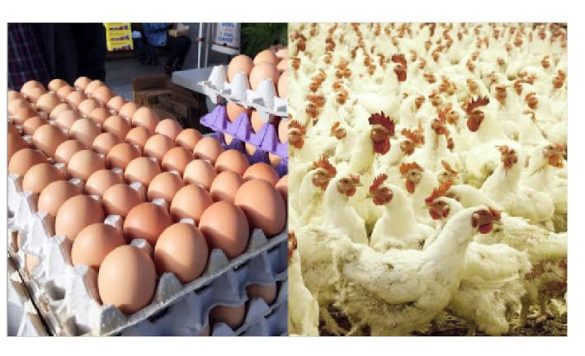
Egg production in Nigeria is coming under increasing threat as the price of day-old chicks (DOCs) surges to as high as N3,000, forcing many poultry farmers to scale back or delay restocking and raising concerns over looming supply shortages, Daily Independent gathered.
Stakeholders in the poultry industry warn that the surge in prices could significantly disrupt egg production and deepen protein shortages across the country, reports Daily Independent.
They note that the situation is placing intense strain on small and medium-scale farmers —who account for the bulk of egg production — as many struggle to restock their flocks consistently.
The ripple effect, they noted, is already beginning to show in declining egg output, irregular supply cycles, and the risk of higher prices for consumers.
In separate interviews with our correspondent, stakeholders attributed the crisis to a mix of economic instability, structural inefficiencies, logistical bottlenecks, and long-standing policy gaps, all of which have pushed the poultry value chain to a critical point.
They stressed that the escalating cost of DOCs —layers in particular — directly threatens egg production, as farmers are forced to delay or scale down restocking. Without urgent intervention, they warned, Nigeria could face tighter egg supplies, rising prices, and weakened food security.
The stakeholders pointed out that the scarcity has pushed the prices of day-old chicks to N3,000 from N1,800 in January 2026. Sunday Ezeobiora, National President of the Poultry Association of Nigeria (PAN), said multiple cost pressures are driving the surge, including foreign exchange volatility, high energy costs under Band A electricity tariffs, and rising diesel prices used to power hatcheries.
He said that the industry is bouncing back after years of pressure as feed prices, accounting for 70 percent of production costs, declined, stressing that the current scarcity of dayold chicks will need another egg-production cycle to be fully resolved.
Ezeobiora further explained that logistics challenges compound the problem.
Farmers located far from hatcheries face higher transportation costs and increased mortality risks, especially as trucks conveying hatching eggs and chicks are delayed at multiple checkpoints mounted by security agencies and other officials.
“These delays affect chick survival rates and raise the final cost to farmers. When farmers receive fewer viable chicks, it directly impacts the number of birds that will mature into egg-laying hens,” he added.
Foluso Adams, Deputy Chairman of PAN in Lagos State, identified additional pressures including rising demand for poultry products, inefficiencies in supply chains, reliance on imported parent stock, and limited hatchery capacity.
He noted that these factors are collectively reducing flock sizes and lowering overall productivity — trends that have direct implications for egg output in the medium term.
Yinka Lawal, Chairman of PAN in Ogun State, said nearly all hatchery inputs — including parent stock, vaccines, and equipment — are tied to foreign exchange, making production increasingly expensive.
He noted that many hatcheries are operating below capacity due to energy costs, limited access to finance, and ageing infrastructure, while disease outbreaks and weak biosecurity in breeder farms are reducing fertility and hatchability rates.
The result, he said, is a shrinking supply of DOCs, which disrupts the pipeline of future laying birds.
“When farmers cannot access enough quality chicks, it creates a gap that will be felt months later in egg production.
“That is what we are beginning to see — irregular supply and pressure on egg prices,” Lawal explained.
He added that the scarcity has strengthened the dominance of large integrated poultry companies, leaving small independent egg producers struggling to compete.
“At the farm level, many are cutting flock sizes or suspending operations. When that happens, egg production drops significantly because these smallholders account for a large share of supply,” he said.
Kabir Ibrahim, former National President of the All Farmers Association of Nigeria (AFAN), linked the crisis to soaring feed, drug, and energy costs, which have made breeder operations increasingly unsustainable.
He warned that declining consumer purchasing power further complicates the situation, as farmers are unable to pass on rising costs without risking reduced demand for eggs.
Dayo Gawati, Managing Director of Fdot Farms, argued that while seasonal price spikes are not unusual, the surge has been amplified by currency depreciation and weak policy coordination.
“This happens every year, but it is more severe now because of the naira. Without strong policies and effective administration, the cycle will continue,” he said.
Godwin Egbebe, another industry stakeholder, pointed to macroeconomic shocks such as naira devaluation, rising fuel prices, and electricity tariffs as key drivers of rising production costs.
For Dr. Taiwo Adeoye, Managing Director of Rostal Resources Limited, the roots of the crisis lie in policy shifts over the past two years, particularly fuel subsidy removal and foreign exchange deregulation, which triggered widespread inflation across the poultry value chain.
“The impact cut across all levels — from Grand Parent Stock to Parent Stock and down to commercial farms. Many operations scaled down, and rebuilding that capacity will take time,” he said.
Adeoye warned that restoring breeder and hatchery capacity to pre-2023 levels could take at least a year, meaning the current shortage of DOCs— and its impact on egg production —may persist in the near term.
As the crisis deepens, stakeholders are unanimous that without targeted interventions — ranging from easing logistics bottlenecks to improving access to finance and stabilising input costs — the consequences for egg production could be far-reaching.
With fewer chicks translating into fewer laying birds, Nigeria risks not only higher egg prices but also reduced availability of one of the most affordable sources of animal protein for millions of households.