While much of the world is open to tourists, there are places where visitors are either completely prohibited from entering or allowed access only under very strict conditions.
The reasons vary. Some locations are protected because of fragile ecosystems or ancient archaeological remains, while others are restricted for security, religious or cultural reasons, reports Vanguard.
Here are 10 places around the world where ordinary visitors cannot simply walk in.
1. North Sentinel Island, India
North Sentinel Island, located in India’s Andaman and Nicobar Islands, is home to the Sentinelese, one of the world’s few remaining communities living in voluntary isolation.
The Indian government has adopted an “eyes-on and hands-off” policy towards the tribe. The entire island, together with a surrounding coastal zone, has been designated as a tribal reserve.
Visitors are prohibited from going ashore or approaching the island.
India’s government says the restrictions are intended to protect both the Sentinelese and outsiders from potentially dangerous contact.
The restrictions are strictly enforced, making North Sentinel Island one of the world’s most inaccessible inhabited places.
2. Surtsey, Iceland
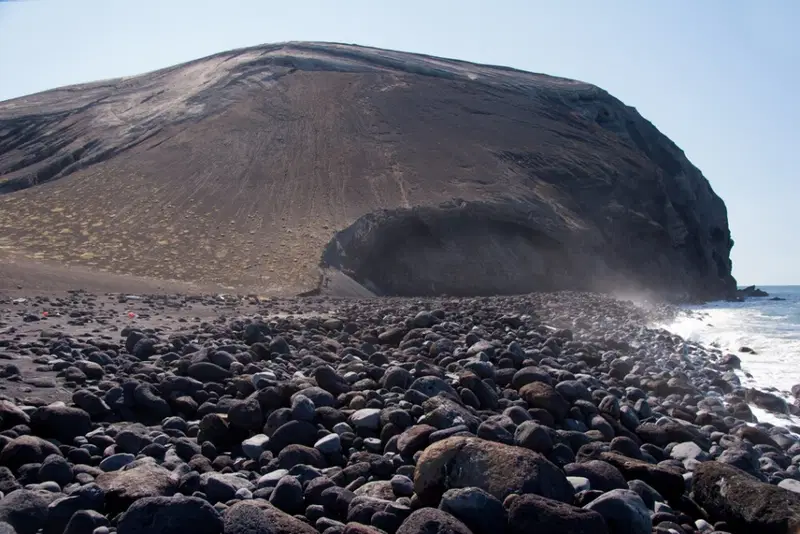
Surtsey is a volcanic island that emerged from the Atlantic Ocean between 1963 and 1967.
Rather than turning the newly formed island into a tourist attraction, Iceland placed it under strict protection so scientists could observe how plants, animals and other organisms naturally colonise new land.
UNESCO says going ashore or diving by Surtsey is prohibited, while introducing organisms, minerals or soil and leaving waste on the island are also forbidden.
Only authorised scientific activity is permitted under the site’s protection arrangements.
The restrictions have helped preserve Surtsey as a rare natural laboratory largely free from human interference.
3. Lascaux Cave, France
The Lascaux Cave in southwestern France contains prehistoric paintings dating back roughly 17,000 years.
The cave was once open to visitors, but the large number of people entering the site began threatening the paintings. Changes in the cave’s environment contributed to biological problems that endangered the artwork.
UNESCO records that the cave was closed to the public in 1963 for conservation reasons. Today, visitors are directed towards replicas and interpretation centres rather than the original cave.
The closure demonstrates how tourism itself can threaten ancient heritage sites.
4. Chauvet Cave, France
Another French prehistoric site, the Chauvet Cave contains some of the world’s oldest known figurative cave paintings.
Unlike many tourist caves, the original Chauvet site was never opened to mass tourism.
UNESCO says changes in humidity and air composition could severely affect the drawings and paintings.
As a result, the cave is not open to the general public, and even visits by experts, researchers and conservators are restricted to the minimum necessary.
A replica was created so visitors could experience the artwork without entering the original cave.
5. Ilha da Queimada Grande, Brazil
Better known as Snake Island, Ilha da Queimada Grande lies off the coast of São Paulo and is famous for its population of the highly venomous golden lancehead snake, Bothrops insularis.
The island is a federal conservation unit managed by Brazil’s ICMBio, and members of the general public cannot simply visit it.
Brazil’s Butantan Institute reported in 2025 that the island can only be visited by people properly authorised by the conservation authorities. The municipality of Itanhaém also states that landing on the island is prohibited.
Scientists and authorised researchers can access the island for conservation and research purposes.
6. Fort Knox Bullion Depository, United States
Fort Knox is synonymous with America’s gold reserves, but tourists cannot enter the famous bullion depository.
The US Mint states explicitly that no visitors are permitted at the United States Bullion Depository.
The facility stores a huge quantity of US government gold, and access is tightly controlled. The Mint says the depository currently holds more than 147 million fine troy ounces of gold.
The facility has occasionally been opened to highly selected officials and journalists. However, those exceptional visits do not make it a public tourist attraction.
7. Svalbard Global Seed Vault, Norway
Deep inside a mountain on the Norwegian Arctic archipelago of Svalbard is the Global Seed Vault, which stores backup copies of crop seeds from gene banks around the world.
Although visitors can see the distinctive entrance from outside, the interior is not open to the public.
NordGen, one of the organisations operating the facility, says only authorised personnel can enter the Seed Vault following enhanced security measures. Even media representatives are no longer permitted inside.
As of June 2026, more than 1.4 million seed samples were stored in the facility, making it one of the world’s most important repositories of agricultural genetic diversity.
8. Heard Island and McDonald Islands, Australia
Located in the southern Indian Ocean, Heard Island and the McDonald Islands are among Australia’s most remote territories.
The islands are protected for their exceptional natural environment, including glaciers, volcanic landscapes and wildlife.
UNESCO describes the area as a strict nature reserve and says strict visitation and quarantine controls are required to preserve its ecological integrity and prevent the introduction of diseases and non-native species.
Access is therefore highly restricted and controlled rather than being available to ordinary tourists.
9. Mount Athos, Greece
Mount Athos is a self-governing monastic community in northern Greece and home to 20 monasteries.
It is unusual because access is restricted based on gender: women are not permitted to enter the peninsula under the traditional Avaton rule.
Men can visit, but they must obtain a special permit, while the number of visitors is controlled.
Information for pilgrims states that only men are permitted to enter Mount Athos and that foreign visitors require written permission from the relevant Mount Athos authorities.
The restriction is rooted in the religious traditions governing the monastic community.
10. Makkah’s Holy Mosque and its premises, Saudi Arabia
Some restrictions are based not on environmental protection or security but on religious rules.
Saudi Arabia’s official tourism visa terms state that non-Muslims are not permitted to enter the Holy Mosque and its premises in Makkah. The same terms also prohibit non-Muslims from entering the Prophet’s Mosque and its premises in Madinah.
Makkah also has additional access restrictions during the Hajj season. In 2026, Saudi authorities required permits for entry during the Hajj period and imposed penalties on people who entered or remained in Makkah and the holy sites without the required authorisation.
The restrictions are intended to preserve the sanctity of the holy sites and regulate access during the annual pilgrimage.
Why are these places restricted?
The reasons these locations are off-limits vary considerably.
For North Sentinel Island, the priority is protecting an isolated indigenous community. For Surtsey, the objective is scientific and environmental preservation. Lascaux and Chauvet are protected because human presence could damage irreplaceable prehistoric artwork.
Other sites, such as Fort Knox and the Svalbard Global Seed Vault, have restrictions because of security and the importance of what they contain. Mount Athos and Makkah have restrictions rooted in religious traditions and rules.
These locations show that some of the world’s most fascinating destinations are not necessarily places that can be added to a normal holiday itinerary.
In many cases, keeping visitors away is precisely what allows the sites, communities and treasures within them to survive.