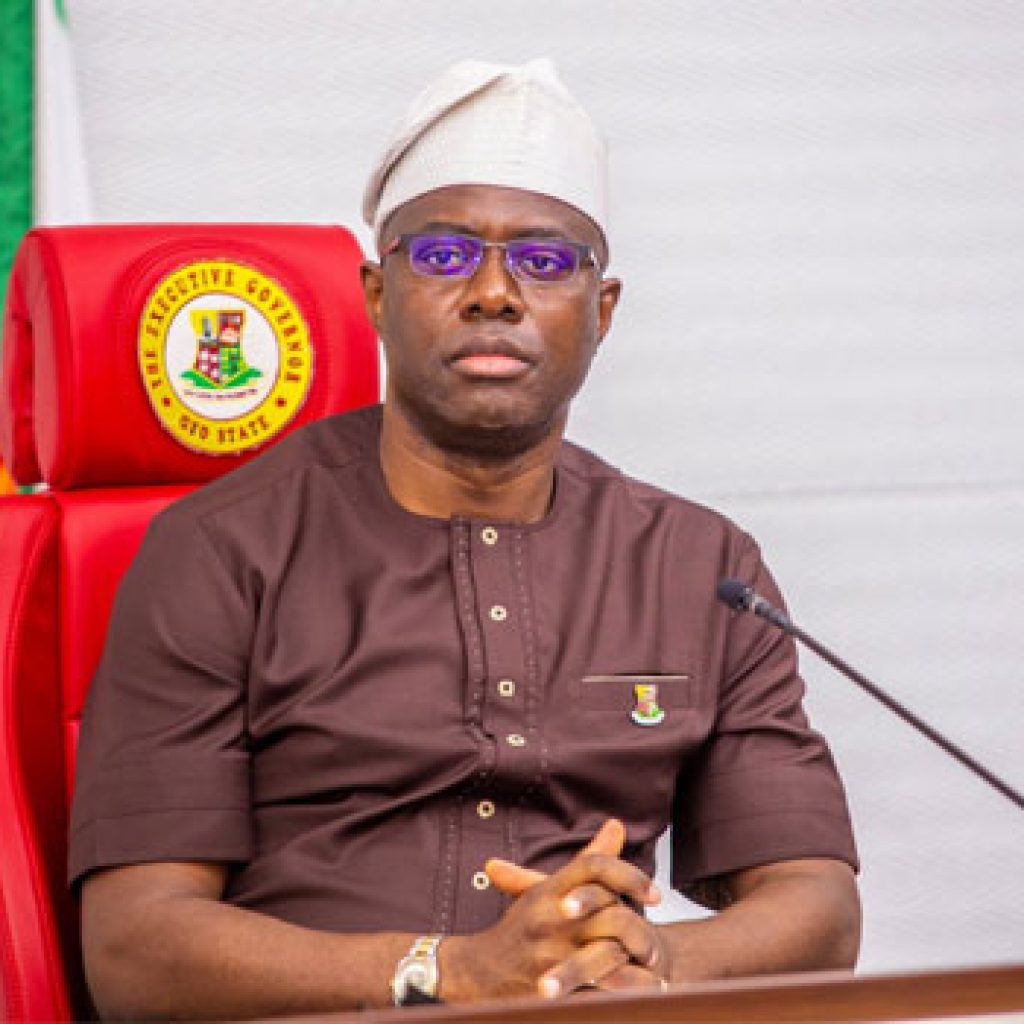
•Governor Babajide Sanwo-Olu of Lagos State
Experts and African leaders have sounded the alarm over the surge in ritual killings and human trafficking, urging urgent and united action to confront what they described as a growing continental crisis.
The alarm was raised at the first Annual Africa Colloquium Against Human Trafficking, organised by the Lagos State Ministry of Justice in partnership with Pepperdine University’s Sudreau Global Justice Institute, where speakers decried the growing fusion of ritual abuse, sacrifice, and trafficking networks across Nigeria and West Africa.

Lagos State governor, Babajide Sanwo-Olu, in his opening address, warned that the nation is facing one of the most heinous crimes against humanity that must be tackled collectively, reports Daily Independent.
Represented by the Secretary to the State Government, ’Bimbola Salu-Hundeyin, the governor said: “Human trafficking is not an abstract problem. It is real, and it is close to home,” stressing that millions especially women and children are trapped in forced labour, sexual exploitation, and ritual abuse.
He urged African governments, law enforcement agencies, and traditional institutions to unite in dismantling myths that link success or power to human sacrifice.
“Our people are not for sale; our children are not sacrifices,” Sanwo-Olu declared.
He added that the colloquium must mark “the day we moved from words to work,” calling for collective efforts to “protect our people, punish perpetrators, and restore dignity to those harmed.”
The Attorney General of the Federation, (AGF), Lateef Fagbemi (SAN), in his remark noted that the fight against human trafficking demands a shared continental strategy, adding that ritual-related crimes have grown into a major security and moral crisis in several African countries.
Represented by Ezinne Nwokoro, the AGF added that the conversation must move beyond rhetoric to institutional reforms that strengthen cross-border investigations, fast-track prosecutions, and prioritise victim rehabilitation.
He stressed that the fight against human trafficking demands a shared continental strategy, adding that ritual-related crimes have grown into a major security and moral crisis in several African countries.
“We must rebuild a justice system that protects the most vulnerable and ensures that no trafficker or ritual killer hides behind culture or borders,” he said.
The Chief Judge of Lagos State, Kazeem Alogba, described human trafficking as a global pandemic that continues to threaten the dignity and safety of human beings across the world.
Speaking at a forum, the Chief Judge said trafficking has existed for centuries and remains one of humanity’s oldest and most exploitative trades.
She noted that ritual abuse and human sacrifice are offshoots of historical slavery practices and called for collective community action to eradicate them.
According to her, communities must perceive human trafficking as evil for it to be effectively tackled.
Alogba also emphasised the need for proper training and motivation of law enforcement personnel who serve as “foot soldiers” in combating trafficking.
She commended the Lagos State legislature for imposing tougher penalties and reaffirmed the judiciary’s commitment to enforcing anti-trafficking laws.
In his address, the Lagos State Attorney-General and Commissioner for Justice, Mr. Lawal Pedro (SAN), said human trafficking has become one of the most profitable global crimes, generating an estimated $236 billion annually, only behind arms and drug smuggling.
Pedro described the illicit trade as “a high-profit, low-risk enterprise for criminal syndicates,” stressing that it thrives on weak enforcement, poverty, and cross-border complicity.
He added that ritual killings and trafficking are increasingly interlinked, both organised and commercialised.
He noted that the Lagos State Task Force Against Human Trafficking, in partnership with NAPTIP and international bodies, has rescued over 4,700 victims between 2022 and 2024, while also strengthening prosecution systems and public awareness.
“The government alone cannot win this fight,” he said. “We need a united front of justice ministries, traditional rulers, faith leaders, and civil society to break this chain of exploitation.”
The Director-General of the National Agency for the Prohibition of Trafficking in Persons (NAPTIP), Binta Adamu Bello, described ritual killings as “a dangerous new face of human trafficking” in Nigeria, disclosing that over 150 cases were recorded within just five months of 2025.
She said many victims of ritual killings were, in fact, victims of trafficking, trapped by coercion and spiritual manipulation.
“These oaths are not enforced with guns or chains, but with deep-seated cultural fears,” she said, recalling that traffickers often use fetish oaths to silence and control victims trafficked abroad for sexual exploitation.
Speaking on behalf of Pepperdine University’s Sudreau Global Justice Institute, Professor Cameron McCollum reaffirmed the institution’s commitment to supporting African nations in building stronger justice systems to combat ritual abuse and human trafficking.
He noted that Pepperdine, based in Los Angeles, has partnered with African countries for over two decades, beginning with Uganda, where it helped develop a fast-track juvenile justice system.
McCollum said the university now works with nearly 20 African countries on justice and anti-trafficking projects.