•Nigerian Senate, Super Eagles and Super Falcons
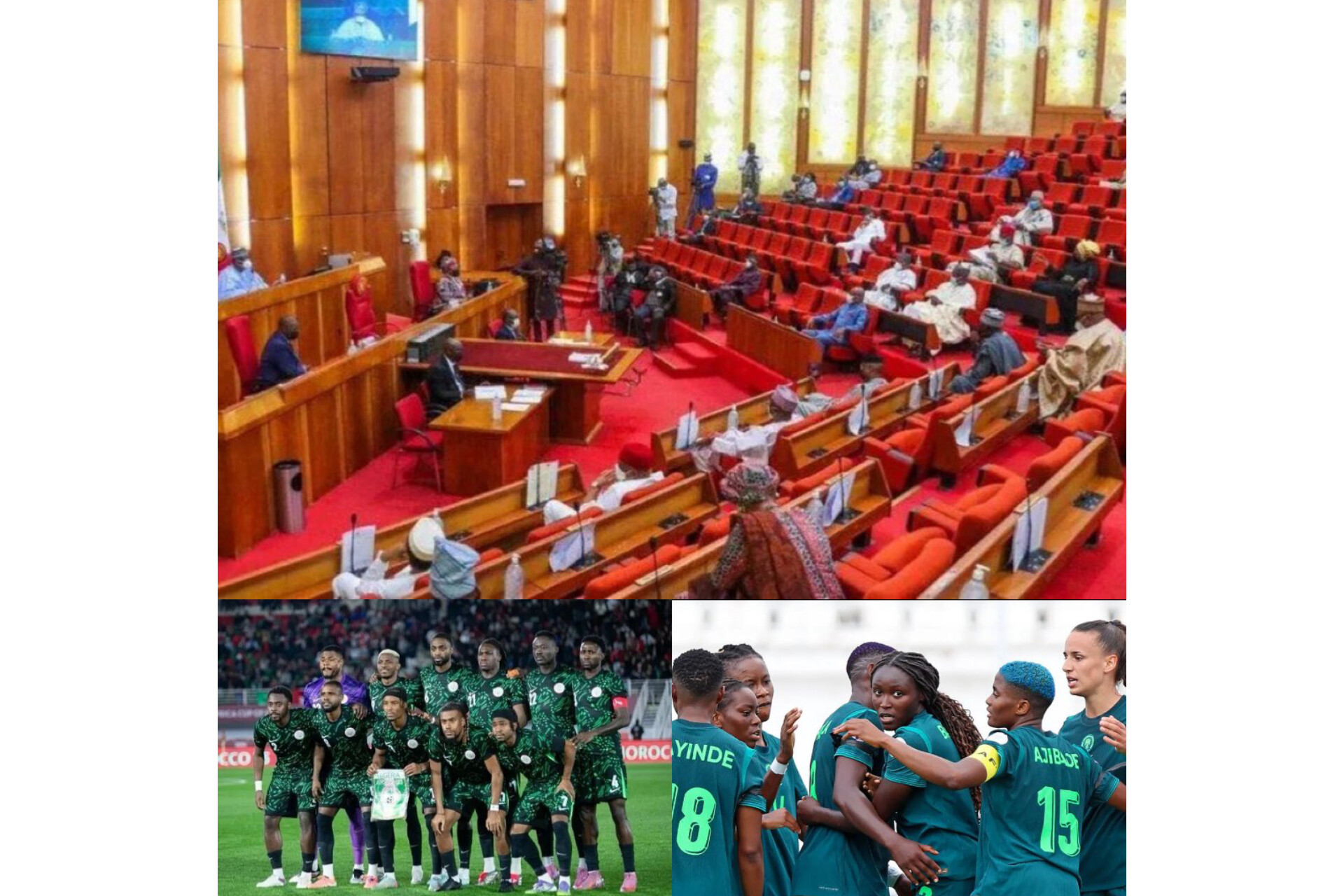
The Senate yesterday is launched a fresh assault on the country’s football administration, expressing deep anger over the string of embarrassing failures suffered by Nigeria’s national teams and demanding urgent explanations from the National Sports Commission (NSC) and Nigeria Football Federation (NFF).
The Senate Committee on Sports, led by Senator Abdul Ningi (Bauchi Central), summoned NSC Chairman, Shehu Dikko, and NFF President, Ibrahim Musa Gusau, to an emergency meeting over what lawmakers described as the alarming collapse of Nigeria’s football fortunes, reports Daily Independent.

The meeting, held in Ningi’s office, followed a directive from Senate President, Godswill Akpabio, who, according to the committee chairman, demanded answers on the worsening state of Nigerian sports, particularly football.
Ningi told journalists after the meeting that the engagement was designed to prepare the ground for his comprehensive briefing to the Senate when it resumes next month on the state of sports and measures required to restore Nigeria’s competitiveness on the international stage.
He said the Senate was particularly disturbed by the failure of the Super Eagles to qualify for the 2026 FIFA World Cup, followed by the Super Falcons’ failure to secure qualification for the 2027 FIFA Women’s World Cup in Brazil.
“We called them to close ranks,” Ningi said, accusing the NFF and NSC of operating too far apart despite their shared responsibility for the development and success of Nigerian football.
According to him, the widening gap between the two institutions had become unacceptable and required immediate intervention.
“They are wide apart,” he said, adding that efforts were already underway to bring both bodies together for a coordinated approach to rescuing Nigerian football.
Ningi said the Senate meeting was also aimed at uncovering the reasons behind the poor performances of the national teams despite what he described as unprecedented incentives and increased government support for sports.
He recalled that President Bola Tinubu had provided substantial financial motivation for players and officials, including a $100,000 payment to each member of the relevant contingent.
Ningi questioned what additional motivation could reasonably be demanded from government after such interventions, particularly when the country was grappling with severe economic pressures affecting more than 220 million Nigerians.
He further disclosed that government had significantly increased the sports budget, insisting that the combination of financial incentives and increased funding should have translated into improved performances.
“I thought the president has done all that he could in motivating them,” he said.
The senator said the failure to qualify for the 2026 World Cup was particularly painful, while the Super Falcons’ inability to make the 2027 tournament had compounded the national disappointment.
The development has intensified calls by football enthusiasts for sweeping changes, including demands for the dissolution of the NFF.
But Ningi cautioned that any intervention by the Senate and other stakeholders must remain firmly within the boundaries of Nigerian law and international football regulations.
He said the legislature would examine the relevant Nigerian laws alongside FIFA statutes before determining the appropriate course of action.
“My concern is that whatever action we must do, we must do it within the limits of the law,” Ningi said.
The emergency meeting has therefore opened a new phase in the Senate’s scrutiny of Nigerian football administration, with the committee expected to report back to the full chamber when lawmakers reconvene next month.
For a football establishment already under mounting pressure, the Senate’s intervention signals that the failures of Nigeria’s national teams are no longer being treated merely as sporting disappointments, but as a matter demanding institutional accountability and urgent corrective action.