•Nigerian Senate
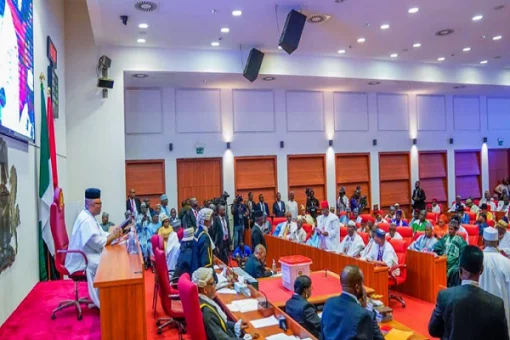
Delta North’s Senator Ned Nwoko has said the Red Chamber’s passage of the National Agency for Malaria Elimination Bill is a landmark step in Nigeria’s fight against malaria.
He expressed the confidence that the country could henceforth move from managing the disease to eliminating it, reports The Nation.

Nwoko, who sponsored the legislation, said the Bill’s passage marked a historic turning point in the battle against one of Nigeria’s most persistent public health challenges.
Speaking after the Bill scaled the third reading, Nwoko said the elimination of malaria was not only possible but had been achieved by several countries around the world.
“Malaria has been eliminated in several countries around the world. It is achievable. Nigeria can end malaria, and Africa can end malaria. What is needed is focus, coordination and political will,” he said.
The piece of legislation, titled: “A Bill for an Act to Establish the National Agency for Malaria Elimination and for Related Matters, 2025 (SB.172),” seeks to create a dedicated institution to coordinate a comprehensive, data-driven and results-oriented national response to malaria.
The legislation, which passed the second reading on May 15, 2025, was subsequently referred to the Senate Committee on Health (Secondary and Tertiary) for further scrutiny before receiving final approval.
Nwoko said the proposed agency would provide the institutional framework required to drive prevention, environmental management, research, surveillance, public awareness campaigns and elimination strategies across the country.
The Delta North’s lawmaker noted that the Senate’s approval represented the culmination of years of advocacy and personal commitment to the cause of malaria eradication in Africa.
Recalling his efforts to draw global attention to the disease, the senator said he undertook a symbolic expedition to Antarctica nearly two decades ago and subsequently drafted similar legislation as a private citizen. Although the proposal failed to gain legislative support at the time, Nwoko said he remained committed to the vision and revived it after his election to the Senate.
According to him, malaria continues to claim thousands of lives across Africa, particularly among children and vulnerable groups, despite being largely preventable and treatable.
“Many people have come to accept malaria as a normal part of life. It should not be. We must move beyond treatment to elimination,” he said.
The Bill received a significant boost during stakeholder consultations conducted by the Senate Committee on Health.
As part of the legislative process, the committee invited memoranda from the public through advertisements in national newspapers and electronic media before organising a public hearing that attracted health experts, government agencies, civil society organisations, and development partners.
Participants included representatives of the Federal Ministry of Health, the Federal Ministry of Justice, the National Agency for Food and Drug Administration and Control (NAFDAC), the Nigeria Medical Association (NMA), Joint Health Sector Union, Environmental Health Council of Nigeria, Nigeria End Malaria Council, Malaria Technical Working Group and several academic and public health institutions.
The committee reported overwhelming support for the Bill, with stakeholders stressing the need for a specialised institution that would focus exclusively on malaria elimination rather than the management of recurring outbreaks.
Lawmakers also adopted the term “elimination” instead of “eradication,” noting that the former aligns with internationally accepted terminology for country-level interventions.
Addressing concerns over potential duplication of functions with the existing National Malaria Elimination Programme, the committee explained that the proposed agency would serve as the central coordinating body for all malaria prevention, control and elimination efforts nationwide.
The committee further observed that Nigeria’s current malaria response is heavily skewed towards treatment, with insufficient emphasis on prevention and long-term elimination strategies.
Under the proposed law, the agency would establish zonal and state offices and implement a national strategic plan aimed at coordinating interventions across federal, state, and local government levels.
Nwoko maintained that Nigeria could replicate the success recorded by other countries if it invested more aggressively in environmental sanitation, waste management, fumigation, research and innovation to reduce mosquito breeding sites.
“There is no amount of money spent to save lives that is too much. Families are still losing loved ones to malaria every day. We cannot continue to treat this as normal,” he said.
Nwoko added that the initiative would operate at the grassroots level through partnerships with states, local governments and communities, ensuring that malaria elimination efforts reach every part of the country.
Following the Senate’s approval, the Bill will proceed to the House of Representatives for concurrence before being transmitted to President Bola Ahmed Tinubu for assent.
If enacted, the National Agency for Malaria Elimination is expected to become one of the most ambitious public health institutions in Nigeria’s recent history and could strengthen the country’s leadership role in Africa’s campaign to eliminate malaria.
“This is a fight we can win. Nigeria can end malaria, and we must be determined to do so,” Nwoko stated.