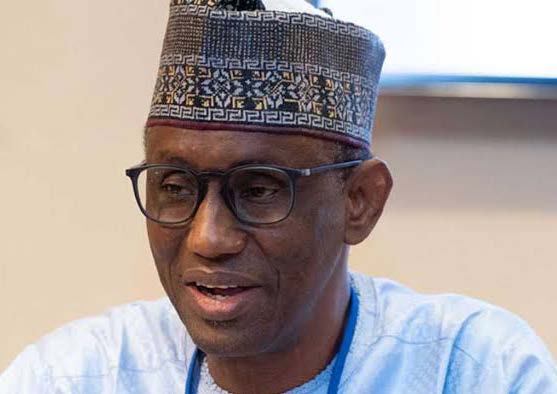
•National Security Adviser, Nuhu Ribadu
By SOLA SHITTU
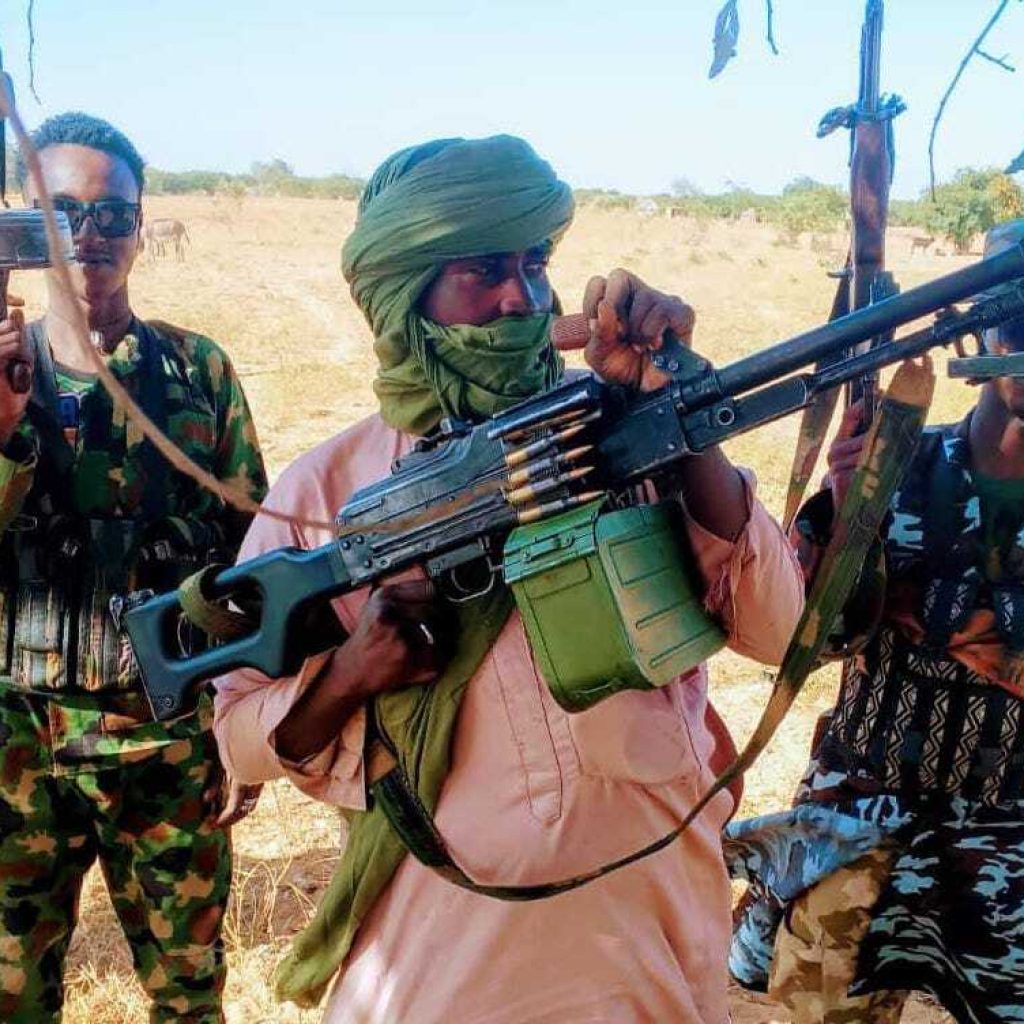
For more than a decade, Nigeria has battled terrorism with guns, boots, and battlefield strategies. From aerial bombardments to ground offensives in forests and border communities, the state’s response has largely focused on eliminating fighters and reclaiming territory, reports Sunday Independent.

Yet beneath the explosions, abductions, and massacres lies a quieter but far more resilient engine of violence: money. Terrorism in Nigeria is not sustained by ideology alone; it is powered by a complex, adaptive, and often invisible financial ecosystem that channels billions of naira across villages, borders, bank vaults and, increasingly, digital platforms.
From Boko Haram’s early reliance on foreign ideological sympathisers and external donations to today’s insurgency–bandit hybrid sustained by kidnapping, extortion, illegal mining, arms trafficking, and informal financial networks, terror financing in Nigeria has evolved into a sophisticated underground economy. It is an economy that thrives on weak oversight, porous borders, informal value systems, and the desperation of communities trapped between armed groups and a distant state. Despite repeated government claims of arrests and prosecutions of terror financiers, many security experts insist that Nigeria is still confronting the symptoms of terrorism rather than dismantling the financial arteries that keep violent groups alive.
Security analysts increasingly agree that terror groups rarely collapse simply because fighters are killed. Rather, they weaken when funding dries up. In Nigeria’s case, that funding is almost never a single stream.
It is a braided river of criminal enterprise, coerced community payments, ideological contributions, diaspora support, and illicit trade. Dr. Kabir Adamu, Managing Director of Beacon Consulting and a leading security analyst, describes the system as decentralised and highly adaptive. According to him, Nigeria now faces a web of overlapping networks that combine terrorism, banditry, organised crime, and local political economies, with money flowing faster through these networks than the state’s intelligence systems can presently track.
In its formative years, Boko Haram reportedly depended on foreign donations and ideological sponsors, some routed through charities and informal remittance systems. As international scrutiny increased and counter-terror financing controls tightened, the group adapted. By 2014, when it briefly controlled territory across parts of the North- East, Boko Haram had become largely self-financing. It taxed local populations, looted banks, seized agricultural produce, extorted traders, and engaged in cross-border smuggling. That model did not disappear with territorial losses; it fragmented, migrated, and merged with other violent criminal networks.
AN OVERLAPPING FINANCIAL ECOSYSTEM
Today, bandit groups in the North-West, terror cells in the North-East, and criminal-terror hybrids across parts of the North-Central operate overlapping financial ecosystems.
A senior security source familiar with counter-terror finance operations described the system as “a criminal economy disguised as insurgency,” where money moves more efficiently than troops. According to the source, weapons procurement, fuel supply, food logistics, informant payments, and recruitment incentives continue uninterrupted even when individual fighters are neutralised.
Kidnap-for-ransom has become the most visible and emotionally charged component of this terror economy.
Entire communities in Zamfara, Katsina, Kaduna, Niger, and parts of the North-Central now live under informal taxation regimes enforced by armed groups.
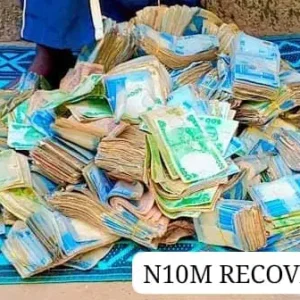
Intelligence assessments and independent security reports estimate that ransom payments linked to banditry and terror networks run into hundreds of billions of naira annually, much of it undocumented. Families sell land, livestock, and businesses to raise funds, while communities collectively negotiate under duress to secure the release of abducted relatives.
Although the government officially discourages ransom payments, negotiations often occur through intermediaries such as local elders, informal brokers, and community representatives, creating opaque money trails that are nearly impossible to audit.
A former Department of State Services operative explained that ransom operations are rarely chaotic. They are structured enterprises with designated negotiators, couriers, accountants, logistics coordinators, and armed enforcers.
Funds are distributed through defined hierarchies, with allocations for weapons procurement, logistics, fighters’ welfare, informant networks, and reinvestment into future operations. By the time one courier is tracked, the money has usually passed through multiple layers.
WELL-KEPT SECRETS OF INTERMEDIARIES, PAYMENTS
In many affected communities, residents quietly admit they know who collect these funds and how payments are enforced.
Fear, complicity, and survival instincts keep mouths shut. Silence becomes a form of protection in areas where state presence is weak and retaliation is swift.
Beyond kidnapping lies a less visible but equally potent source of terror finance: illegal mining and resource smuggling.
Vast ungoverned spaces in northern Nigeria host illegal gold, lithium, and mineral mining sites controlled or taxed by armed groups. Ore is extracted by desperate locals and, in some cases, forced labour, then smuggled through porous borders into neighbouring countries before entering the global supply chain.
A mining governance expert familiar with the sector described illegal mining as terrorism’s silent financier, noting that unlike ransom cash, minerals leave little immediate digital footprint. Gold leaves Nigeria as dust and re-enters the international market as refined bullion, with proceeds returning as clean money through intermediaries.
Security reports suggest that revenues from illegal mining are often harder to trace than ransom payments and may even exceed them. Cattle rustling, fuel smuggling, arms trafficking, and illicit agricultural trade —particularly around border corridors near Lake Chad —further entrench terror groups within local economies, blurring the line between ideological insurgency and organised crime.
Contrary to popular belief, terror financing does not operate entirely outside Nigeria’s formal financial system. Financial intelligence officials acknowledge that significant volumes of illicit funds pass through banks and licensed institutions, often in fragmented amounts deliberately structured to evade detection thresholds. Compliance officers in commercial banks admit privately that while Suspicious Activity Reports have improved intelligence gathering, Nigeria’s vast informal economy continues to undermine enforcement. Cash couriers, unregistered bureaux de change, agent banking outlets, and community-based remittance networks remain major vulnerabilities.
The expansion of mobile money platforms and POS-based agent banking has deepened financial inclusion but has also created new channels for abuse, particularly in rural areas with weak identity verification.
The rise of cryptocurrency has added another layer of complexity. While there is limited public evidence of large-scale crypto-funded terrorism in Nigeria, security agencies confirm that digital assets are now actively monitored due to their anonymity and cross-border mobility.
WHO ARE THE FINANCIERS?
Perhaps the most sensitive question in Nigeria’s terror-financing debate is also the most politically explosive: who funds terrorism?
Over the years, investigations have pointed fingers at businessmen, politicians, religious figures, diaspora networks, and criminal entrepreneurs. Some cases have reached the courts; many have not. Allegations are often entangled in politics, ethnic sensitivities, and weak prosecutorial follow-through.
Professor Jideofor Adibe, a political analyst and public policy scholar, argues that elite complicity remains the unresolved core of the problem. According to him, terror financing is not a poor man’s crime. It requires capital, access, and protection, and until elite enablers are confronted, the system will continue to recycle itself by sacrificing foot soldiers.
A counter-terrorism expert described financiers as “the clean hands behind dirty wars,” stressing that dismantling their networks requires political courage as much as intelligence capacity. Without sustained political will, financial investigations risk stopping at the lowest rungs of the ladder.
The federal government maintains that it is intensifying efforts to disrupt these financial networks.
The Minister of Defence, General Christopher Musa (rtd.), has repeatedly stated that modern counter-terrorism must prioritise intelligence-driven financial disruption alongside military operations.
He has argued that terrorism cannot be defeated solely through kinetic action and that cutting off funding streams is central to degrading armed groups’ operational capacity.
Similarly, the Chief of Defence Staff, Lt. Gen. Olufemi Oluyede, has emphasised that Nigeria’s security architecture is increasingly focused on intelligence fusion, financial tracking, and inter-agency collaboration.
According to him, contemporary warfare is as much financial as it is kinetic, and once funding pipelines are disrupted, arms supply chains, recruitment mechanisms, and logistics networks begin to collapse.
Authorities point to prosecutions under anti-money laundering and counter-terrorism laws as evidence of progress.
The Nigerian Financial Intelligence Unit, working with the EFCC and other agencies, says it has strengthened monitoring frameworks and aligned Nigeria with global AML and counter-terror financing standards.
Critics, however, argue that convictions alone do not equal meaningful disruption. They question the scale of asset seizures, the transparency of prosecutions, and the absence of detailed public accounting showing how terror-finance networks are dismantled and proceeds recovered.
TERROR FINANCING: A DAILY REALITY
For communities trapped between terrorists and the state, terror financing is not an abstract policy debate but a daily reality.
Farmers pay so-called security levies to access their land. Traders are taxed to move goods along rural roads. Families live under constant threat of abduction and extortion. In some villages, armed groups function as de facto authorities, collecting revenue more efficiently than the state. Ironically, these same communities are later accused of aiding terrorism when money trails surface.
Human rights advocates warn that without addressing poverty, governance gaps, and prolonged state absence, financial crackdowns risk criminalising victims rather than perpetrators.
Experts broadly agree that defeating terror financing requires more than arrests and publicised convictions. It demands deeper financial intelligence, political courage to pursue elite financiers, stronger border and mineral regulation, community-based economic alternatives, and transparency in prosecutions and asset recovery. Above all, it requires recognising terror financing as a national economic threat, not merely a security challenge.
As long as terrorism remains profitable, violence will continue to find recruits. Guns may silence fighters, but only financial disruption can dismantle the system that replaces them. Nigeria’s terror war will not be won in forests alone. It will be won—or lost— in bank records, mining pits, border towns, ransom negotiations, and digital ledgers. Unmasking the trail of billions is uncomfortable, politically risky, and legally complex.
But until Nigeria follows the money with the same intensity it follows the gunmen, terrorism will continue to regenerate — funded, fed, and financed from within.