Some businesses and traders may be taking advantage of the newly introduced tax laws to arbitrarily increase the prices of goods and services in different parts of the country, findings have shown.
Since the commencement of the new tax laws in January, the federal government has maintained that the laws would reduce certain taxes and stimulate growth without short-term revenue increases, reports Saturday PUNCH.
However, recent developments indicate that some business owners are already raising the prices of their goods and services, attributing the hikes to the tax laws.

It was gathered that the increases have come in the form of Value Added Tax charges and other general price adjustments.
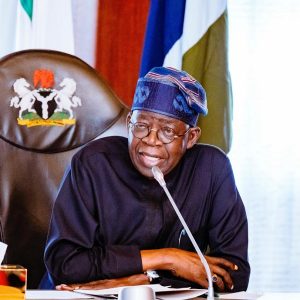
The controversial tax regime became law on June 26 when President Bola Tinubu signed four major tax reform bills into laws, marking what the government has described as the most significant overhaul of the tax system in decades.
The laws are the Nigeria Tax Act, the Nigeria Tax Administration Act, the Nigeria Revenue Service (Establishment) Act and the Joint Revenue Board (Establishment) Act, all operating under a single authority, the Nigeria Revenue Service.
The NRS had, last December, said the new tax laws were designed to strengthen economic competitiveness, attract investments and improve long-term fiscal stability.
The agency also said the much-debated four per cent development levy on imported goods is not a new or additional tax burden, but a streamlined consolidation of several existing levies.
The exempted items
Under the new tax laws, a list of items mostly used by Nigerians are exempted from VAT payments. These include basic food items such as rice, beans, vegetables and other unprocessed essentials.
Other exemptions include medical and pharmaceutical products, educational books (materials and services), electricity generation and transmission services, non-oil exports, agricultural inputs, diesel, petrol and solar power equipment.
Rents and goods meant for humanitarian projects are also exempt from VAT under the new law.
In addition, companies with annual turnover below N100m are exempt from charging VAT entirely.
However, despite these exemptions, findings show that business owners, traders and SMEs in different parts of the country are exploiting the new tax laws to make extra gains on products and services.
In separate interviews with our correspondents, some business owners, retailers and traders confirmed the sharp increases in the prices of goods and services, citing the need to accommodate fresh tax payments.
A business owner, who identified herself simply as Yemisi, said the implementation of the tax laws had forced her to increase prices to accommodate tax payments.
She noted that failure to do so could negatively affect her business by the end of the year.
Yemisi described the tax and VAT regime as challenging for small-scale registered businesses, stressing that both had impacted revenue and income.
She said, “We have started increasing prices to accommodate the tax reforms. If we don’t do that, business owners may end up without any gains.
“Clothes we used to buy for N8,000 now cost N10,000, while items that sold for N15,000 are now sold for between N17,000 and N20,000.”
Similarly, a trader, Ramat Owolabi, said goods supplied by wholesalers had become more expensive in the market.
She explained that prices of products had been hiked, noting that the increases were linked to the new tax regime.
Owolabi said, “We don’t even understand what is happening in the market this year. What we bought at cheaper prices last December have skyrocketed this year by between 10 and 20 per cent.
“Is it the tax that has affected the prices of products? This isn’t understandable. We hope we get clarity on this.”
It was also gathered that some car dealers were adding extra charges to the prices of vehicles.
Speaking with our correspondent, a top car dealer in Lagos, who asked not to be identified, said it was borne out of extreme carefulness about the new tax laws.
“Everybody is trying to be careful with this new tax rule so that, at the end of the year, you will not pay for what you did not eat,” he said.
“Most times, it is people who give us cars to sell. It is after selling that we collect our commission.
“Imagine after I have collected a commission of N2,000 on a car sold, then they bring a tax of N20,000 for me to pay at the end of the year on just that single car. Where do you expect me to get the money to balance the tax payment?” he queried.
Explaining how the new tax reform has affected business practices, he said, “Before, we didn’t do this, but now it is a must. If somebody wants to buy a car now, we will first calculate the VAT on the car price and add it to the amount the buyer will pay. That’s the new rule now. We just want to be very careful with the new law.”
More outcry on X
Since the beginning of the year, there have also been complaints by Nigerians on X over suspected extortions by small-scale firms and street traders, which they attributed to the new tax laws.
In a post on Tuesday, Ohikizi, with the handle @Kings75431077, wrote, “Literally, everything in Nigeria has skyrocketed in price because of the new tax reform. A kilo of chicken from 6,000 to 6,600; N100 charges on POS for N5,000 is now N150. Buy N10,000 fuel, they charge you N500.”
On the same day, a social media blog on X identified as Gist with Denok shared a video in which a lady narrated how a popular restaurant, Ileyan, with outlets in Lagos, Abuja and Ibadan, charged her an extra N23,000 as 7.5 per cent VAT and five per cent consumption tax on a N181,000 meal she and her friends ate at the restaurant.
The receipt of the meal, displayed by the lady in the video, indicated that about N9,000 was taken as consumption tax, while the remaining N13,000 was deducted as VAT.
“I don’t understand Tinubu’s policies at all. We went to Ileyan to eat and our bill was N181,000, but to our surprise we were asked to pay an extra N23,000. That is 7.5 per cent VAT and five per cent consumption tax. In the end, we paid N203,625. Nigerians, is this how we are going to be paying when we buy and sell?” the lady said.
Last Friday, a viral post surfaced on X in which a Nigerian social media influencer, Rita Ushie, popularly known as Raye, shared a payment receipt claiming that N487,500 was added to her N6.5m partial payment for a tech startup project as a 7.5 per cent VAT charge, sparking discussions on the platform.
On the same day, a user, Stringer, with the handle @dcryptosailor, wrote on X, “Saw a woman today on my street who said she was charged extra N500 at the market where she went to buy things worth around N10,000 because of the new tax law, and she was telling other shop owners to start adding money. I shook my head and then started explaining to them.”
Speaking with our correspondent, a trader, who doesn’t want his name in print, said the newly implemented tax laws had increased deductions on routine financial transactions.
He said despite the new tax laws not stipulating Value Added Tax charges on savings interest, over N4,000 was deducted as VAT charges on his PiggyVest savings.
“I invested N250,000 for one year on PiggyVest, and when I withdrew my money, I was charged N4,125.14 as Value Added Tax,” he said.
“This is money I already struggled to save, and the deduction came simply because of the new tax law.”
Efforts to speak with the Manufacturers Association of Nigeria and the Nigerian Labour Congress proved abortive as their spokespersons did not pick their calls or respond to text and WhatsApp messages sent to their telephone lines as of press time.
SMEs condemn extortion of consumers
Speaking on the matter, the President of the Association of Small Business Owners of Nigeria, Femi Egbesola, said the practice of increasing prices under the guise of tax compliance was wrong and unfair.
Egbesola said, “I am not aware if such is happening, but if it is, it is very wrong because they are expected to pay taxes from their profit and not to extort the masses. That is more or less extortion and it also shows in a large way that they are not really aware of the intent of the government and the tax laws.
“If they are aware, they will know that the more money they make, the more taxes they will pay. Even though they increase the costs of their products, it will result in the fact that they will pay more taxes.”
He, however, added that there was the need for small businesses to be exempted from the compliance to allow for proper understanding of the new tax law.
Also, an economist, Dr Aliyu Ilias, said the government must go beyond introducing reforms and ensure effective implementation and monitoring.
He urged the NRS to investigate the matter and ensure that those involved are brought to book.
According to him, failure to enforce the reforms will have negative consequences for the generality of Nigerians.
Ilias stated, “Government should go beyond bringing a reform. They should also ensure the reforms they are bringing are checked. The NRS should look into the matter and bring such business owners to book. If they don’t do this it will bring negative effects to the generality of Nigerians.”
No justification for price hike — NRS
In an interview with our correspondent, Mr Dare Adekanmbi, the Special Adviser on Media to the Executive Chairman of the Nigeria Revenue Service, Zacch Adedeji, said there was no increase in tax rates or introduction of new taxes in the tax laws.
“It thus goes without saying that there can be no justification for any increase in the prices of taxable goods and services because of the new tax laws,” Adekanmbi said.
He described the business owners engaging in the increases as unpatriotic.
“The tax reform brings relief to Nigerians in key areas where they spend a greater percentage of their income.
“It also provides a lot of benefits for low-income earners as well as small businesses,” he added.