

•Egwu
As Nigeria inches closer to the 2027 general elections, the credibility of the electoral process is once again under scrutiny. Questions about funding timelines, the reliability of electoral technology, political party dysfunction, and the integrity of the collation process are increasingly dominating national conversations.
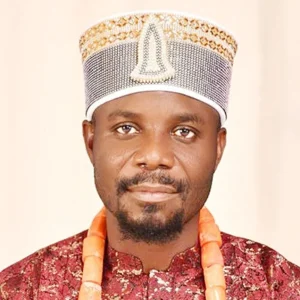
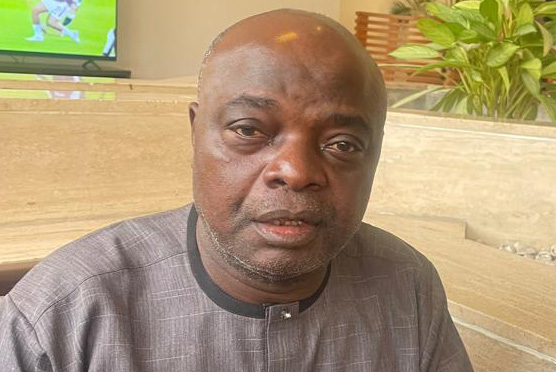
In this wide-ranging interview, Prof. Sam Egwu, Resident Electoral Commissioner (REC) of the Independent National Electoral Commission (INEC) currently serving in Benue State, offers rare insight into the internal workings of Nigeria’s electoral body.
A veteran political scientist who began his academic career as an Assistant Lecturer in 1986 and later joined election administration, the commissioner reflects on nearly four decades of observing Nigeria’s democratic evolution.
He speaks candidly about INEC’s preparedness for 2027, the limitations imposed by the new funding timeline under the Electoral Act, the role of technology in improving elections, and the persistent problem of result manipulation during collation.
He also delivers a blunt critique of Nigeria’s political culture, arguing that many members of the political elite lack the democratic temperament required to strengthen the country’s electoral system.
While acknowledging that Nigeria’s elections have improved significantly since the controversial 2007 general elections, he insists that more reforms are necessary — particularly in the collation process, which he describes as the most vulnerable stage of the electoral process, reports Sunday Independent.
Excerpts:
As a Resident Electoral Commissioner, you are directly involved in Nigeria’s electoral processes. With the 2027 elections approaching, how prepared would you say INEC is at the moment?
Elections are not a one-day event. They are a long process consisting of several activities, and each activity must be carefully executed before the actual voting day. In fact, there are about 14 major electoral activities that must be carried out sequentially when preparing for elections.
Each one has its own timeline and operational requirements.
One of the most important activities is Continuous Voter Registration (CVR). That process started in August 2025. The first phase ended in December 2025, and the second phase began in January this year, which will run until April 17. The final phase will continue until around August. Another important step we are taking is the effort to clean up the voter register.
Over time, voter registers can become inflated because some registered voters may have died while others may have relocated to different states.
INEC is therefore exploring processes such as voter revalidation to ensure that the register is credible enough to support a transparent election. At the same time, the commission has released the election timetable and schedule of activities, which outlines the key milestones leading up to the 2027 elections. Political parties have already begun their ward, local government, and state congresses, which are necessary steps in preparing their internal structures before primaries.
By April, political parties are expected to commence primaries to select their candidates. In addition to these activities, INEC is also working on procurement processes, voter education campaigns, and stakeholder consultations to ensure that citizens and political actors understand the rules governing the upcoming elections. So, preparation is already well underway.
FUNDING TIMELINE MAY COMPLICATE PREPARATIONS
The Electoral Act now provides that election funds should be released 180 days before the election. Do you think this is adequate?
Personally, I believe 180 days is too short for the scale of elections we conduct in Nigeria.
Election management involves extensive procurement. You have to procure ballot papers, ballot boxes, voting cubicles, technological devices, logistics materials, and transportation arrangements for thousands of polling units across the country. These items cannot be procured overnight.
The reality in Nigeria is that election funds are rarely released in a single lump sum. Instead, they are usually released in tranches, depending on the government’s budget cycle and revenue inflows. That means INEC often receives funds gradually rather than all at once. When funding is released piecemeal, it becomes difficult for the commission to plan procurement effectively. You may have to postpone certain contracts or delay logistics arrangements. Ideally, election funds should be released much earlier so that procurement and logistics planning can proceed smoothly.
From my perspective, the earlier timeline that existed before the amendment would have been more helpful.
Looking ahead to 2027, what do you think will be different from previous elections?
To answer that question, we must first situate Nigeria’s elections within the global context of democratic decline.
Across the world today, democracy is facing serious challenges. Some countries are experiencing democratic backsliding, and in parts of Africa we have even seen military coups returning to power. Against that background, Nigeria’s democracy has managed to survive, although not without difficulties. If we go back to 2007, Nigeria experienced what many observers described as the worst elections since the return to democracy in 1999.
However, significant reforms began after the appointment of Professor Attahiru Jega as INEC chairman in 2010. Since then, the commission has introduced several reforms that have gradually improved the electoral process. INEC now emphasizes stakeholder consultations, meaning the commission regularly engages with political parties, civil society organisations, and the public.
We also operate with strategic plans that cover five-year periods, which help us evaluate our progress and identify areas for improvement. These reforms have helped strengthen the institutional capacity of the commission.
How has technology improved the conduct of elections in Nigeria?
Technology has played a crucial role. At one stage, INEC introduced the Smart Card Reader, which verified the chip embedded in the Permanent Voter Card. Today, we have moved to the Bimodal Voter Accreditation System (BVAS). BVAS verifies voters using fingerprints or facial recognition, which greatly reduces the risk of identity theft and multiple voting.
The voter register itself is also biometric-based, which improves the credibility of voter identification. The use of BVAS has significantly improved the integrity of the accreditation process.
COLLATION REMAINS WEAKEST LINK
Despite these improvements, many Nigerians still question the credibility of election results. Where do you think the real problem lies?
The biggest challenge remains the collation of election results. Election results are first declared at the polling unit level, but they must then move through several stages of collation — from the polling unit to the ward, then to the local government, and eventually to the state level. It is during this movement that discrepancies sometimes occur. In other words, the figures recorded at the polling unit may change during the collation process.
This has damaged public confidence in elections. INEC is therefore exploring ways to strengthen the integrity of the collation process through technology.
For example, the BVAS device now has the capability to generate results that correspond with the accreditation data stored in the system. If the number of votes recorded does not match the number of accredited voters, the system will detect the inconsistency during uploading. This is an innovation that many Nigerians are not yet fully aware of.
REAL-TIME TRANSMISSION STILL LIMITED BY INFRASTRUCTURE
There has been intense debate about real-time transmission of election results. What is your view on this issue?
Real-time transmission is desirable, but it must be understood within the context of Nigeria’s infrastructure limitations. Many parts of Nigeria still lack reliable telecommunication network coverage. If there is no network connectivity at a polling unit, it becomes impossible to transmit results instantly. You cannot conduct elections in Nigeria using the infrastructure of another country.
We must work with the infrastructure that exists within Nigeria. INEC does not have the resources to build telecommunications networks or construct nationwide polling facilities. We rely heavily on public infrastructure such as schools, which are often used as polling units.
Ad hoc staff are also accommodated in available public facilities, even when those facilities are not ideal. These limitations must be understood when discussing technological reforms in the electoral process.
Some analysts blame ethnicity and religion for Nigeria’s electoral problems. Do you agree?
Ethnicity and religion certainly play roles in our politics, but the deeper problem is political culture. Many members of Nigeria’s political elite simply do not have the democratic temperament.
Democracy requires patience and respect for the rules of the game. But in Nigeria, many politicians want to win at all costs. They are often willing to manipulate the system because they believe that once they are declared winners, they can settle disputes in court later.
Until we develop stronger democratic values and attitudes, our electoral process will continue to face challenges.
POLITICAL PARTIES ARE WEAK
What role do political parties play in this situation?
Political parties are supposed to be self-governing institutions, but in Nigeria they face serious structural problems. First, many parties lack internal democracy.
Second, they are not socially rooted. In many countries, political parties are built around social groups — workers, farmers, or ideological movements. But in Nigeria, parties are often coalitions of elites who unite mainly to gain access to power. Because they lack ideological foundations, parties frequently experience internal conflicts and defections.
In states like Benue, internal divisions within political parties are becoming more visible. Do you think reconciliation is possible?
Politics is driven by enlightened self-interest. If political actors realise that division will weaken their chances of winning elections, they may find ways to reconcile.
However, Nigerian politics is heavily influenced by patronage networks. People often align themselves with whichever faction offers them the greatest political advantage.
The actors involved in these factions are not irrational. They are rational individuals pursuing their interests. Whether they reconcile will depend on whether unity serves those interests.