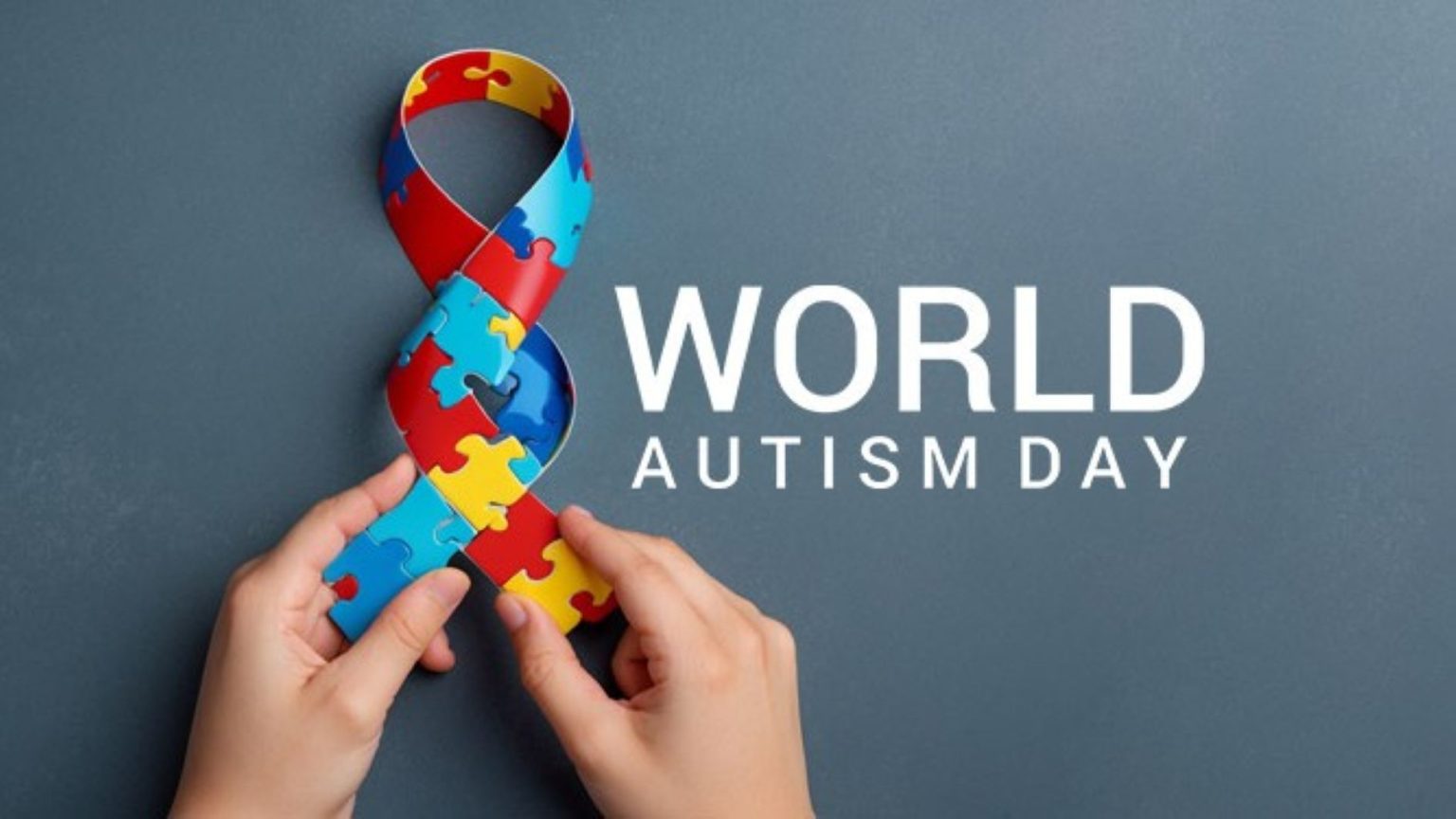
As the world marks World Autism Awareness Day today, mounting concerns have emerged over the harsh realities faced by families of children with autism in Nigeria.
Of primary concern are the high cost of care, poor access to services, and weak enforcement of disability rights, which continue to deepen their burden, reports The Guardian.
Notably, autism care remains largely unaffordable for many households, with therapy forming the backbone of management.
Children on the spectrum typically require a combination of speech therapy, occupational therapy and behavioural therapy, often delivered over extended periods.
At the Lagos University Teaching Hospital (LUTH), speech therapy is estimated to cost between N12,000 and N15,000 for a six-week session, while behavioural and occupational therapies cost between N10,000 and N12,000 each within the same period.
With sessions usually scheduled weekly, families are compelled to pay separately for each form of therapy, significantly increasing the overall financial burden.
Beyond treatment costs, access to these services remains a major hurdle. Many families, particularly those living in peri-urban and rural communities, must travel long distances to access specialised centres located in urban hubs such as Lagos.
For instance, caregivers from the outskirts, such as Ikorodu, often commute across the state to reach facilities in areas like Idi-Araba or Ikeja, where most specialists are based. This challenge is worsened by the rising cost of transportation, driven by repeated nationwide increases in petroleum prices, further stretching already limited household incomes.
The economic strain is particularly severe for families with multiple children on the spectrum, as autism is a lifelong developmental condition that demands sustained intervention.
In many cases, parents, especially mothers, are forced to reduce working hours or quit jobs entirely to provide round-the-clock care, leading to loss of income and heightened financial vulnerability.
Compounding these challenges is the limited integration of autism services into primary healthcare, forcing families to rely on tertiary facilities that are already overstretched.
The absence of nearby therapists at grassroots health centres means early diagnosis and intervention, which is critical to improving long-term outcomes, is often delayed.
Legal protections for persons with disabilities also remain weak in practice. Although Nigeria enacted the Discrimination Against Persons with Disabilities (Prohibition) Act to safeguard the rights of persons with disabilities, stakeholders are lamenting that enforcement has been slow and inconsistent. They said that gaps in implementation, poor funding of relevant agencies and limited public awareness continue to undermine its impact, leaving many families exposed to discrimination in housing, education and social inclusion.
Celebrated every second of April, the 2026 World Autism Awareness Day, themed: ‘Autism and Humanity – Every Life Has Value’, highlights the dignity, rights, and inherent worth of all autistic individuals, advocating for their inclusion in all aspects of society, including education, employment, and healthcare.
Stakeholders are calling for increased awareness to reduce stigma, while advocating a more holistic approach to autism management that spans nutrition, education and overall well-being.
In addition to therapy, they insist that nutrition has emerged as a critical, though often overlooked, component of autism care.
Although nutrition neither causes nor cures autism spectrum disorder (ASD), experts have noted that it plays a vital supportive role in improving outcomes. According to them, dietary patterns can influence brain function, behaviour, attention span, energy levels, immunity and the overall well-being of children on the spectrum.
Autism, also known as ASD, refers to a group of conditions related to brain development. It is characterised by varying degrees of difficulty in social interaction and communication, and although signs can appear in early childhood, diagnosis is often delayed.
Globally, about 62 million people, roughly one in 127, are estimated to be on the spectrum.
According to the World Health Organisation, while awareness and diagnosis have improved in recent years, the exact causes of autism remain unclear, with multiple factors believed to be involved.
The agency also stresses that there is no conclusive scientific evidence linking autism to the use of paracetamol during pregnancy or to childhood vaccines, amid persistent misconceptions.
National President of the Association for Intellectual and Developmental Disabilities of Nigeria, Mrs Joko Omotola, raised concerns over widespread stigma and limited access to essential services for persons with autism and other intellectual and developmental disabilities (IDD) in Nigeria.
Speaking in an interview with our correspondent, Omotola explained that many parents still hide their children at home due to stigma; however, increased awareness campaigns are gradually encouraging some parents to come forward, especially through support groups and non-governmental organisations.
Omotola stressed that autism can often go unnoticed in early childhood, particularly in busy households where parents may not immediately detect developmental delays.
She explained that signs typically become clearer when children fail to meet developmental milestones by around two years of age.
Describing autism as a lifelong condition, she said consistent early intervention can reduce the intensity of symptoms over time, though it does not eliminate the condition.
According to her, early diagnosis is critical, as it enables timely intervention through therapy programmes, which can significantly improve a child’s communication, behaviour, and social interaction.
Omotola identified access to therapy as a major challenge, noting that services such as speech, occupational, and behavioural therapy are not only scarce but also expensive.
She explained that many families must travel long distances to access care, as such services are concentrated in a few urban centres.
She further disclosed that therapy costs can run into tens of thousands of naira over a few weeks, excluding transportation expenses, making it unaffordable for many families.
On education, Omotola lamented that while some children with autism may be enrolled in schools, they often lack access to meaningful learning.
She explained that many schools do not have the necessary assistive devices, trained personnel, or tailored teaching approaches required for children with IDD.
According to her, inclusive classrooms are frequently overcrowded, with teachers lacking specialised training to support children with diverse learning needs.
She noted that in some cases, children spend years in school without acquiring basic skills, due to the absence of structured, individualised education plans.
She added that private schools offering specialised support are often prohibitively expensive, with parents required to pay additional fees for tailored instruction, on top of standard tuition.
To address these issues, Omotola called on the government to prioritise access to healthcare by including autism-related therapies in health insurance schemes. She emphasised that making therapy services available at primary healthcare centres would significantly reduce the burden on families.
She also advocated reforms in the education sector, including the adoption of specialised curricula, teacher training, and the provision of assistive learning tools. In addition, she urged the government to strengthen social protection systems, including welfare support for families caring for children with disabilities.
Omotola further stressed the need for sustained public sensitisation to combat stigma and promote inclusion, noting that awareness alone is no longer sufficient.
While acknowledging the existence of the Discrimination Against Persons with Disabilities (Prohibition) Act, she said enforcement remains weak due to inadequate funding and implementation gaps.
She concluded by urging authorities to move beyond policy discussions to concrete action, stressing that persons with autism deserve dignity, inclusion, and equal opportunities in all aspects of society.
A mother, Kelechi Onah, told our correspondent that her child, diagnosed with autism at the age of four, requires round-the-clock care, placing a significant financial strain on her.
Onah, a former banker, said she was forced to quit her job two years ago following the diagnosis to care for her child, adding that her husband left the marriage shortly afterwards.
The Ikorodu resident said that her plight reflects a broader socio-economic burden faced by many families and explained that the high cost of care, combined with the need for constant supervision, makes it difficult, especially for single parents, to maintain stable employment.
Onah also decried persistent discrimination in housing and education, alleging that families with children with disabilities are sometimes excluded or pressured to vacate their homes or withdraw their children from schools, further worsening their challenges.
A Clinical Nutritionist and digital health creator, Odukoya Fiyinfoluwa, popularly known as YourDietBoy, clarified that what children with autism eat significantly affects their daily functioning.
According to him, diet influences brain function, energy levels, behaviour, attention span, gut health, immunity and overall well-being.
Speaking with our correspondent, Fiyinfoluwa observed that many children with autism experience feeding difficulties, which often limit the variety and quality of their diets.
Drawing from his experience in paediatrics, he said such restrictions can, over time, reduce nutrient intake and worsen symptoms, leading to poor concentration, irritability, low energy levels and increased susceptibility to illness.
The nutritionist added that emerging research continues to explore the link between gut health and behaviour, noting that some children with autism experience gastrointestinal issues such as constipation, bloating and diarrhoea, which may further affect mood and comfort.
He maintained that despite these connections, nutrition should be viewed strictly as a supportive tool to improve quality of life.
On feeding challenges, he said these are common among children with autism both in Nigeria and globally, with one of the most frequent being extreme food selectivity and sensory sensitivities. He explained that some children consume fewer than ten types of food, often choosing items similar in colour, texture or taste.
According to him, these challenges are particularly difficult in the Nigerian context, where traditional meals often combine multiple textures, which can be overwhelming for children with sensory sensitivities.
He warned that caregivers sometimes misinterpret such behaviours as stubbornness or poor discipline, whereas they are developmental and sensory-related, not intentional.
Fiyinfoluwa further revealed that there is a clear pattern of nutrient deficiencies among children with autism, especially in Nigeria. He listed common deficiencies to include protein, due to avoidance of meat, fish, eggs and legumes; iron, which affects energy levels, immunity and cognitive function; calcium, particularly among children who avoid dairy; and vitamin D.
He added that low fibre intake is also widespread due to the rejection of vegetables, which contributes to constipation.
The nutritionist also warned against unnecessary dietary restrictions driven by misinformation, cautioning that such practices could further reduce nutrient intake if not properly managed.
He recommended a structured and individualised nutrition approach tailored to each child. He identified feeding therapy as a key strategy to help children gradually accept new foods and reduce anxiety around eating, thereby improving well-being.