•Sickle cell
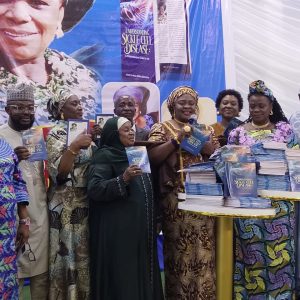
Sickle Cell Foundation Nigeria (SCFN) has launched its 2025 World Sickle Cell Day campaign.
It noted the gap between new treatments and access for Africans and warned that these therapies may remain out of reach for those who need them most, reports The Nation.
Under the theme: “Access to New Therapies, Hope or Hype?”, the campaign, from May 28 to June 28, will ignite conversations around health equity, especially in sub-Saharan Africa.
With Nigeria accounting for 25 per cent of global sickle cell burden, recording 150,000 affected births annually and 100,000 child deaths before age five, SCFN said it is time to move beyond promises and deliver real access to life-saving treatments.
National Director, Dr. Annette Akinsete, said: “This campaign goes beyond celebration. It’s about confronting the uncomfortable reality that most Nigerians living with SCD cannot access life-saving therapies. We are asking, are these treatments real for us, or just another story of global health inequality?”
To drive the message home, SCFN is mobilising a wave of activities across the country, from national media engagements and policy dialogues to international expert forums and grassroots outreach.
One of the key events is the Red Umbrella Walk and National Blood Donation Drive scheduled for June 28 in Ikeja, Lagos.
It’s aimed at both raising awareness and encouraging life-saving support for SCD patients.
Backing its campaign with action, SCFN is showcasing major strides in treatment innovation.
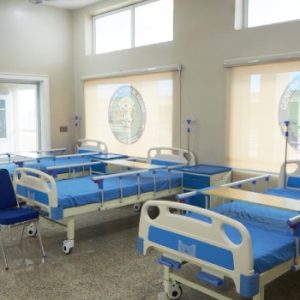
In collaboration with the Lagos University Teaching Hospital (LUTH), the foundation successfully cured two patients through bone marrow transplants at its newly commissioned Transplant Centre.
The patients transitioned from the sickle genotype (HbSS) to normal genotypes (HbAA and HbAS), a feat once deemed impossible in Nigeria’s under-resourced health system.
“These transplants prove that a cure is not just a theory, it’s happening here in Nigeria. We are investing heavily in curative care like bone marrow transplant and exploring gene therapy because we believe access to innovation should not be a privilege. It’s a moral imperative,” said Dr. Akinsete.
More patients are currently being treated at the centre in partnership with international collaborators, marking SCFN as a growing leader in SCD intervention across the Global South.
The foundation also reported a surge in impact in the first quarter of 2025. Through its Next-Gen Community Project, SCFN reached over 3,000 individuals in remote riverine areas of Epe, Lagos.
The project trained frontline healthcare workers and dismantled deep-rooted myths surrounding sickle cell.
On campuses, the Campus Sensitisation Initiative engaged over 5,000 students at Bowen University, Osun State, where a sickle cell advocacy network was inaugurated.
The National Youth Development Project extended SCFN’s reach, sensitising 19,000 National Youth Service Corps (NYSC) members and enlisting over 700 volunteer social workers for continued grassroots engagement.
SCFN’s Programme and Strategic Communication Manager, Caleb Audu said: “The knowledge gap is alarming, especially among the youth. Our projects aim to close these gaps early, using education as prevention.”
In diagnostics, SCFN has begun a Chorionic Villus Sampling (CVS) Training Programme to equip health professionals with early prenatal detection of SCD and other genetic conditions, part of its push to reduce SCD births and childhood mortality by 80% before 2030.
“Our goal is to reduce sickle cell births and under-five mortality by 80% before 2030. But we cannot do it alone. We need full commitment from the government, private sector, and global health partners,” Dr. Akinsete noted.
Looking forward, SCFN is scaling its Integrated Health Initiative to all 774 local government areas in Nigeria. The initiative focuses on genetic screening, newborn care, and skills empowerment for people living with SCD, alongside free drug administration and palliative support for low-income families.
Since its founding in 1994, SCFN has recorded over 52 bone marrow transplants, 3,100+ prenatal diagnoses, 70,000+ free medication distributions, and nearly 250,000 haemoglobin tests , making it the only nonprofit globally delivering full-spectrum sickle cell care.
World Sickle Cell Day is observed every June 19.