


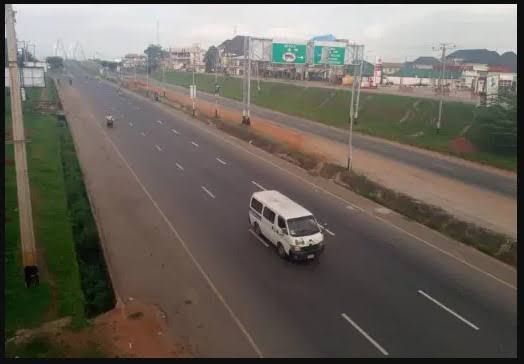
•The new Enugu–Onitsha Highway
The federal government has announced plans to open the critical 15-kilometre stretch of the Enugu–Onitsha Highway to traffic before Easter.
The government said the move is aimed at easing transportation challenges and boosting economic activities across Nigeria’s South-East, reports The Guardian.
The Minister of Works, David Umahi, disclosed this yesterday during an inspection tour of ongoing federal road projects in Enugu State.
He expressed satisfaction with the pace and quality of work so far.
Umahi said the section of the road, which has reached an advanced stage of completion, would open on or before March 31, even if finishing touches such as road markings and median curbs are not yet completed.
According to him, the directive is part of the federal government’s commitment to providing immediate relief to road users while ensuring long-term infrastructure durability.
He noted that the Enugu–Onitsha and Enugu–Port Harcourt corridors are among the most strategic routes in the South-East, historically plagued by traffic congestion, tanker accidents, and deteriorating pavement conditions.
He, however, expressed optimism that ongoing reconstruction efforts would permanently reverse the trend.
However, Umahi has said that the people of the South-East zone should be grateful to President Bola Tinubu for the enormous federal road development across the region.
Umahi said this during an inspection of ongoing federal road projects in Enugu State yesterday, where he assessed the level of progress of the projects, noting that the quantum of road construction in the region runs into trillions of naira.
He said the reconstruction of the Enugu–Onitsha Highway remains one of the most significant interventions by the current administration in the region.
“This road is the most important route for the people of the South-East. Before now, there were frequent tanker accidents and loss of lives, but that is becoming a thing of the past,” he said.
According to him, the 107-kilometre dual carriageway, totalling 214 kilometres, is being partly reconstructed using concrete to ensure durability.
“The fact remains that about half of it is going to be done on concrete. Even if asphalt fails, at least we will still have a solid portion of the road intact,” Umahi stated.
He added that the project also includes solar-powered street lighting to improve safety along the corridor.