•Funke Treasure
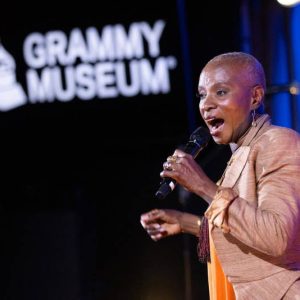
A retired Assistant Director (Programmes) at Radio Nigeria, Funke-Treasure Akintoye, is a multiple award-winning, multi-genre media personality and social entrepreneur in Nigeria. She is a girl-child & women advocate and the Convener, Sanitary Pad Media Campaign. In this interview, she speaks on how she survived having fibroids and counsels on how to live through the various challenges of being a woman, reports Saturday Tribune.
Excerpts:
You’ve been very active in the advocacy for safe reproductive life for women. What informed your interest and can you give us a little of such activities?
My interest grew from multiple reasons and experiences. The needless deaths arising from silence, ignorance, shaming and stigma of women with period disorders. My personal encounter with uterine fibroids made me realize that if that seemingly harmless menstrual flow goes wrong, it can have devastating consequences.
Recently, a guest on my podcast, My Period Stories with Funke Treasure shared how inadequate menstrual hygiene as a teenager led to infertility later in life. She didn’t know better then. Those were the days many girls were using tissue paper also known as toilet paper to contain menstrual blood. It led to infections for many. For many girls nowadays, period poverty is at the root of their infertility, t the reason they ended up with.
Some mothers are shy about socialising their daughters into the right hygienic practices as they begin to menstruate. Some are just not involved in such intimate developments in the lives of their daughters. They just tell them, they have become women and can get pregnant, and that is it. They lose the golden opportunity to own the ‘becoming’ moments for their girls. And then they are the first to persecute the girls for being ‘dainty’ about menstruation, they misinterpret the reactions of their daughters to the symptoms of period disorders as laziness or slothfulness. Many of the period disorders could have been managed if diagnosed on time but for careless, lackadaisical mothers.
To answer your question on activities, we have been using storytelling in public health communication as a strategy to bring awareness and catalyse change. We have used radio drama, podcast and an essay competition to push narratives that challenge the thinking of the average Kemi and Tunde on menstrual health and reproductive health rights. Our goal is to normalise period conversations.
Our radio drama aired in more than forty radio stations across Nigeria, including the Radio Nigeria network between 2023 and 2024. Our essay competition in 2023 gave teenage school girls the opportunity to own their period stories without being nervous or anxious. We have a one-year pad scholarship in secondary schools through which we plug the period poverty challenge for school girls. We are in 15 states in Nigeria at the moment in collaboration with other NGOs. We also have an audio and video podcast through which we have engaged resource persons and individuals on their peculiar period stories. The podcast is in its second season presently, it is airing on Africa Magic Family on Saturdays at 12.30 pm.
How did you first learn that you had fibroids, and what was the diagnostic process like for you?
Oh, that was many years back, 2002, I think, I was a radio presenter then, and single. A normal flow steadily spiraled into painful, heavy flow, stains, and frequent visits to the bathroom. It is often a frustrating, and inconvenient turn for sufferers. It degenerated quite quickly for me back then. I could feel the lump and a five-day window for menstruation turned into more days. Often, women manage it with difficulty at this level, struggling with secrecy, not wanting to be spotlighted in the office as the one with a period disorder. Yet one loses menstrual dignity often because one’s clothes gets stained, no matter how diligent one is at managing the stains. I would clean the studio seat, sit on one bum to control the stain because the flow was rapid. I had to take the fearful decision of a fibroid surgery then. I told no one, I just went on my annual leave for the period of the surgery. I was lucky that I had no complications.
What treatment options were you presented with, and how did you make your decision?
At that time, there was no other option in Nigeria but surgery. I did the second surgery because it grew back since I didn’t have children yet. They say fibroid grows in a displaced womb. It takes over when pregnancy refuses to occur. I knew of someone who shared her experience of a laser fibroid surgery with me. It is a minimally invasive procedure that uses focused laser energy to destroy or shrink uterine fibroids. She did it outside Nigeria, then. I understand that it is expensive, it is still non common in Nigeria. I did a myomectomy for the second time but the incision was better handled and the scar was better positioned to enable me to wear bikinis without it showing.
Were you aware of less invasive options like uterine artery embolization or focused ultrasound?
No, I wasn’t. I only just got to know of the non-invasive procedure at a watch party for the first season of my podcast, My Period Stories, when Dr. Abayomi Ajayi mentioned it as we were talking about fibroids. I decided then to bring the knowledge to many people through the podcast in the second season.
How did fibroids affect your fertility choices or reproductive health conversations with doctors?
Look, fibroids are underrated. Fewer NGOs or CSOs are dedicated solely to fibroids, and existing health organisations often focus on more “high-profile” conditions. It also does not have celebrity champions or coalitions that give it visibility.
It is, nevertheless, a monster and a huge barrier to living a productive life for many women. Doctors say it doesn’t prevent one from getting pregnant though, yet they interfere with fertility and come with a lot of anxiety. I have a friend who had fibroids and got pregnant. Doctors can explain the dangers of that and the possibilities as well. My friend was delivered of her baby. I have heard similar stories of triumphs with pregnancy and childbirth, fibroids growth notwithstanding. Doctors say it depends on the location of the fibroid tumors in the reproductive tract.
What do you wish more people including doctors understood about living with fibroids?
Doctors already know all there is to know. I however need more people to know about the other options available for the treatment of fibroids.
I want our governments to provide legislators and policy makers to elevate fibroids in the national health agenda. The high fibroid prevalence among Nigerian women, especially of reproductive age, demands policy-level attention. And perhaps government should start criminalizing deaths arising from fibroid surgeries.
Nigeria needs louder voices, targeted research, stronger policies, and grassroots awareness to tackle the challenge that it is.
You must have met other people with similar conditions. What do you think of their efforts at tackling the problem?
They are at best individual efforts. Women are not yet courageous enough to go public about their experiences. Our guest on the first episode of My Period Stories podcast said she had to keep digging because there was no one to share their experience with her. She wrote a book out of her experience to help others find the needed information to navigate a similar situation. We adopted the title of her book, Fighting Fibroids for a four-part series on fibroids in the second season of the podcast currently running on the Africa Magic Family.
Why do you think uterine fibroids have not received the same attention as other women’s health issues like breast cancer or endometriosis?
First, the challenge of data. What isn’t measured is often ignored. We need a comprehensive national data. The National Bureau of Statistics should work on a national data on fibroid prevalence, outcomes, or treatment gaps in Nigeria.
Second, silence. Silence around reproductive pain is normalised, and this is a result of cultural conditioning. “heavy periods” is expected to be endured. It leads to late or delayed diagnosis.
Thirdly, fibroid-related deaths or morbidity are under-reported except they are high-profile women, whose passing attracts attention.
How can awareness campaigns help shift the narrative around fibroids from one of silence and stigma to open conversation?
Public storytelling by women who share their fibroid journeys helps normalize conversations about menstrual health and reproductive pain. Ours at the Sanitary Pad Media Campaign (SPMC) is media-based, Nigeria needs more of such campaigns to highlight how common fibroids are and tackle the shame and isolation arising from it. More awareness campaigns can shift fibroids from being a woman’s ‘silent burden” to a shared public health issue, which is what it should be. They replace fear and shame with knowledge, solidarity, and advocacy—which ultimately leads to earlier diagnosis, better care, and stronger patient voices.
When people realise they’re not alone, and we normalise period conversations, they’re more likely to seek help and talk about it. Podcast interviews like ours would close the knowledge gaps, same for documentaries. And people can concentrate on activities in July, the Fibroid Awareness Month, to give traction to issues about fibroid.
How do you think healthcare systems ensure equitable access to non-surgical fibroid treatments, especially in underserved communities?
Subsidise medications and hormonal therapy, then make access to minimally invasive procedures popular and affordable. Ensure fibroid care is accessible in primary healthcare centers. Implement free or subsidised screening days in underserved areas via state and local government support. Faith-based and community-oriented organisations already do this, but its needs scaling up because they can’t meet the demands for treatment. It is the purview of government so the three tiers should step in, fully to subsidise.