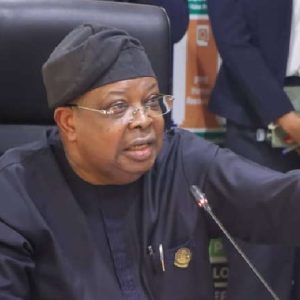
•Niyi Aborisade Esq and Tinubu
A United Kingdom-based human rights lawyer, Barrister Niyi Aborisade [BANA], has cautioned that Nigeria cannot achieve sustainable economic growth through borrowing, urging the Tinubu-led federal government to prioritise production, fiscal discipline and wealth creation.
Aborisade, who spoke during an interview in Ibadan, said the country’s dependence on imports and rising public expenditure had continued to fuel borrowing without delivering meaningful improvements in the lives of ordinary Nigerians, reports The Guardian.
According to him, Nigeria must shift from a consumption-driven economy to a productive one if it hopes to achieve lasting prosperity.
“We are living on borrowed resources because Nigeria is not producing enough. We import almost everything while government spending continues to increase. Unless we become a productive economy, borrowing will continue,” he said.
He expressed concern over what he described as wasteful government spending and alleged budget irregularities, warning that continued fiscal indiscipline could expose the country to serious economic risks.
“There have also been concerns about budget irregularities and wasteful spending. If this continues unchecked, the country risks serious financial challenges,” he added.
Aborisade faulted the management of the economy under President Bola Tinubu, arguing that the gains being highlighted by government officials had yet to translate into improved living conditions for Nigerians.
While acknowledging the government’s position that external factors had contributed to current economic challenges, he maintained that many of the problems predated recent global developments.
“The exchange rate has moved from about ₦500 to over ₦1,500 to one U.S. dollar, while fuel prices have risen significantly. Government says the foreign reserves have improved, but ordinary Nigerians are not feeling the impact,” he said.
The governorship aspirant noted that rising inflation and the high cost of living had left many households struggling to meet basic needs.
“People are hungry. Many families can no longer afford basic necessities. An economy cannot be judged successful simply because the figures look good on paper. The real test is whether the standard of living of the people has improved,” he said.
He urged the federal government to focus on policies that would stimulate local production, support industries, create jobs and reduce the country’s dependence on imports.