•Workers and Tinubu
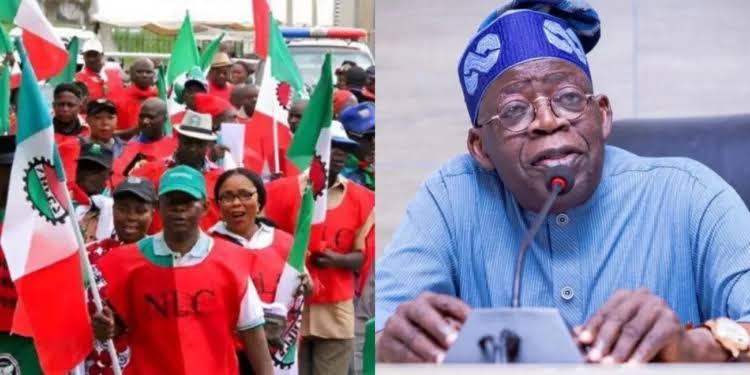
The Association of Senior Civil Servants of Nigeria (ASCSN) has raised the alarm over what it described as renewed moves to privatise Federal Government Colleges, popularly known as Unity Schools, warning that such a policy would make quality secondary education inaccessible to millions of Nigerian children and undermine one of Nigeria’s enduring symbols of national integration.
The union’s reaction followed reports that the federal government had approved the concessioning of King’s College, Lagos, to its Old Boys’ Association under a Public-Private Partnership (PPP) arrangement, reports Vanguard.

In a statement issued in Abuja and jointly signed by its National President, Shehu Mohammed, and Secretary-General, Joshua Apebo, the ASCSN warned that concessioning the college could set a dangerous precedent that might eventually lead to the transfer of the remaining 119 Unity Schools to private interests and political elites.
The union urged Nigerians to reject any attempt to privatise the schools, insisting that they remain a national asset that should be preserved for future generations.
According to the ASCSN, the Unity School system was conceived in 1966 by Nigeria’s first Prime Minister, Sir Abubakar Tafawa Balewa, to serve as model secondary schools where children from different ethnic, religious, social and economic backgrounds could study together and foster national unity.
It noted that the first three Unity Colleges were established in Okposi (later relocated to Enugu) for the former Eastern Region, Warri for the Western Region, and Sokoto for the Northern Region.
The union said there are now 120 Federal Government Colleges across the country, many of which remain among Nigeria’s most sought-after secondary schools because of the quality of education they provide.
The ASCSN also recalled previous attempts to phase out the schools, alleging that former Head of State and President, Chief Olusegun Obasanjo, first advanced the idea in 1978 that the Federal Government should not operate secondary schools.
According to the union, the policy resurfaced during Obasanjo’s civilian administration beginning in 1999, including efforts to dismantle the junior secondary sections of the Unity Schools as part of a broader plan to phase out the system.
The union said it successfully resisted the move through prolonged negotiations, a seven-week strike, legal action and nationwide mobilisation involving labour unions, students, parents, teachers, civil society organisations, religious leaders and traditional rulers.
It added that the campaign eventually succeeded in July 2010 when then-President Goodluck Jonathan directed the restoration of the junior secondary sections, thereby preserving the Unity School system.
The ASCSN argued that privatising the schools would also contradict Section 18 of the 1999 Constitution (as amended), which outlines the government’s responsibility to provide free and universal education at various levels.
To support its position, the union cited examples from developed countries, stating that the United States operates between 20,000 and 24,000 publicly funded secondary schools, the United Kingdom has about 4,200 publicly funded secondary schools, while Germany runs approximately 8,900 state-owned schools.
“These schools are publicly funded and managed. Since these are capitalist societies, we do not know where Nigerian politicians got the idea that government cannot run secondary schools,” the union stated.
It maintained that Old Boys’ Associations and private investors interested in operating secondary schools should establish their own institutions instead of seeking control of Unity Schools, which it described as the collective heritage of all Nigerians.
The ASCSN further warned that handing the schools over to private entrepreneurs could ultimately lead to the conversion of school facilities and their vast land holdings into hotels, shopping malls and other commercial ventures driven by profit.
The union called on the federal government to abandon any plan to privatise or concession Unity Schools and instead preserve and strengthen them as a lasting national legacy established by Sir Abubakar Tafawa Balewa and sustained by successive administrations.