•Big Thumb Network
Speakers at the Big Thumb Network (BtN) roundtable have called on Nigerians to take back their country from self-serving politicians who care less about the people’s interests.
The roundtable was held yesterday in Lagos in collaboration with Save Democracy Mega Alliance (SDMA) and the Indigenous Food and Allied Processors Association Network (IFAPAN), reports Vanguard.

Convened by Okhaimon Omonhinmin, the roundtable anchored by the General Manager of Jordan 105.5 FM, Charles Idehor, had some of the nation’s best minds discuss the state of the nation on the second anniversary of President Bola Tinubu’s administration.
The roundtable was themed “We must Comot Suffer ’27. Big Thumb Go do am.”
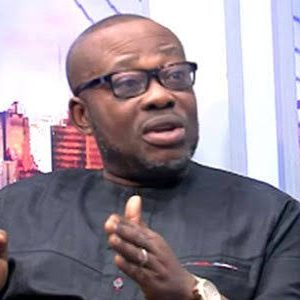
Dissecting the topic “Speaking Truth to Power: The Urgency of Moral Outrage in Public Discourse,” aviation safety expert, Dr Dayo Kayode, threw his weight behind Prof Pat Utomi’s shadow government.
“The only way we can give alternative policy especially in terms of food, security, foreign exchange, direct foreign investment, foreign policy and all that, is to bring ourselves together to come up with alternative policies to whatever the government has been doing,” he said.
“If we’re doing this, what then do you call shadow government? Shadow government doesn’t mean to uproot the government from Aso Rock. But it is time for us Nigerians to emancipate ourselves.”
Dr Kayode berated the government for “failing to protect the nation’s currency,” describing it as an abnormality.
He accused political, religious and traditional leaders and some civil society organisations of colluding to cheat the Nigerian people.
Policies, Priorities and Political Will
Barr. Affiong Affiong made a presentation on the topic, “Pathway to Economic Redemption: Policies, Priorities and the Political Will Needed Before 2027.”
She said Nigeria needs a “radical socialist revolutionary government,” noting that Prof Utomi was being liberal with his shadow government.
“These issues are about us organising for power and we haven’t even started yet. Most of us don’t even understand what it means to organise for power,” she said.
“One of the people who understands the concept of power is Bola Tinubu. He understands how to organise for it, he just doesn’t know what to do with it.”
She added, “Nigeria is a neo-colonial state. If we do not begin from that point. We’ve done nothing. We are still in a state of colonisation, just like we were when the white man was here. The only difference is that the colour has changed from white to black. This confuses a lot of us because the colour of our oppressor is the same as ours. So the oppressor is our brother, our father, our husband, and if we are even lucky, he’s from the same ethnic group as us.”
Nigeria’s Democracy
Convener of SDMA and co-host of the roundtable, Tony Akeni, quoted American essayist Ralph Waldo Emerson, who said, “Let me never fall into the vulgar mistake of dreaming that I am persecuted whenever I am contradicted.”
“It applies to nations, governments, societies, communities and parents,” Mr Akeni said while addressing the topic “Democracy in Distress: Saving the Soul of the Nigerian Republic.”
“That is one of the woes of this administration and even the one before it,” he continued.
“When you criticise, they come up with a law either to close your mouth or to stop criticism, anything to stop opposition. Repression is their stronghold.”
Akeni said he was worried about the state of the nation because of the impact that present actions will have on future generations, adding that Nigerians must move decisively against self-serving politicians.
Food Insecurity
Mr Biodun Adewuni of IFAPAN presented a brief but holistic report on Nigeria’s food insecurity. He said the West African nation recorded the world’s biggest spike in food insecurity in 2014 due to President Tinubu’s policies.
His report said one of the key findings, according to the 2025 Global Report on Food Crises, was that 31.8 million Nigerians are now facing high levels of acute food insecurity.
“According to the World Bank’s Africa Pulse report (April 2025), Nigeria now has the largest population of extremely poor people globally. The same World Bank report warns that, without urgent and effective policy changes, millions more Nigerians will fall into extreme poverty by 2027,” he said.
Dr Kehinde Sogunle, Dr Bolaji Akinyemi, Barr. Joe Ikheloa, among others, also spoke.