

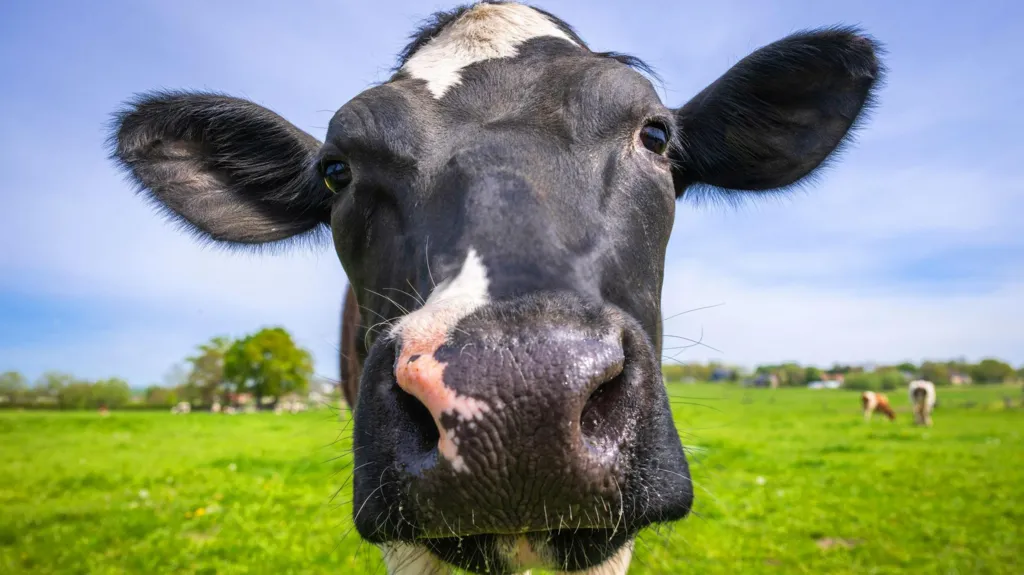
•A cow in UK
A case of classical Bovine Spongiform Encephalopathy, commonly known as mad cow disease, has been confirmed in a cow on a farm in Dumfries and Galloway, Scotland.
The Scottish government disclosed this in a statement published on its website today, saying precautionary movement restrictions had been imposed on the animal’s offspring and its cohort at the affected premises.

Mad cow disease is a rare and deadly neurodegenerative disease that affects the brain and nervous system of cattle.
Infected cows typically show symptoms four or five years after exposure, including nervousness, aggression or anxiety.
Other symptoms include difficulty walking or standing, tremors, reduced milk production and weight loss despite a normal appetite.
The disease is always fatal once clinical signs appear. There is no established treatment or vaccine.
According to the government, investigations by the Animal and Plant Health Agency were ongoing to establish the origin of the disease outbreak.
The statement read, “A case of classical Bovine Spongiform Encephalopathy (BSE) has been confirmed in a cow on a farm in Dumfries and Galloway.
“Precautionary movement restrictions have been put in place on the offspring of the animal and its ‘cohort’ at the impacted premises. This is standard procedure for a confirmed case of classical BSE.
“The case was identified as a result of our routine though intensive BSE surveillance and stringent control measures that are in place. The animal did not enter the human food chain and Food Standards Scotland have confirmed there is no risk to human health as a result of this isolated case.”
The Scottish government said the affected animals’ cohorts, including offspring, had been traced and isolated and would be destroyed in accordance with legal requirements.
It added that all animals over four years old that die on farms are routinely tested for BSE under Scotland’s surveillance system.
Agriculture minister, Jim Fairlie, said the government and other agencies acted swiftly after the case was confirmed.
“Following confirmation of a case of classical BSE in Dumfries and Galloway, the Scottish Government and other agencies acted swiftly and decisively to protect the agriculture sector,” he said.
Fairlie said the quick detection demonstrated the effectiveness of the surveillance system.
“The fact we identified this isolated case so quickly is clear proof that our surveillance system for detecting this type of disease is working effectively,” he said.
He also thanked the owner of the affected animal for reporting the case promptly.
“I want to thank the animal’s owner for their diligence. Their swift action allowed us to identify and isolate the case immediately, minimising its impact on the wider industry,” Fairlie said.
The government said strict controls remain in place to protect consumers, including the removal of specified risk materials such as the spinal column, brain and skull from cattle carcasses intended for human consumption.
The UK experienced a major BSE outbreak in the 1980s and 1990s that led to the culling of millions of cattle and was linked to more than 170 human deaths from the related variant Creutzfeldt-Jakob disease.