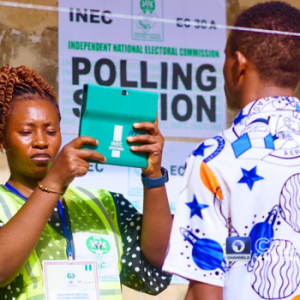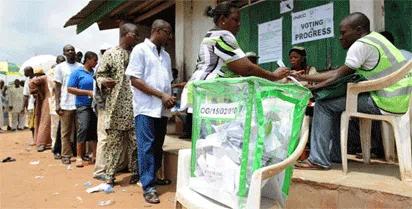
•An election day in Nigeria
Tribune Editorial
The proposed bill seeking to jail Nigerians who abstain from voting in national and state elections is not only alarmingly authoritarian, it is a profound misreading of Nigeria’s democratic challenges and a glaring misplacement of legislative priorities.
Rather than confronting the real reasons behind widespread voter apathy, such as endemic electoral fraud, chronic governance failures and widespread disillusionment with the political class, lawmakers are taking the easy route of criminalisation.
This approach is not only unjust; it is undemocratic, as it violates fundamental democratic principles.
At the heart of democracy lies choice, the freedom to participate and, equally, the right not to vote. Voting is a right, not a compulsory duty enforced by threats of imprisonment.
The idea of jailing citizens for choosing not to vote is a blatant violation of civil liberties and runs counter to Nigeria’s constitutional protections of freedom of expression and association. As the Socio-Economic Rights and Accountability Project (SERAP) rightly emphasised, such a measure flies in the face of Nigeria’s human rights commitments and democratic ethos. This bill also displays a startling disregard for the lived realities of many Nigerians.
People abstain from voting for a myriad legitimate reasons, including lost or uncollected Permanent Voter Cards (PVCs), unsafe or inaccessible polling units, disenchantment with uninspiring candidates, or even physical displacement due to conflict or economic hardship. Is it just or reasonable to fine or imprison citizens for such systemic failings?
If the National Assembly is truly concerned about low voter turnout, it must address the root causes rather than punishing the symptoms. Electoral reform should begin by dismantling the culture of impunity that allows powerful political actors to rig elections, buy votes, and undermine the sanctity of the ballot.
A serious commitment to clean elections would mean removing constitutional immunity for governors and their deputies when they manipulate electoral outcomes. It would also require a total overhaul of the Independent National Electoral Commission (INEC), starting with the appointment of non-partisan, professionally competent Resident Electoral Commissioners (RECs) to restore credibility and impartiality.
Restoring public trust in the electoral system also demands broader governance reforms. When politicians enrich themselves at public expense, fail to provide basic services, and remain insulated from accountability, citizens naturally grow cynical and disengaged.
It is performance, not punishment, that will draw Nigerians back to the polls. If lawmakers are sincere about increasing voter participation, they should begin by governing with integrity, demonstrating results, and living up to the promises they make during campaigns.
Advocates of the bill may point to countries like Australia, where compulsory voting is law. But that comparison falls apart under scrutiny. Australia pairs its voting laws with efficient electoral administration, robust civic education, and a high degree of public trust in institutions.
Nigeria, by contrast, struggles with logistical chaos during elections, rampant corruption, and widespread disenchantment with the political class. In such a context, criminalising non-voting is not only unjust — it’s plainly absurd.
Instead of resorting to punitive measures, the government should channel its energy and resources into making the electoral process more accessible, transparent, and citizen-friendly.
The barriers to participation in Nigeria’s elections are not rooted in apathy alone but in systemic dysfunction. Improving the distribution and collection of PVCs is a critical first step.
Many eligible voters are disenfranchised simply because they are unable to obtain their PVCs due to poor planning, inadequate staffing, and logistical bottlenecks at INEC centres. Streamlining this process, extending collection deadlines, and adopting technology-driven solutions can significantly boost participation. In addition, the introduction of early voting options will ease the burden on voters, particularly those in remote areas, those with mobility challenges, or with pressing personal and professional obligations on election day. By offering more flexible voting windows, such as weekend voting or mail-in ballots, Nigeria can accommodate a wider segment of its population and encourage greater turnout.
Ensuring the safety of voters is equally paramount. Elections in Nigeria are too often marred by violence, voter intimidation, and security lapses.
When citizens fear for their lives at polling units, participation becomes an act of bravery rather than civic duty. The government must invest in adequate security measures that protect voters without militarising the process. Election-day violence must be met with swift and impartial justice, not swept under the carpet.
Moreover, addressing voter apathy requires tackling its root cause: a widespread belief that votes do not count. This belief is fueled by a history of electoral malpractice, from ballot box snatching and vote buying to doctored results and post-election judicial manipulations.
To change this perception, the government must take aggressive action against electoral corruption. Offenders, whether they are party agents, candidates, or state actors, must be held accountable. Transparency must be the standard at every stage of the process, from voter registration to result collation.
When people see that elections are fair, credible and consequential, they are more likely to engage. Voting should feel like a meaningful act of agency, not a futile ritual. Citizens must trust that their ballots will not be manipulated, that their voices will be heard, and that change is possible through the democratic process. Only then will voter turnout rise, not through coercion or threats, but through renewed belief in a system that works for the people.
Ultimately, this bill reflects a lazy, authoritarian response to a deeply rooted political crisis. Nigerians are not indifferent to democracy. They are exhausted by a system that repeatedly fails them. The answer to apathy is not punishment but reform.
The National Assembly must abandon this ill-conceived proposal and focus on the real work of rebuilding the foundations of trust, integrity and accountability in Nigerian politics. Coercion cannot substitute for good governance.
If lawmakers want more Nigerians to vote, they must first give them something, and someone, worth voting for.