Skip to content
Monday 6 July 2026
  • Home
  • Advertise with us
  • Contact
The Frontier
Click to read
The Frontier
  • News
  • Crime
  • Politics
  • Headlines
  • Education
  • Health
  • Business & Economy
  • Sports
  • More
    • International
    • Religion
    • Entertainment
    • Info Tech
    • Matilda Showbiz
      • Gists
      • Music
      • Gossips
      • Oga MAT
      • Romance
    • Arts & Culture
    • Environment
    • Opinion
    • Features
    • Epistles of Anthony Kila
    • EyeCare with Dr Priscilia Imade
The Frontier
  • News
  • Crime
  • Politics
  • Religion
  • Headlines
  • Education
  • International
  • Business & Economy
  • Entertainment
  • Sports
  • Arts & Culture
  • Environment
  • Health
  • Matilda Showbiz
    • Gists
    • Music
    • Gossips
    • Oga MAT
    • Romance
  • Opinion
  • Epistles of Anthony Kila
  • EyeCare with Dr Priscilia Imade
  • Info Tech
  • Interview
The Frontier
Click to read
Business & Economy
Business & Economy

World Bank alert sparks new worries over Nigeria’s food inflation

The FrontierThe FrontierJuly 6, 2026 84 Minutes read0

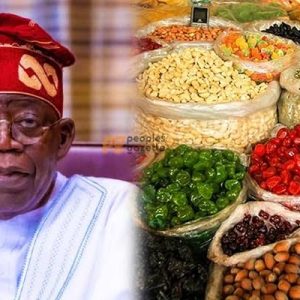
•Tinubu and World Bank logo

The World Bank’s latest warning over mounting global food risks is raising fresh concerns for Nigeria, where food inflation remains one of the biggest challenges con­fronting households despite government efforts to increase agricultural production.

In its June Food Security Update, the World Bank cautioned that persistent glob­al supply chain disruptions, rising fertiliser prices, geopolitical tensions and the grow­ing threat of El Niño weather conditions could trigger another round of food price increases across developing economies, with West and Central Africa among the regions most at risk.

For Nigeria, analysts say the warning the country remains heavily deis particularly significant because pendent on imported agricultural inputs, including fertilisers, agro­chemicals, improved seeds, farm machinery and petroleum prod­ucts used for transportation and processing, reports Daily Independent.

Although inflation has begun to moderate from previous highs, food prices continue to account for the largest share of household spending, while millions of Nige­rians still face food insecurity due to insecurity in farming communi­ties, climate change, high transpor­tation costs and weak agricultural infrastructure.

The World Bank noted that al­though global food supplies remain broadly adequate, supply chain disruptions continue to raise pro­duction costs across agricultural value chains.

According to the report, logis­tics bottlenecks, higher freight costs and geopolitical tensions have pushed up the prices of key farm inputs such as fertilisers and en­ergy, sustaining inflationary pres­sures across global food markets.

These developments are al­ready reflected in international commodity prices.

The International Grains Coun­cil’s (IGC) Grains and Oilseeds Index climbed 7.4 percent year-on-year to 230.6 at the end of May, sig­nalling renewed upward pressure on global grain prices.

For Nigeria, which still imports substantial quantities of wheat and relies on global commodity markets for several food products, rising international prices could translate into higher domestic food costs.

Bread, noodles, flour and other wheat-based products remain par­ticularly vulnerable to internation­al price movements.

The World Bank also projected that global production of wheat, maize and rice would decline from the record levels achieved in 2025 as farmers worldwide struggle with rising input costs, adverse weather and weaker planting incentives.

Although soybean production is expected to reach a record high, experts say the improvement may not be sufficient to offset tightening supplies of other staple crops.

Perhaps even more worrying is the climate outlook.

The World Bank estimates an 82 percent probability that El Niño conditions will develop later in 2026 and persist into early 2027.

For Nigeria, the consequences could be severe.

El Niño often disrupts rainfall patterns, leading to drought in some regions and flooding in oth­ers.

Northern Nigeria, where much of the country’s grain production takes place, could experience below-average rainfall, reducing yields of maize, sorghum and millet, while excessive rainfall in southern areas could destroy crops and worsen post-harvest losses.

The report specifically high­lighted the Sahel as one of the regions likely to experience agri­cultural stress, placing Nigeria’s northern farming belt directly within the zone of concern.

Climate experts warn that lower harvests would tighten food supplies, increase market prices and further weaken household purchasing power.

The World Bank also warned that fertiliser markets remain un­stable despite some moderation from earlier peaks.

Fertiliser prices have increased by 35 percent during the first five months of 2026 compared to the same period last year.

This poses another challenge for Nigerian farmers, many of whom already struggle to afford adequate fertiliser due to rising production costs and limited access to credit.

Higher fertiliser prices could reduce application rates, lower crop yields and diminish overall agricultural output during the next planting season.

Adding to the pressure are geopolitical tensions in the Middle East, which the World Bank says are disrupting fertiliser supplies and in­creasing global shipping costs.

Nigeria imports significant quantities of fertiliser raw materi­als and agricultural inputs, making the local market vulnerable to ex­ternal supply disruptions.

Higher import costs are also likely to feed into transportation expenses, especially as haulage operators continue to grapple with elevated energy prices.

The World Bank expects food and nutrition insecurity across West and Central Africa to remain acute during the lean season, when household food stocks typically de­cline before new harvests.

For Nigeria, this warning comes as millions of people, par­ticularly in the North-East and North-West, continue to face food shortages caused by insecurity, displacement, flooding and weak rural infrastructure.

Agricultural economists say the World Bank’s assessment un­derscores the need for Nigeria to accelerate investments in irriga­tion, climate-smart agriculture, lo­cal fertiliser production, improved rural roads, storage facilities and mechanised farming.

They also argue that strength­ening domestic food production and reducing dependence on im­ported agricultural inputs will be critical in insulating the country from external shocks.

With global supply chains still under pressure, fertiliser prices rising, climate risks intensifying and geopolitical tensions showing little sign of easing, experts warn that Nigeria’s battle against food inflation is far from over.

Unless proactive measures are taken to strengthen agricultural resilience and improve productiv­ity, the country could face renewed pressure on food prices, threaten­ing household welfare and slowing the broader economic recovery.

 

Tags
Food inflationNigeriaWorld Bank alert
FacebookTwitterWhatsAppLinkedInEmailLink
Previous post Dangote truck, passenger bus collision kills 10, injures 6 on Lagos-Ibadan expressway
next post Early menopause may raise lifetime heart disease risk by 40% — Experts
Related posts
  • Related posts
  • More from author
Business & Economy

Multiple bank charges suffocate Nigerians •Increased deductions fueling outrage

July 4, 20260
Business & Economy

FG inaugurates new Board of Bank of Agriculture

July 4, 20260
Business & Economy

Crude oil falls to $70 but Nigerian marketers maintain N1,200 pump price

July 2, 20260
Load more
Read also
Inside Akwa Ibom Today

inside the Hill top newspaper

February 9, 20250
Politics

Peter Obi to Tinubu: Resign NOW over governance failures or forget 2027

July 6, 20260
News

SCANDALOUS: Video of ‘fake’ FG Agency boss confronting Tinubu’s chief of staff Gbajabiamila resurfaces •VIDEO

July 6, 20260
Crime

‘Fake’ FG Agency: Accountant-General counters Presidency, says controversial agency has no CBN account

July 6, 20260
Health

Early menopause may raise lifetime heart disease risk by 40% — Experts

July 6, 20260
News

Dangote truck, passenger bus collision kills 10, injures 6 on Lagos-Ibadan expressway

July 6, 20260
World Cup 2026

Neymar retires from international football after World Cup elimination of Brazil

July 6, 20260
Load more

inside the Hill top newspaper

February 9, 2025

Peter Obi to Tinubu: Resign NOW over governance failures or forget 2027

July 6, 2026

SCANDALOUS: Video of ‘fake’ FG Agency boss confronting Tinubu’s chief of staff Gbajabiamila resurfaces •VIDEO

July 6, 2026

‘Fake’ FG Agency: Accountant-General counters Presidency, says controversial agency has no CBN account

July 6, 2026

Early menopause may raise lifetime heart disease risk by 40% — Experts

July 6, 2026

World Bank alert sparks new worries over Nigeria’s food inflation

July 6, 2026

inside the Hill top newspaper

0 Comments

Peter Obi to Tinubu: Resign NOW over governance failures or forget 2027

0 Comments

5 burnt to death scooping fuel from fallen tanker

0 Comments

Naira slumps further as dollar scarcity bites harder

0 Comments

BREAKING: Appeal Court sacks Senate Minority Leader, orders election rerun

0 Comments

Again, Trump fined $10,000 for violating gag order

0 Comments

Follow us

FacebookLike our page
InstagramFollow us
YoutubeSubscribe to our channel
WhatsappContact us
Latest news
1

inside the Hill top newspaper

February 9, 2025
2

SEC warns influencers, bloggers against promoting illegal schemes

April 21, 2025
3

Shaibu storms PDP hqtrs, demands Certificate of Return for Edo primary

February 28, 2024
4

Ronaldo says Ten Hag’s attitude too negative for Man Utd

September 12, 2024
5

Coach Chelle unveils 23-man Super Eagles team for October World Cup qualifiers •FULL LIST

October 3, 2025
6

Wasteful Man Utd scrape past Coventry into FA Cup final

April 22, 2024
Popular
1

inside the Hill top newspaper

February 9, 2025
2

Stop giving excuses, end banditry, killings – Former Army chief, TY Danjuma admonishes military

September 17, 2024
3

France beat Portugal on penalties to reach Euro 2024 semi-finals

July 6, 2024
4

Fleeing Syrian President, family granted asylum in Russia

December 9, 2024
5

2027: Accord disowns Gbenga Hashim, says party has no presidential candidate

June 4, 2026
6

We’ll resist FG’s demand for grazing lands – Middle Belt group

March 16, 2024

About The Frontier

The Frontier is Nigeria’s leading online newspaper. It is published by Okims Media Links Limited headed by Sunny Okim, a veteran journalist who is widely known as The Grandmaster, fondly called so by colleagues and friends for being Nigeria’s pioneer movie journalist.

Most viewed

inside the Hill top newspaper

February 9, 2025

7 Sallah visitors among 17 killed in Sokoto bandit attack

June 1, 2026

Less than 10% female membership of NASS embarrassing to Nigeria – Legislative Institute

October 31, 2024

Peseiro absent as CAF unveils 2024 Coach of the Year nominees

October 24, 2024

Organised Labour suspends protest over police blockade at Rivers LG secretariats

June 24, 2024
Top posts

Categories

  • News4718
  • Politics4360
  • Crime4145
  • International2879
  • Sports2361
  • Business & Economy2200
  • Headlines2136
  • Education1317
  • Matilda Showbiz944
  • Health836
  • Entertainment772
  • Africa535
  • Religion469
  • Environment343
  • Special267
  • Info Tech231
  • Arts & Culture230
  • Hunger protests in Nigeria224
  • Inside Akwa Ibom Today191
  • Interview181
  • Opinion150
  • EyeCare with Dr Priscilia Imade123
  • World Cup 202646
  • Advert31
  • Epistles of Anthony Kila19
  • Trends19
  • Local News5

© 2026 The Frontier, Published by Okims Media Links Limited.

designed by winnet services

  • Home
  • Advertise with us
  • Contact