Skip to content
Saturday 6 June 2026
  • Home
  • Advertise with us
  • Contact
The Frontier
Click to read
The Frontier
  • News
  • Crime
  • Politics
  • Headlines
  • Education
  • Health
  • Business & Economy
  • Sports
  • More
    • International
    • Religion
    • Entertainment
    • Info Tech
    • Matilda Showbiz
      • Gists
      • Music
      • Gossips
      • Oga MAT
      • Romance
    • Arts & Culture
    • Environment
    • Opinion
    • Features
    • Epistles of Anthony Kila
    • EyeCare with Dr Priscilia Imade
The Frontier
  • News
  • Crime
  • Politics
  • Religion
  • Headlines
  • Education
  • International
  • Business & Economy
  • Entertainment
  • Sports
  • Arts & Culture
  • Environment
  • Health
  • Matilda Showbiz
    • Gists
    • Music
    • Gossips
    • Oga MAT
    • Romance
  • Opinion
  • Epistles of Anthony Kila
  • EyeCare with Dr Priscilia Imade
  • Info Tech
  • Interview
The Frontier
Click to read
Opinion
Opinion

If there was no Christian genocide, there was never a Sheikh Abdullahi, By Jonathan Ishaku

The FrontierThe FrontierFebruary 9, 2026 1124 Minutes read0

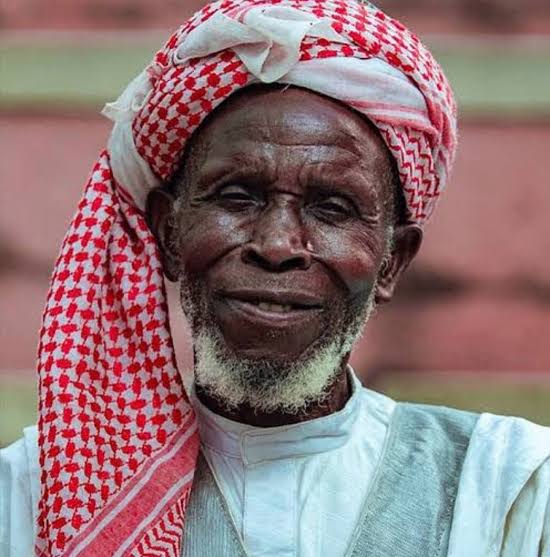
•Late Sheikh Abubakar Abdullahi

When the Nigerian government publicly mourned the death of Imam Abubakar Abdullahi in January 2026, it did so with language that was humane, dignified, and deserved.

The Chief Imam of Nghar village in Plateau State had died at the age of 92, and he was remembered for an act of rare courage: in 2018, during violent attacks in Barkin Ladi Local Government Area, he sheltered more than 200 Christians — some accounts place the number at over 260 — inside his mosque, saving them from armed assailants.

President Bola Ahmed Tinubu described the late cleric as a man who chose conscience over division and humanity over hatred. International tributes echoed the sentiment. Imam Abdullahi had earlier received the International Religious Freedom Award from the United States Department of State, Nigeria’s national honour of Member of the Order of the Niger, and multiple media accolades.

Yet beneath this solemn commemoration lies a contradiction Nigeria has yet to confront.

In the same week that the federal government was commiserating over the death of the Imam honoured for averting a Christian genocide eight years earlier, it transpired that it had expended a humongous $9 million to counter the Christian genocide story behind US designation as a Country of Particular Concern! The federal government cannot simultaneously honour Imam Abdullahi and deny the reality that made his heroism necessary.

Imam Abdullahi did not become globally known for theological scholarship or political leadership. His prominence arose from a single, stark fact: a specific civilian population —Christians — was under lethal attack, and he, as a Muslim cleric, was not part of the target group.

If the violence that swept Plateau State in 2018 was indiscriminate, random, or merely communal unrest, there would have been no reason for Christians to flee into a mosque for sanctuary. There would have been no reason for attackers to spare the mosque while churches were destroyed. And there would have been no reason for a Muslim imam to become a shield for people marked for death precisely because they did not share the attackers’ religious identity.

Strip away the reality of targeted violence, and Imam Abdullahi’s act loses its meaning. His courage only makes sense because there was something — and someone — to be protected from.

In that sense, attempts to deny the targeted nature of anti-Christian violence in parts of Nigeria do not merely erase victims; they also hollow out the moral legacy of one of the country’s most celebrated figures of interfaith solidarity.

Nigeria’s official counter-narrative often rests on conflation: equating organised campaigns of violence with spontaneous riots, reprisals, or breakdowns of law and order. International law does not make this mistake.

International humanitarian law and counter-terrorism frameworks focus on organised non-state armed groups — actors that display structure, continuity, and sustained hostility toward civilian populations. Nigeria unfortunately hosts several such groups, including Boko Haram, ISWAP, Ansaru, and armed formations often described collectively as Fulani herdsmen terrorists.

These groups operate across time, territory, and command chains. They meet the threshold that international law and diplomacy take seriously. Random violence committed during periods of unrest, regardless of who commits it, remains a domestic criminal matter. It is not equivalent to organised terror campaigns driven by identity and sustained capacity.

This distinction is not semantic. It is foundational.

The contradiction becomes sharper in light of reports that the Nigerian government spent approximately $9 million engaging a US-based public relations firm to counter claims —advanced by the US government — that Christians face systematic targeting in Nigeria, a designation that contributed to Nigeria’s inclusion as a Country of Particular Concern on religious freedom grounds.

At the same time the state was funding a campaign to deny the existence of such targeting, it was also celebrating a Muslim cleric whose international recognition stemmed entirely from saving Christians from extermination.

This is not merely a public relations misstep. It is a moral incoherence.

You cannot credibly deny a crime while building national prestige around a man whose fame rests on resisting that very crime.

If Nigeria wished to demonstrate seriousness —to its citizens and to the international community —the millions spent on denial would have been better invested in rehabilitation: rebuilding destroyed communities, supporting survivors, compensating widows and orphans, and restoring livelihoods shattered by violence.

Truth does not weaken a nation’s sovereignty. It strengthens its legitimacy.

Imam Abubakar Abdullahi’s life remains a powerful testament to moral courage across religious divides. But his death has also exposed the fragility of an official narrative that insists targeted religious violence does not exist while drawing moral capital from those who stood against it.

A state cannot mourn a hero born of atrocity while paying to deny the atrocity itself.

History — and the victims —will not accept that contradiction, no matter how sophisticated the lobbying.

*Ishaku, a journalist, essayist and writer, sent this piece via bishilee2017@gmail.com


Tags
Christian genocideJonathan IshakuSheikh Abdullahi
FacebookTwitterWhatsAppLinkedInEmailLink
Previous post 30 killed, many injured as trailer crashes in Kano
next post Music icon 2Baba names Burna Boy as the current king of Afrobeats
Related posts
  • Related posts
  • More from author
Opinion

The triangle driving Nigeria’s governance crisis, By Cheta Nwanze

May 30, 20260
Opinion

Mental health, marriages and productivity: Can inflation have an effect?, By Timi Olubiyi

May 27, 20260
Opinion

Consensus Candidacy: When elite imposition overthrows the people’s democratic will, By Samson Itodo

May 12, 20260
Load more
Read also
Inside Akwa Ibom Today

inside the Hill top newspaper

February 9, 20250
Business & Economy

United Nigeria Airlines surprises passengers with latest Samsung phones

June 6, 20260
Interview

EFCC accused my son of fraud, killed him while on bail – Grieving mother

June 6, 20260
Crime

Oyo abduction: Muslims reject terrorists’ demand for Sharia law

June 6, 20260
Business & Economy

Banks face N100 million penalty for foreign exchange violations

June 6, 20260
Health

How online pharmaceutical products adverts endanger lives

June 6, 20260
Crime

Oyo teachers, pupils kidnap: No child dead in captivity – Police

June 6, 20260
Load more

inside the Hill top newspaper

February 9, 2025

United Nigeria Airlines surprises passengers with latest Samsung phones

June 6, 2026

EFCC accused my son of fraud, killed him while on bail – Grieving mother

June 6, 2026

Oyo abduction: Muslims reject terrorists’ demand for Sharia law

June 6, 2026

Banks face N100 million penalty for foreign exchange violations

June 6, 2026

How online pharmaceutical products adverts endanger lives

June 6, 2026

inside the Hill top newspaper

0 Comments

United Nigeria Airlines surprises passengers with latest Samsung phones

0 Comments

5 burnt to death scooping fuel from fallen tanker

0 Comments

Naira slumps further as dollar scarcity bites harder

0 Comments

BREAKING: Appeal Court sacks Senate Minority Leader, orders election rerun

0 Comments

Again, Trump fined $10,000 for violating gag order

0 Comments

Follow us

FacebookLike our page
InstagramFollow us
YoutubeSubscribe to our channel
WhatsappContact us
Latest news
1

inside the Hill top newspaper

February 9, 2025
2

Reps refute Binance bribery claims, to investigate company executive’s escape from custody

May 8, 2024
3

4-year-old boy abducted by cousin rescued

September 10, 2024
4

2025 Hajj: NAHCON airlifts over 8,819 pilgrims

May 12, 2025
5

Dollar rise not only reason for hike in food prices – Nigerians react

March 26, 2024
6

My employer maltreated me in Libya for refusing to donate blood — Female returnee

September 4, 2025
Popular
1

inside the Hill top newspaper

February 9, 2025
2

Trump to meet Venezuelan opposition leader Machado next week

January 9, 2026
3

Eid-el-Kabir: Military warns of possible terror attacks in North-East

May 26, 2026
4

REVEALED: Real reason Jos school collapsed – Panel

July 17, 2024
5

Australia will get submarines as PM Albanese visits – Trump

October 21, 2025
6

Hospital left scissors in my wife’s stomach during surgery, called it God’s will – Grieving husband

January 18, 2026

About The Frontier

The Frontier is Nigeria’s leading online newspaper. It is published by Okims Media Links Limited headed by Sunny Okim, a veteran journalist who is widely known as The Grandmaster, fondly called so by colleagues and friends for being Nigeria’s pioneer movie journalist.

Most viewed

inside the Hill top newspaper

February 9, 2025

Visa issues disrupted my Tanzania concert, says popular Gospel singer Moses Bliss

October 4, 2025

Tension as sacked Plateau PDP lawmakers vow resumption today

January 23, 2024

Insecurity: France-based forensic expert warns Nigeria against delaying US partnership

December 1, 2025

BREAKING: 4 shot dead as residents, security operatives clash in Kano over demolition

February 3, 2025
Top posts

Categories

  • News4610
  • Politics4218
  • Crime3984
  • International2791
  • Sports2312
  • Business & Economy2145
  • Headlines2089
  • Education1281
  • Matilda Showbiz906
  • Health818
  • Entertainment753
  • Africa492
  • Religion463
  • Environment323
  • Special264
  • Arts & Culture227
  • Info Tech225
  • Hunger protests in Nigeria224
  • Interview178
  • Inside Akwa Ibom Today178
  • Opinion147
  • EyeCare with Dr Priscilia Imade119
  • Advert30
  • Epistles of Anthony Kila19
  • Trends16
  • Local News5

© 2026 The Frontier, Published by Okims Media Links Limited.

designed by winnet services

  • Home
  • Advertise with us
  • Contact