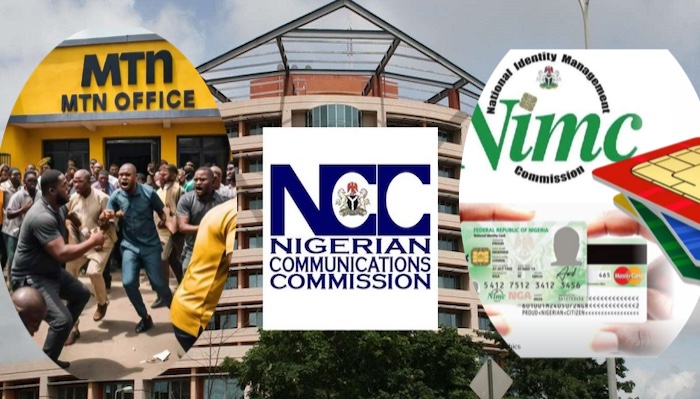
As the set date of Friday, December 13, by the telecom industry regulator, the Nigerian Communications Commission (NCC), for the announcement of a new tariff plan for service providers approaches, the telcos’ subscribers union has set a benchmark for the upward review of call and data prices.
While some customers are expressing fears of the unforeseen economic burden the review would have on them, others believe that the increase is necessary and overdue because of the decline in the service quality of the operators, reports Daily Independent.
The telcos comprising MTN, Glo, Airtel and 9mobile have been clamouring for an increase in call, data, and other service prices without receiving the nod of NCC which describes the issue as a complicated one that needs multi-level consultations.

Speaking with our correspondent, the president of the National Association of Telecommunications Subscribers (NATCOMS), Adeolu Ogunbanjo, acknowledged the need for the operators to review service tariffs, noting that it is overdue.
According to him, “To be fair to the service providers, there is hardly any product or service that has not witnessed an upward price review in the past one year in the country. Take a look at electricity, airlines, fuel, general maintenance, food items and others, all of them have attracted price increases beyond our imagination- some 20 percent, 50 percent, 100 percent and even more. But the telecom services have not been allowed to hike their tariffs for 11 years.
“The quality of service is going down day by day instead of improving. I believe if we allow them to add a little cost on their service, we will witness better services than what we see now, as they will be able to invest more in their equipment and infrastructure.”
Ogunbanjo, however, cautioned the industry regulator not to approve what will compound the plight of most Nigerians with high tariffs, as they are already paying heavily for almost everything just to survive.
“Before now, we believed that a 10 percent increase would be ideal; but after a deep assessment of the current situation in the country, we have come to the conclusion that anything above 5 percent will be inimical to Nigerians. So, we are advocating for 5 percent and below for the expected tariff regime review”, he said.
Commenting on the anticipated tariff hike, Oseji Mordi, a businessman in Sango-Ota in Ogun State, said NCC should factor in affordability in the new tariff plan so that people will not be forced to abandon their SIM cards.
He said: “This is a delicate issue that will affect over 100 million Nigerians. Already, I have dropped one of my three phone lines because of cost, and I believe there are many people also with this experience. So, I will appeal that the operators should be considerate in their proposal so that the decision will not be counter-productive for them and their customers.”
Lilian Agbaje, a civil servant in Edo State, said the planned hike is ill-timed because of the economic hardship Nigerians are faced from all sides of life. She called on the government to step in by cushioning the problems of the telecom operators, even though it is a private sector business.
“I can’t imagine this coming up at this time when many people are struggling to survive. If the government has been supportive enough, there would not be much concern about this hike. I learnt that telcos pay multiple and huge taxes to governments at various levels. My question is, are these operators getting reasonable incentives?” Agbaje queried.
Last month, NCC Executive Vice Chairman, Dr. Aminu Maida, announced that the December 13 date for the tariff plan review remains unchanged, unlike the previously announced date of October 27.
According to NCC, the aim of the review is to reduce the complexity of tariff plans and bundles, ensure transparency and fairness of promotional elements of tariff plans, protect consumers’ interests, and promote fair competition among licensees.
For almost two years now, the industry has been struggling with pressing challenges of operational costs heightened by naira floating policy which triggered devaluation of the naira and scarcity of foreign exchange. The policy significantly impacted on the revenue base of MTN and Airtel, as they posted huge losses both last year and this year. The fear is that it may take longer for them to recover from the losses.