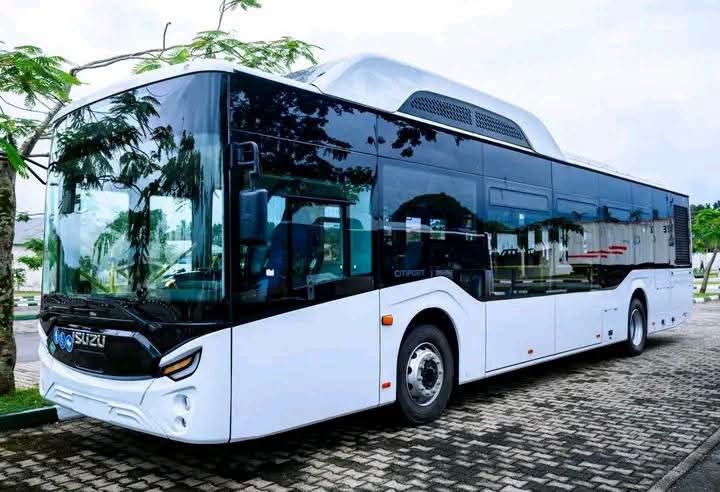
•BUSH UDOMBO, Uyo reporting
Public confidence grows when government projects are open to scrutiny. In an era where misinformation can spread as quickly as facts, transparency remains one of the strongest currencies of responsible governance.
When citizens are given the opportunity to see projects for themselves, speculation gradually gives way to understanding.
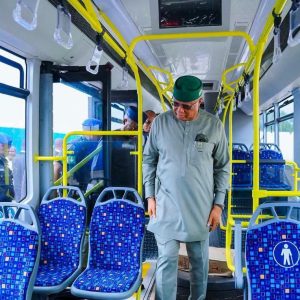
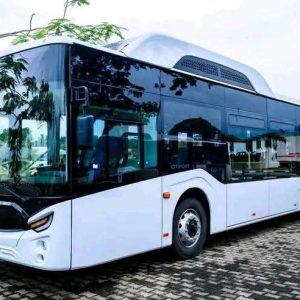
That philosophy was evident as the Akwa Ibom State government invited members of the media to inspect the first batch of its newly acquired Compressed Natural Gas (CNG) buses.
Rather than limiting public engagement to official announcements, the administration opened the project to firsthand verification, allowing journalists to examine the buses, interact with technical experts, and experience the new fleet through a demonstration ride.
The exercise reflected a governance style that places openness alongside project delivery. It was not simply about displaying new vehicles; it was about reinforcing public trust through direct access to information and allowing facts to speak for themselves.
The inspection also marked another important milestone in Governor Umo Eno’s commitment to building an integrated public transportation system for Akwa Ibom State. With the arrival of the first 20 factory-built CNG buses out of the 50 approved by the administration, the Governor’s transport vision is steadily moving from policy to practical implementation.
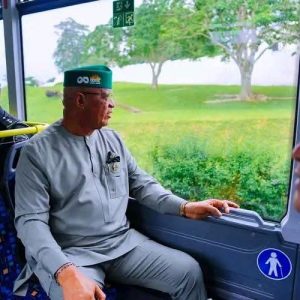
During the engagement, government officials explained that the initiative extends far beyond the procurement of buses. It includes a modern central transport terminal in Uyo, bus stations across the 31 local government areas, maintenance workshops, driver training facilities, CNG refuelling stations, ticketing systems, and other supporting infrastructure designed to sustain a world-class mass transit network.
This broader approach reflects a clear understanding that efficient public transportation is not created by vehicles alone. It depends on the supporting systems that guarantee safety, reliability, maintenance, operational efficiency, and long-term sustainability.
Equally significant was the clarification provided on the buses themselves. Officials and technical consultants explained that the fleet consists of factory-built CNG buses manufactured specifically for Akwa Ibom State, rather than diesel vehicles converted to run on compressed natural gas. That distinction places the project among the more advanced clean-energy transport initiatives currently emerging in Nigeria.
For commuters, however, the real significance lies beyond technical specifications. A modern transport system promises safer travel, lower operating costs, greater comfort, improved connectivity between communities, and more reliable access to workplaces, schools, markets, healthcare facilities, and airports.
The integrated transport network is expected to connect all 31 local government areas through strategically planned routes while strengthening links with key commercial centres and the Victor Attah International Airport. Such connectivity has the potential to stimulate economic activities, support local businesses, and encourage greater movement of people and goods across the state.
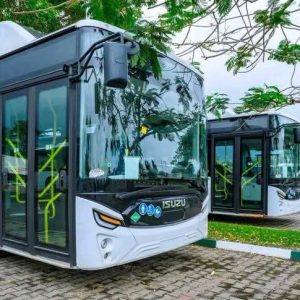
The decision to invite journalists to inspect the buses also reinforced another important principle of democratic governance. Public projects financed with public resources should be open to public examination.
By allowing the media to independently verify the condition, quality, and originality of the buses, the administration demonstrated confidence in the integrity of the procurement process.
Beyond transportation, the initiative reflects Governor Umo Eno’s broader development philosophy under the ARISE Agenda, where infrastructure is designed to improve everyday life while creating new opportunities for economic growth. Modern mobility supports commerce, encourages investment, creates employment, and contributes to environmental sustainability through cleaner energy solutions.
As additional buses arrive and supporting infrastructure nears completion, the focus will naturally shift from procurement to service delivery. The measure of success will ultimately be seen in how effectively the system improves mobility for ordinary residents and strengthens economic activity across Akwa Ibom State.
For now, the inspection offered something equally important. It demonstrated that major public investments can be accompanied by openness, accountability, and constructive public engagement. In that sense, the unveiling of the CNG buses was more than a presentation of new vehicles—it was another step towards building public confidence in a transport system designed to serve both present and future generations.
WATCH THE VIDEO BELOW: