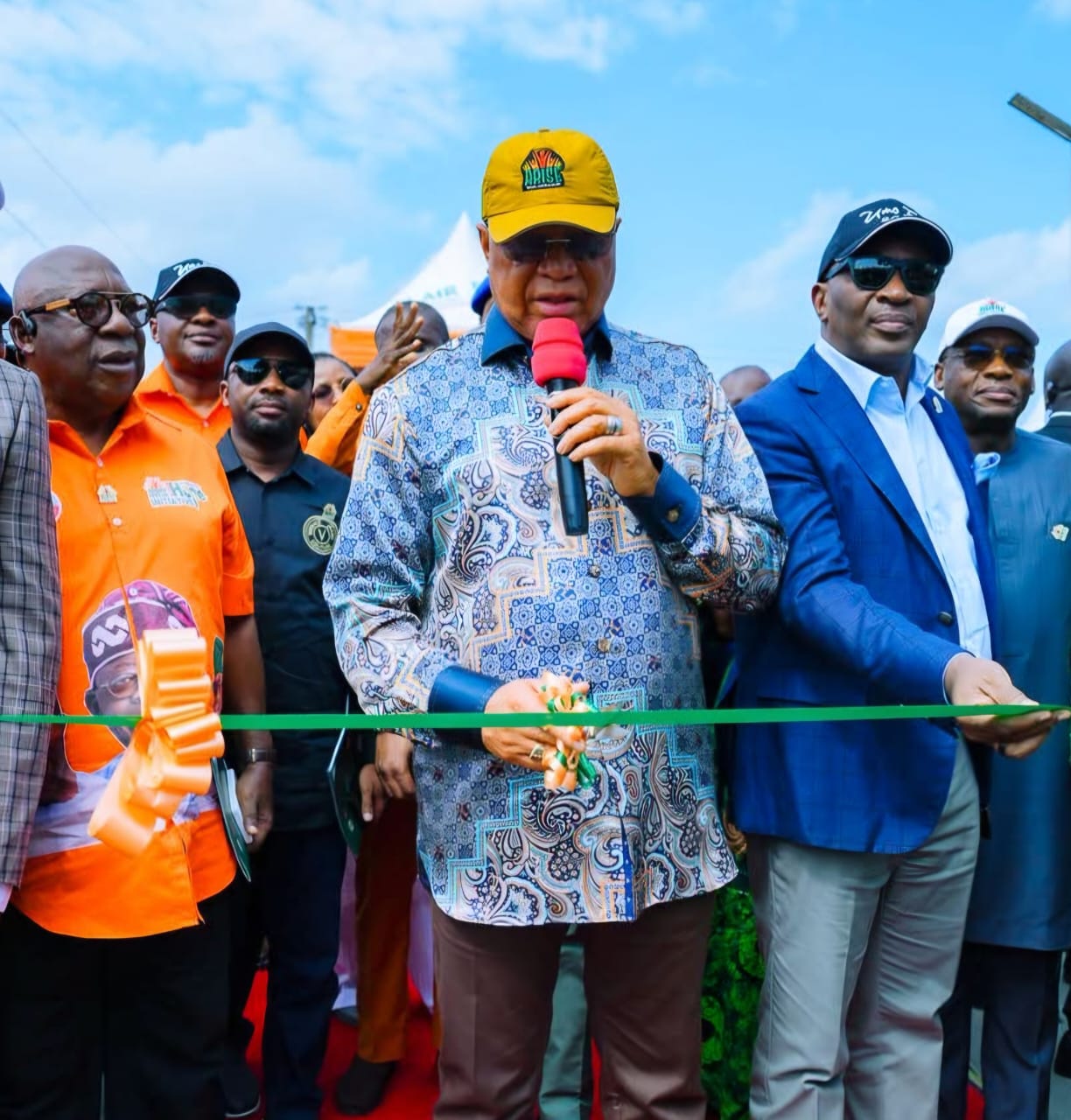
•Governor Umo Eno (cutting the tape)
By completing inherited projects and expanding infrastructure development, Akwa Ibom State governor, Pastor Umo Eno, is steadily reinforcing a governance philosophy that places people, continuity, and development at the center of public service.
That commitment was once again brought to the fore with the commissioning of 4.8 kilometres of roads in Eket Local Government Area, a milestone that underscores the administration’s resolve to complete valuable projects inherited from previous governments while initiating new ones to drive economic growth.
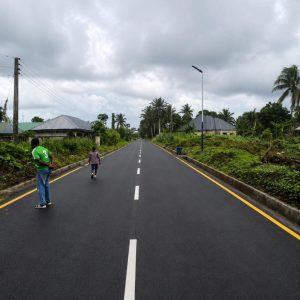
The newly commissioned projects include the 2.4-kilometre Ikot Akpa Ikpo–Urua Udo-Inyang Road and a 2.4-kilometre internal road network within Mkpok Estate Phases I and II. Though modest in length, the roads carry enormous significance for residents, traders, motorists, and businesses that rely on accessible transportation networks for their daily activities.
Speaking during the commissioning ceremonies, Governor Eno reaffirmed that governance should not be driven by political considerations but by the needs and welfare of the people.
“The people remain at the center of our administration,” the governor declared, emphasising that every worthwhile project inherited from previous administrations would be completed and put to use for the benefit of Akwa Ibom citizens.
The Ikot Akpa Ikpo–Urua Udo-Inyang Road exemplifies that promise. Initiated by a previous administration, the project had remained incomplete until Governor Eno’s government stepped in to finish it. The road serves as a vital economic corridor connecting several communities and providing easier access to the historic Urua Udo-Inyang Market, a major commercial hub in the area.
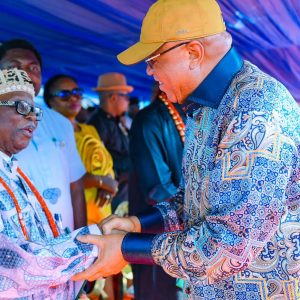
For residents who had endured years of poor access and transportation challenges, the completion of the road signals more than infrastructure development; it represents renewed hope, improved mobility, and enhanced economic opportunities.
Beyond completing inherited projects, Governor Eno is also expanding the infrastructure footprint of his administration in Eket. According to him, 38 kilometres of roads are currently under construction across the local government area, with plans already underway to add another 12 kilometres, bringing the total to 50 kilometres.
The governor described the projects as part of his administration’s broader vision to open up communities, stimulate economic activities, and improve the quality of life of citizens.
The commissioning of the internal roads within Mkpok Estate carried a particularly personal significance for the Governor. Having lived and conducted business in the area for many years, he spoke passionately about the importance of the estate to the people of Eket.
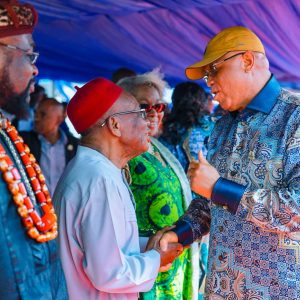
Describing Mkpok Estate as the equivalent of Ewet Housing Estate in Uyo, Governor Eno noted that the newly constructed roads would significantly improve accessibility, ease movement, and increase the value of properties within the estate.
For residents, the transformation is already visible. Smooth, well-paved roads have replaced difficult routes, creating a more attractive and functional environment for living and business activities.
The projects also highlight the administration’s focus on quality delivery. Commissioner for Works and Fire Service, Professor Eno Ibanga, explained that the roads were constructed with complete drainage systems designed to ensure durability and protect the infrastructure from erosion and flooding.
He commended the governor’s unwavering commitment to infrastructure development and rural transformation, noting that the projects align with the administration’s broader development agenda.
The impact of the roads extends beyond Eket. According to the Chairman of Eket Local Government Area, Hon. Akaninyene Tommey, the Ikot Akpa Ikpo–Urua Udo-Inyang Road serves as a strategic link connecting communities in Eket, Esit Eket, and Mbo Local Government Areas.

Such connectivity is essential for economic development, as it facilitates the movement of goods and services, strengthens inter-community relations, and opens up rural areas for investment opportunities.
Dr. Dominic Ukpong, a key stakeholder described the governor as a “pragmatic and visionary leader whose actions have strengthened public confidence in government”.
He particularly praised Governor Eno’s willingness to complete projects inherited from previous administrations, describing it as a “demonstration of maturity, leadership, and commitment” to continuity in governance.
According to him, the governor’s “finishers’ anointing” has not only delivered infrastructure to the people but has also “fostered peace, unity, and a sense of collective ownership among citizens”.
As part of his visit to Eket, Governor Eno also inspected the ongoing Afaha Atai and Iseyiridua road projects, signaling that infrastructure development in the area remains a priority.
A community leader, Effiong Essien said the inspections reflected a leadership style that emphasizes monitoring, accountability, and timely project delivery”.
Ultimately, the commissioning of the roads in Eket is about more than asphalt and concrete. It tells a story of continuity in governance, strategic investment in infrastructure, and a determination to ensure that development reaches communities across Akwa Ibom State.
For the people of Eket, the newly commissioned roads represent easier access, enhanced economic opportunities, and improved living conditions. For the state, they stand as another testament to an administration committed to leaving no worthwhile project unfinished and no community untouched.
As the bulldozers continue their work and more projects move toward completion, the message from Governor Umo Eno’s administration remains clear: development is not a promise for tomorrow, it is a responsibility being delivered today.