

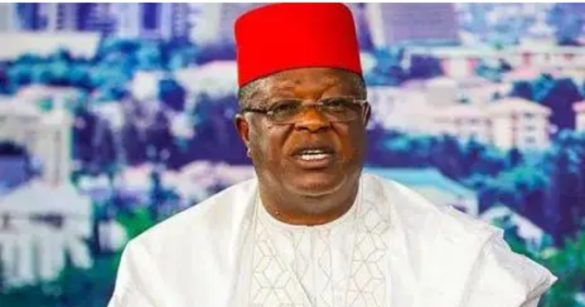
•Minister of Works, Dave Umahi
The Federal Ministry of Works is facing mounting criticism following the inclusion of over ₦500 million for the training of make-up artists and hairdressers, as well as the supply of grinding machines, motorcycles, mini-vans and anti-drug abuse advocacy in its 2026 budget proposal.
The allocations, contained in the ministry’s 2026 budget estimates submitted to the National Assembly, list the items under empowerment and sensitisation programmes, an approach that has sparked concern given the ministry’s statutory mandate to construct, rehabilitate and maintain federal roads and bridges, reports Daily Independent.

A breakdown of the estimates shows that the funds are spread across skills acquisition programmes for youths and women in make-up artistry and hairdressing, procurement of grinding machines for distribution to beneficiaries, and the purchase of motorcycles and mini-vans for selected states.
The proposal also includes spending on anti-drug abuse sensitization and advocacy campaigns, further fuelling public debate over what many observers describe as a growing trend of non-core expenditures by infrastructure-focused ministries.
The proposal has drawn sharp reactions from stakeholders and members of the public.
“It is baffling that the Ministry of Works is allocating hundreds of millions for make-up artists and grinding machines while our roads continue to claim lives daily,” said Chinedu Okafor, a transport safety advocate in Abuja.
“Every kobo should go into fixing the death traps on our highways.”
Critics argue that every kobo allocated to the ministry should be channelled towards revamping what they described as “death-trap” roads across the country, noting that poor road infrastructure continues to claim lives and undermine economic activities nationwide.
“The items listed in the Works Ministry’s budget are outside its core mandate,” noted Dr. Aisha Bello, an economist and public policy expert.
“These funds would be far better spent on road rehabilitation, which has a direct impact on economic activity and public safety.”
They have therefore called for the immediate reversal of the allocations, urging the National Assembly to strike out the non-core items during budget defence sessions and redirect the funds to urgent road rehabilitation and maintenance projects.
“We will carefully examine these allocations during the budget defence sessions,” said Rep. member of the House Committee on Works who wants his name shielded.
“The National Assembly has a duty to ensure that public funds are directed to priorities that serve the citizens’ needs,” he said.
The 2026 budget proposals remain before the National Assembly, where lawmakers are expected to subject the Ministry of Works’ spending priorities to rigorous scrutiny, amid growing calls for the removal of non-core items and the redirection of funds to critical road rehabilitation projects nationwide.